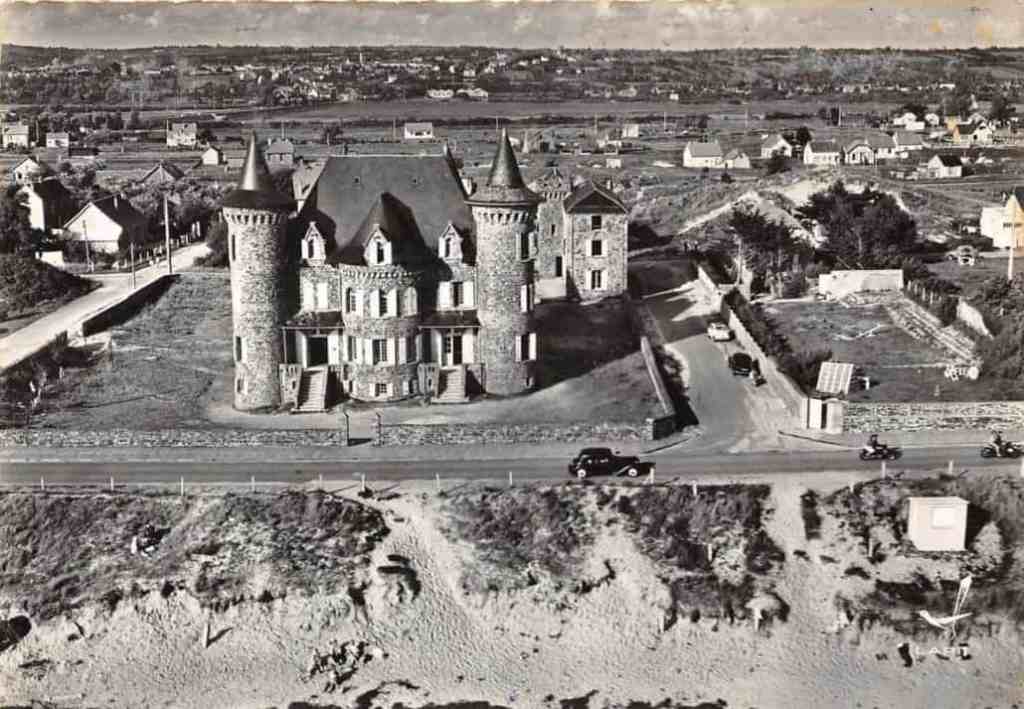
Some places never leave your heart… Barneville-Carteret (Manche département, Normandy) is one of those. I also love castles. And I love genealogy! Here is another very nice discovery I made, linking my three loves!
✨
1) My Easter and Summer vacations in Barneville
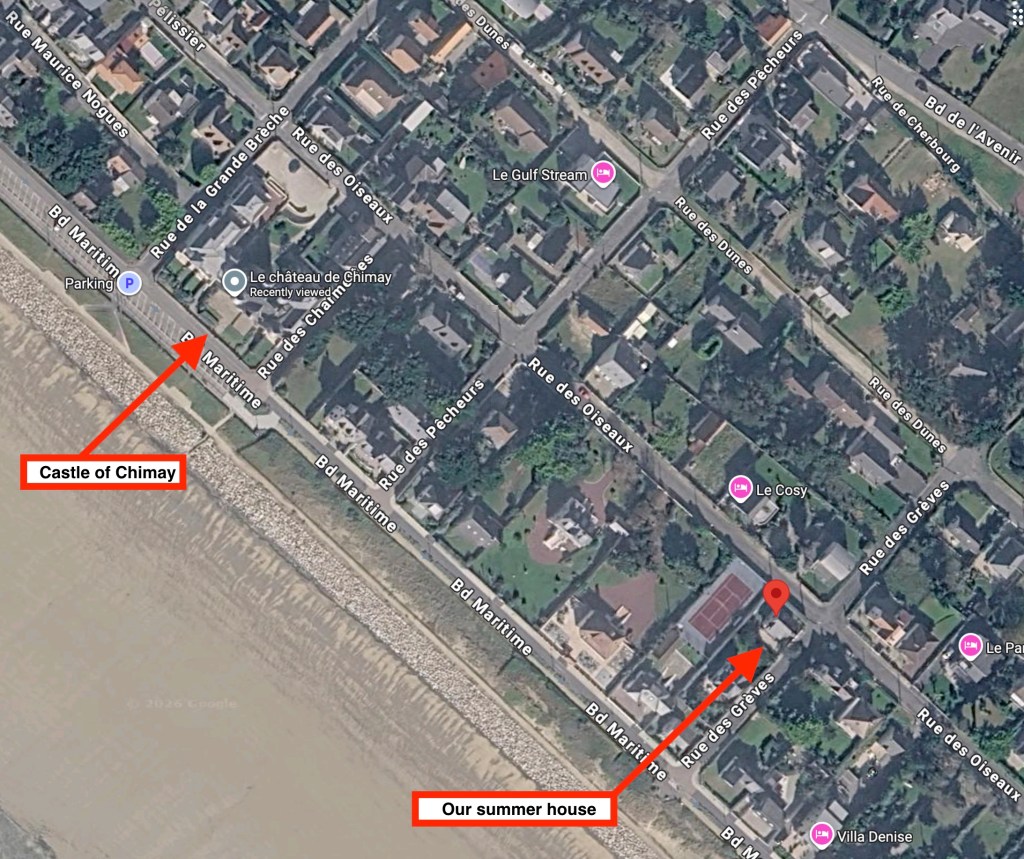
In 1977, after my grandfather Paul Berjot passed away, my grandmother, “Mamie Lu”, bought a cute little two-story house in Barneville (Barneville-Carteret), just 50 yards from the beach! This vacation house was to be shared by her four children and all her grandkids (eight of us at that time, with two more a few years later!). We took turns going there, but the house was big enough that two families could stay at the same time.
The ground floor had a kitchen, two bedrooms, and a dining room that would be used for meals, summer homework (“cahiers de vacances”), and board-games time. There was also a bathroom, complete with a shower that would get plugged up often if we didn’t clean our sandy feet before using it! A staircase in the kitchen led to the second floor, where there were two more bedrooms. You had to go through the first bedroom (which could sleep three) to access the second bedroom (which could sleep four). That second bedroom overlooked the neighbors’ property and their private tennis court.
I still remember every room, the smell of the house, the sounds of the pots and pans in the kitchen where my mother was cooking up delicious meals. I also remember the creaking of the stairs and wooden floors of the upstairs bedrooms, and the little terrasse in front of the living room. And I remember the size of the key to the house: big and heavy!
Every morning, I would go jogging with my father to get bread at the boulangerie. We would either go via the Boulevard Maritime (beach side) or the Rue des Oiseaux, behind our house. Whichever way we chose, we would go either in front of or behind the castle.
After breakfast, we would all go to the beach or to the market, and sometimes to Carteret to see the lighthouse and play on the dunes. We also went to all the surrounding villages, towns or cities, such as, to name a few, Port-Bail, Granville, Bricquebec, Sainte-Mère-Église, one of the first French towns liberated on June 6, 1944, during the D-Day landings. And, of course, the Mont Saint-Michel, about a two-hour drive from Barneville.
There were also the mandatory visits to “Madame Égé“, the local “épicerie Égé”, where we would spend the money (5 French francs at the time) that our other grandmother, “Mamie de Melun”, would inevitably give us before each vacation: “For an ice cream or anything you want when you are on vacation!”
After lunch, we would do a little bit of our cahiers de vacances (not my favorite part of the day, especially the maths exercises!). Then, more beach and swimming time! At low tide, we would go shrimp and crab fishing. And if the weather was too bad, we would play board games or go and visit somewhere (there’s always something to visit in France!).
When we had crab for dinner, my siblings and I were sent to gather “galets” (flat rocks) on the beach. We used them to crack open the crab legs and bodies. (Sorry, vegetarians… I respect your decision, but you really don’t know what you’re missing…).
We spent many hours playing soccer in the sandy driveway, using the garage door as one of the goals.
And we spent many more hours watching the champion of Normandy, our neighbor, play tennis just below our upstairs bedroom window! She was so kind to let us play when she wasn’t using the court! And we did!
From the beach at the end of our street, we could see the Island of Jersey. Normandy has a reputation for getting quite a bit of rain. So the joke was this: “When you see Jersey, it’s because it’s going to rain. When you can’t see Jersey, it’s because it’s raining!”
Every year, my parents would take us to visit the area. We went to Bayeux to see the Tapestry (here is my recent post about the Bayeux Tapestry), the D-Day beaches, and multiple villages, towns, castles and churches nearby. France is so rich with history!
Our house was called “Les Courlis” and was located at 16, rue des Grèves, in Barneville. My grandmother eventually sold it, a few years before she passed away.
A few years ago, while in the area, my sister stopped in Barneville for a day and walked to “our” house. At that very moment, a man came out of the house and saw her. She explained that we used to spend our vacations here for many years in the late 1970s and 1980s, and this very kind man invited my sister inside to look around the house!
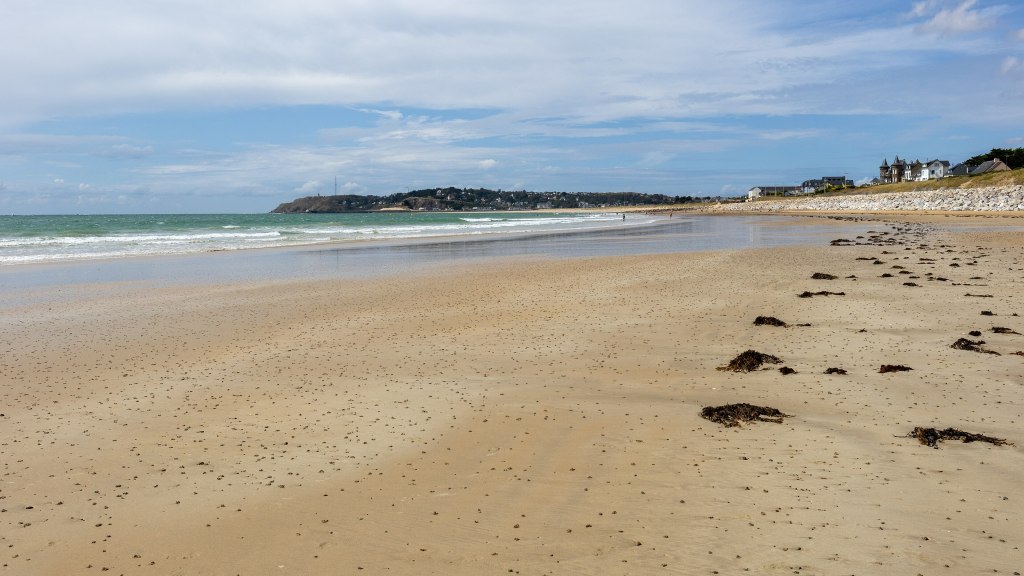
Last year, my cousins Louis and Christine d’Arras d’Haudrecy (found through genealogy!) also spent a day in Barneville while visiting the area. They went to the house and sent me pictures of the beach, the street and the house! It has changed quite a bit since “our days” there, but it meant so much to me to see it…
Sadly, Barneville-Carteret is one of 303 French municipalities identified as being seriously threatened by rising sea levels due to climate change.
I will take David to finally discover Barneville next time we go to France, probably in 2027.
Merci, Papi et Mamie Lu, de nous avoir offert tant de merveilleux souvenirs de Barneville que nous garderons toujours dans nos cœurs…
2) I love castles…
France is home to an estimated 45,000 châteaux, more than any other country in Europe.
I love castles… I am always amazed by those magnificent monuments built centuries ago and still standing today. Their perfection, their design, their beauty, that particular musty smell of very old buildings, the creaking of wooden floors, those immense stone rooms that must have been so cold in the winter, and those huge fireplaces, large enough to roast an entire ox! I don’t particularly care for the heavy decorations, but those rooms are still majestic. What is most astonishing to me is that they were built without the tools we have today. We think we are so smart with all our technology. Yet, how were those pyramids, cathedrals and castles built?
When we were kids, our parents often took us to visit churches and castles, especially those in our area or not too far away. The famous Château de Vaux-le-Vicomte, built by Nicolas Fouquet (King Louis XIV’s superintendent of finances), is only ten minutes away from the house where I grew up! Five minutes farther east is the Château de Blandy (Blandy-les-Tours). As for the Château de Fontainebleau, it is only a thirty-minute drive away.
(For more information about Nicolas Fouquet and the Château de Vaux-le-Vicomte, see my post “En garde! Prêts? Allez! D’Artagnan, my new cousin!”).
Our trip to France in 2015 to visit my family was filled with visits to castles. We took David to see the Château de Vaux-le-Vicomte, the Château de Blandy, the Château de Fontainebleau, and the Château des Ducs de Bretagne in Nantes!
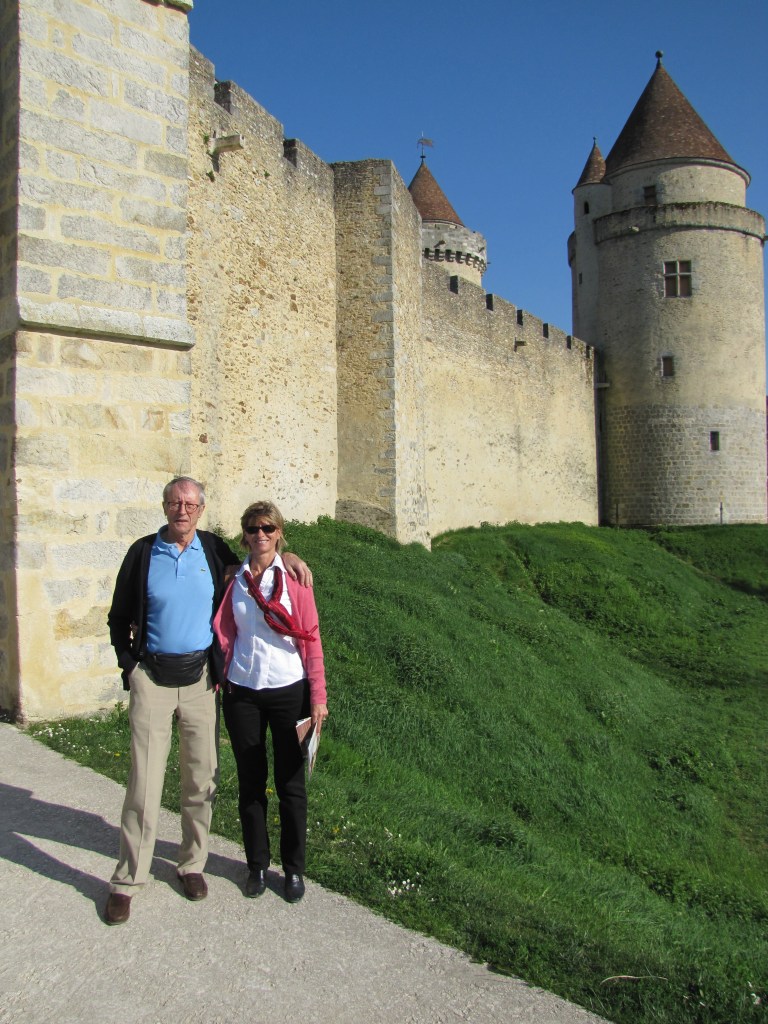
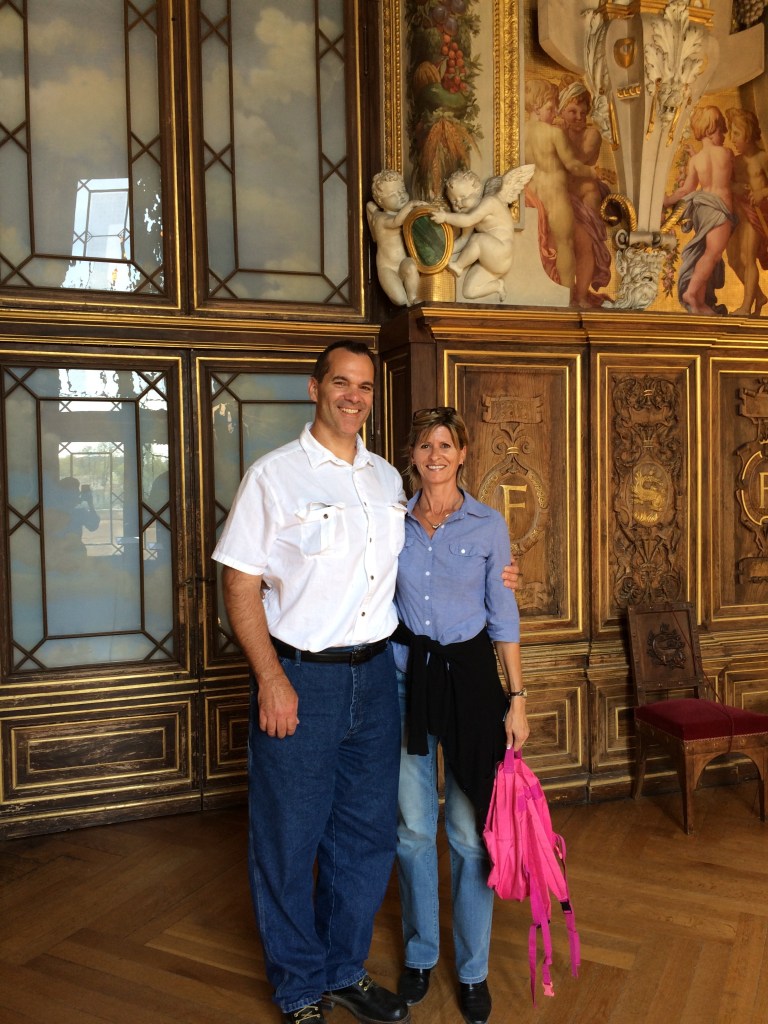
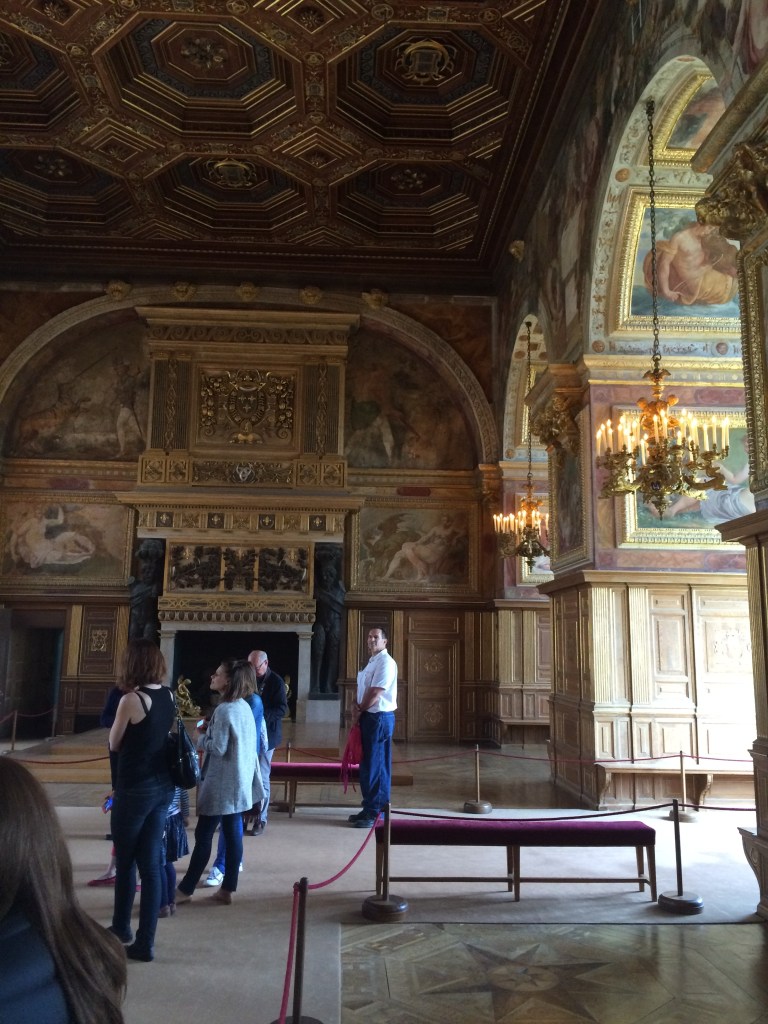
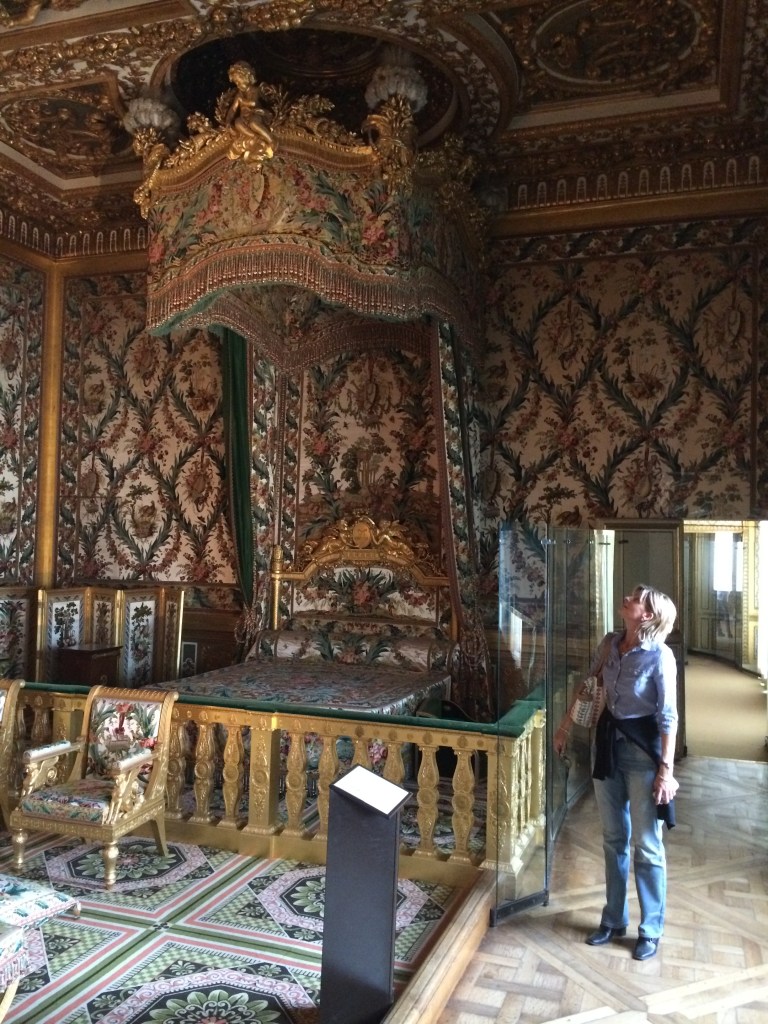
David and me, Château de Fontainebleau, April 20, 2015
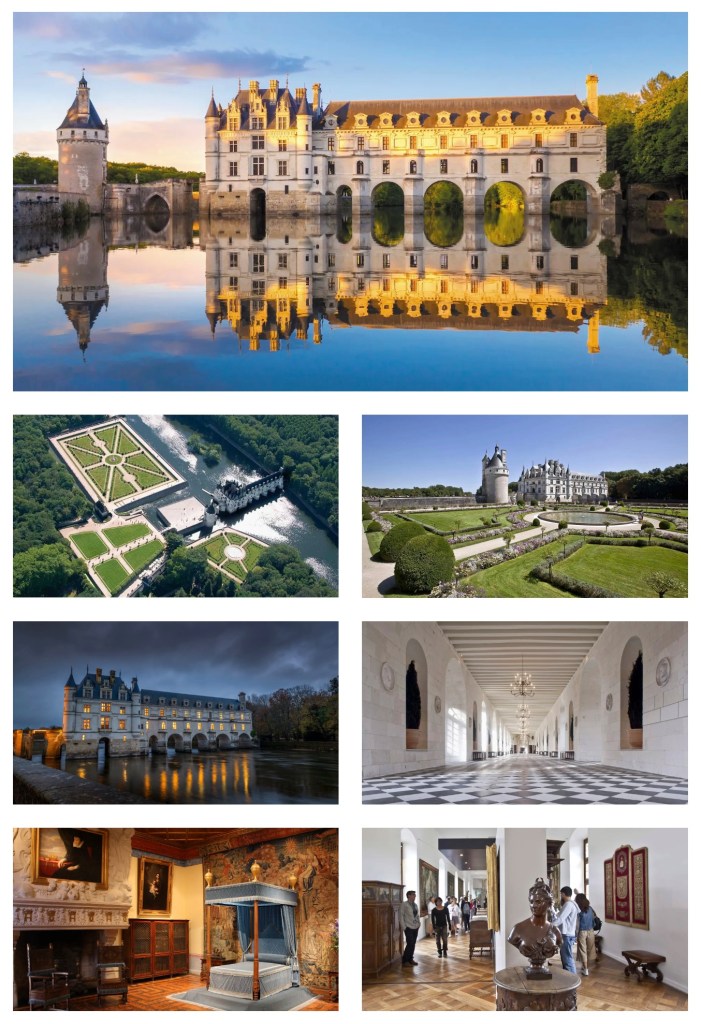
One of my favorite castles was, and still is, the Château de Chenonceau, one of the many “Châteaux de la Loire” (Châteaux of the Loire Valley). This castle is a little farther away, a three-hour drive from my parents’ house. Its construction began in 1513, and it is nicknamed “Le Château des Dames” (the Castle of the Ladies). It was initiated by Katherine Briçonnet and later transformed over the years by Diane de Poitiers (mistress of Henri II of France), Catherine de Médicis (wife of Henri II of France), Louise de Lorraine (“la Reine Blanche”), Louise Dupin, and Madame Pelouze.
If you too love castles, you’ll enjoy visiting the Chenonceau website. Make sure to check out their virtual visit page, too!
The photos below are from the Blois Chambord Val de Loire website.
The Château de Barneville
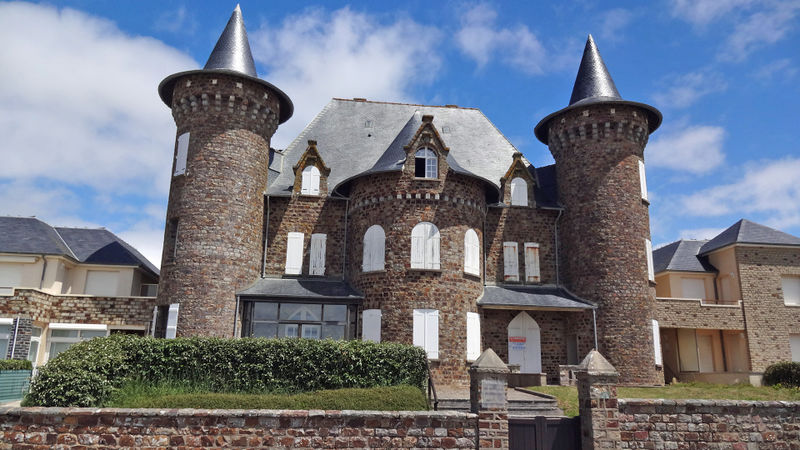
But the castle I will talk about next is much more modest and not old at all. It is very recent, in fact. And it’s so close to my heart! It’s officially called the “Château de Chimay”. But for me, it will always be the “Château de Barneville”.
Throughout all our years of vacations in Barneville, the castle was unoccupied. One year, during one of our walks with our parents, we actually all went inside the castle! We didn’t break in (I prefer to clarify…). We entered through the courtyard at the back and made our way inside the castle after discovering an open door. We didn’t stay long at all, but it was very nice to be inside that “fortress” that we had been neighbors to for so long!
So why this name? This explanation is below.
3) 🌿 So… What about the genealogy connection?
While I love living in the U.S., I do get homesick for France every now and then. One day, I was daydreaming about Barneville and all the wonderful family times we spent there. My thoughts took me to the “Château de Barneville”. I wanted to know who built it so that I could add it to my “Castles” page on my Geneanet tree (I included the link below).
When I discovered who built it, I was only half-surprised, and I smiled: I had been working on that person and her life just days before!! I just love those moments… That’s why I always follow my intuition in my genealogy research. Some days, I have no clue why I feel prompted to research a particular family, battle, castle, until days later, when it always— always—leads to something that will bring me back to it.
This was no exception. I had been researching the de Riquet de Caraman-Chimay family.
Clara Ward, Princess of Chimay
Clara Ward was born in 1873 in Detroit, Michigan, United States. She met the Belgian prince Joseph de Riquet de Caraman-Chimay (1858-1937), her future first husband, during a trip to Nice, France. He was the 19th Prince of Chimay, and, like my father, an Olympic fencer! He competed in épée at the 1900 Paris Olympic Games (my father competed in foil at the 1964, 1968, 1972 and 1976 Olympic Games).
They were married in 1890. Through this marriage, Clara Ward became Princess of Caraman-Chimay, or Princess of Chimay. They had two children. The marriage didn’t last and they divorced in 1897. However, she continued to use her title.
In 1911, while married to her fourth husband, the Italian Albano Casellato, Clara spent the summer in Barneville. She fell in love with the location and decided to buy land on which to build a “chalet”. That eventually became the “Château de Chimay.”
The castle was built between 1912 and 1914.
During my research, I found that it went through multiple lives and owners:
- 1914–1917: During World War I, it was used by the Belgian army
- 1928–1939: It was transformed into a hotel (“l’Hôtel du Château)
- 1939–1945: During World War II, it was first occupied by the Germans, then by the Americans
- 1946–1976: It hosted children’s summer camps, then became another Hotel-Restaurant
- 1994: The château is acquired by a property company (SCI), which divides it into apartments. The entire development is known as “Les Terrasses du Château” (“The Château Terraces”).
Another funny genealogy discovery
A few days after discovering that the château de Barneville had been built by Clara Ward, I researched the genealogy of one of my uncles whose family is from Normandy. And what did I discover? That one of his ancestors, his great-great-grandmother, passed away in Barneville in April 1912! It is very possible that she witnessed the beginning of the construction of the castle!
✨
🌿 Genealogy on my Geneanet tree
Here are the links to several pages on my Geneanet tree related to the individuals, events or places mentioned in this post: (FYI: on Geneanet, the little “green circle” on an individual’s image indicates that the person is part of my direct lineage).
Note: Some individuals or events might appear “alone” on my tree, but be sure to check the links to other pages.
- Clara Ward (1873–1916)
- Joseph de Riquet de Caraman-Chimay (1858–1937)
- Castles of France
- Château de Chimay (Barneville)
- Château de Vaux-le-Vicomte
- Château de Blandy-les-Tours
- Château de Fontainebleau
- Château des Ducs de Bretagne
- Château de Chenonceau – the “Castle of the Ladies”: built and improved by:
- Katherine Briçonnet (?–1526) (original owner)
- Diane de Poitiers (1500–1566)
- Catherine de Médicis (1519–1589)
- Henri II of France (1519–1559)
- Louise de Lorraine (la “Reine Blanche”) (1553–1601)
- Louise Dupin (1706–799) – She was the great-grandmother par alliance (by marriage) of the famous writer George Sand.
- Madame Pelouze (née Wilson) (1836–1902)
- Olympic Games
- WWI (1914–1918)
- WWII (1939–1945) (information on D-Day)

