
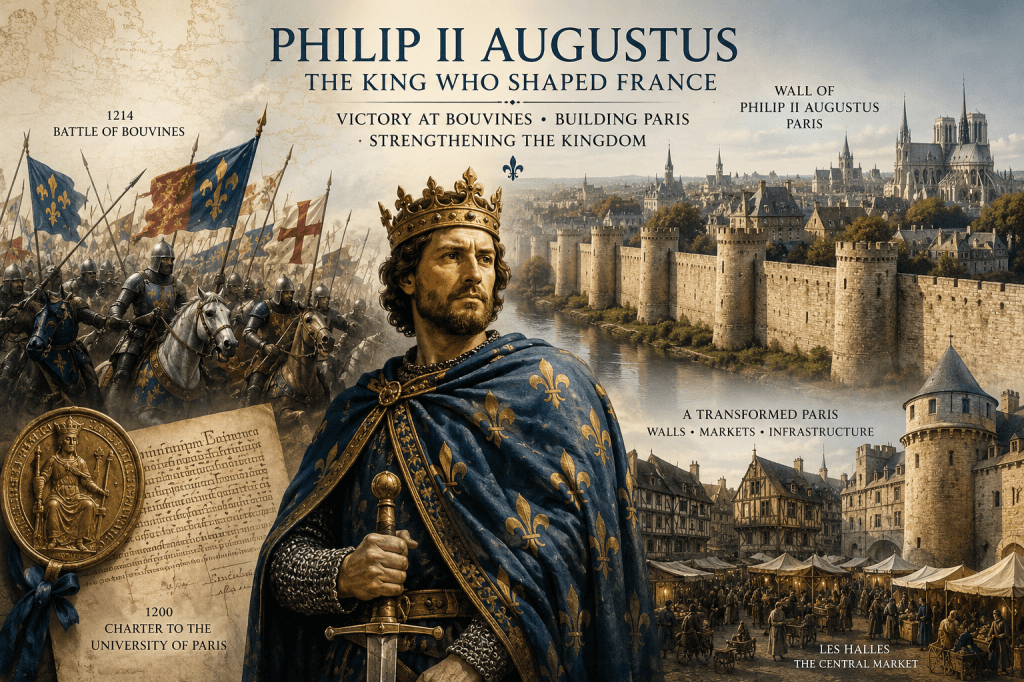
Walk through the streets of Paris today, and you can still find stones laid more than 800 years ago. They are the remains of the Wall of Philip II Augustus, built before the king left on the Third Crusade. Those ancient stones are only one reminder of the extraordinary ruler who transformed both Paris and the Kingdom of France.
Philip II of France (1165-1223), also known as Philip Augustus, was the seventh king of the Capetian dynasty and the first to officially style himself “Roi de France” (King of France). Before his reign, monarchs used the title “Roi des Francs” (King of the Franks).
He was the son and heir of Louis VII and his third wife, Adèle of Champagne.
Philip II and his first wife Isabelle de Hainaut (1170-1190) were the grandparents of Louis IX of France, also known as Saint Louis (a couple of posts about him: “From Lafayette to St. Louis: French Names Across America“; Madeleine de Hénin-Liétard (ca 1640-after 1694): The Ancestor Who Opened the Door to History.)
Philip II Augustus remains, to this day, one of the most influential and extensively studied kings of medieval France—not only because of the length of his reign, but also due to his major military victories and lasting administrative reforms.
Few medieval kings shaped France as profoundly as Philip II Augustus. Many of the institutions, territorial boundaries, and iconic landmarks that shaped medieval France can trace part of their origins to his reign.
By the time of his death in 1223, the French monarchy was stronger, wealthier, and far more centralized than when he inherited the throne, laying important foundations for the future Kingdom of France.
During the long struggles with the Anglo-Norman Plantagenet dynasty, and before departing on the Third Crusade, he ordered the construction of a defensive wall around Paris, known as the Wall of Philip II Augustus (L’enceinte de Philippe Auguste). This is the oldest known city wall of Paris.
The wall enclosed roughly 250 hectares (about 620 acres) and protected a rapidly growing medieval city. Built of stone with towers and fortified gates, it represented one of the most ambitious urban defense projects of its time.
Today, remarkably, several sections of this wall can still be seen throughout Paris.
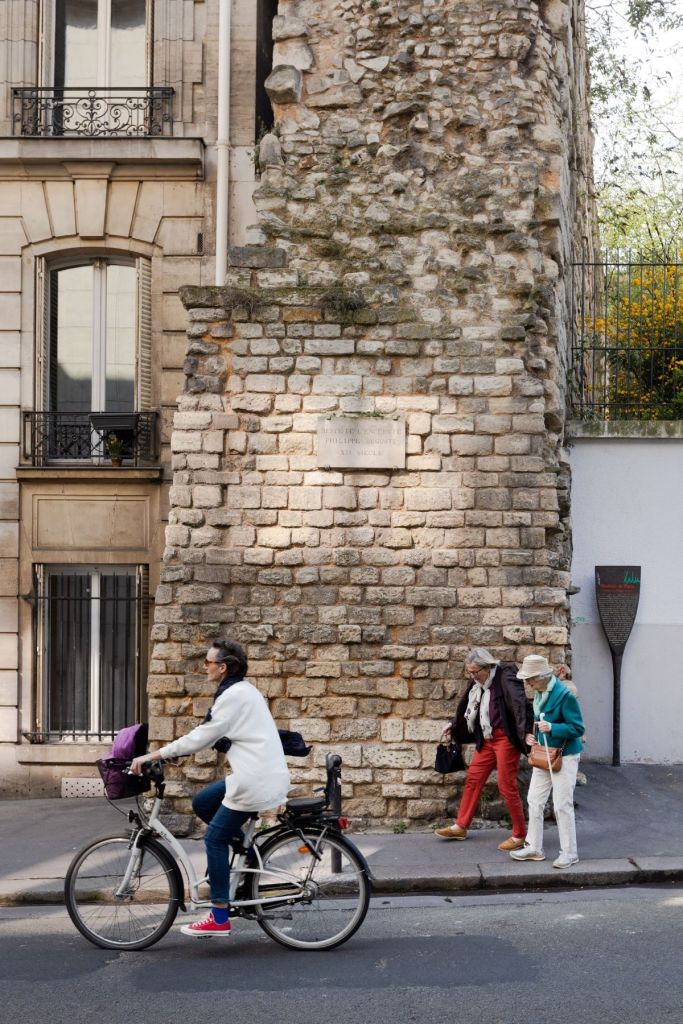
(Portion of curtain existing in rue Clovis, showing the ashlar facing and rubble core construction)
During our last trip to France in January 2024, my husband and I spent a week in Paris. I wanted to show David several historic monuments. We also spent a (very-very cold) day with my mother’s first cousin, Jacky, who sadly passed away last summer.
Jacky was a true lover of Paris. He knew nearly every street, the history of each neighborhood, and the stories of countless churches. Despite his difficulties walking with a cane, he guided us through many places and also pointed out the remains of the Wall of Philip II Augustus.
Below: Saint-Merry Church, walk in the streets of Paris, arrival at the National Archives of Paris
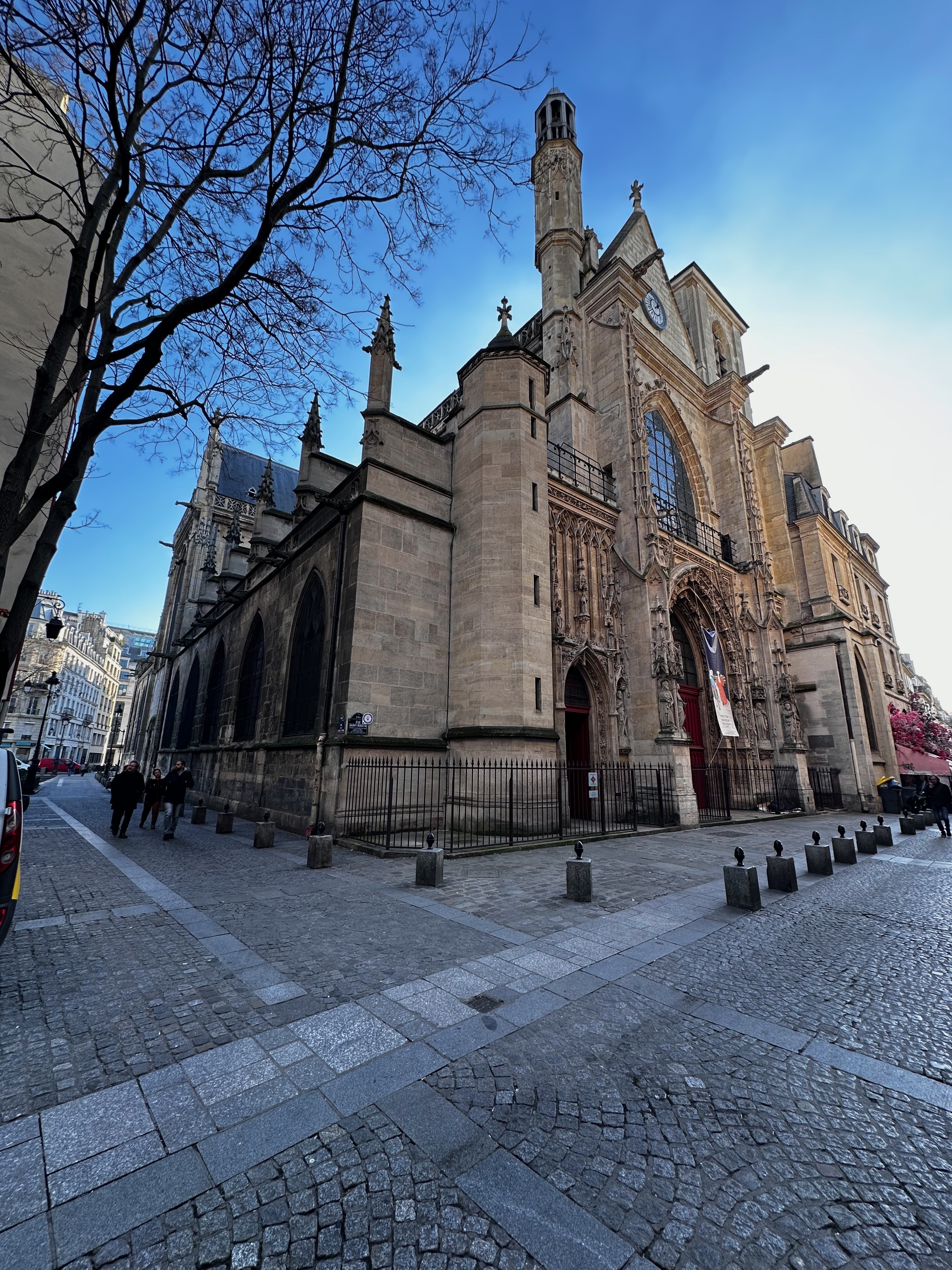
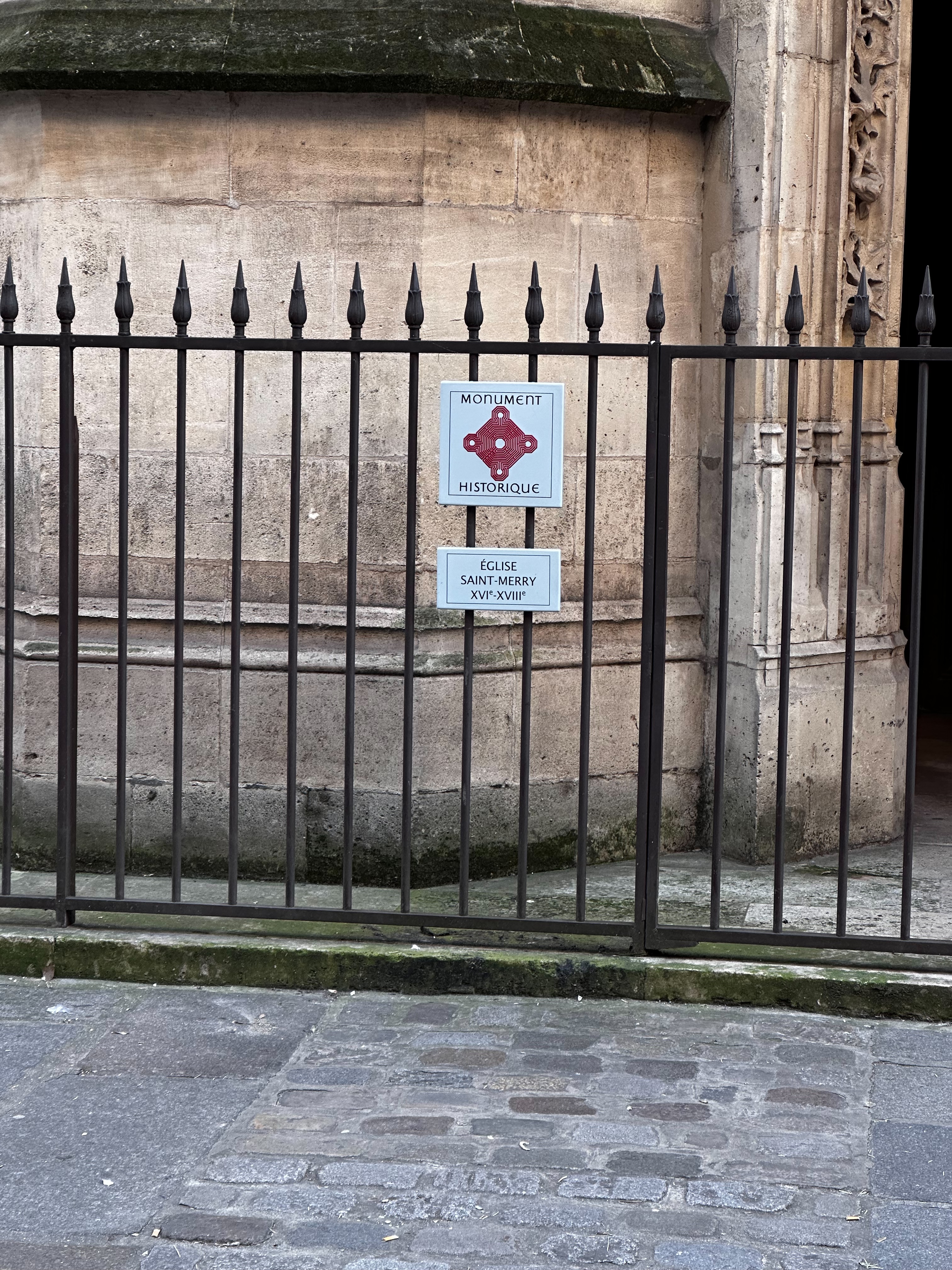


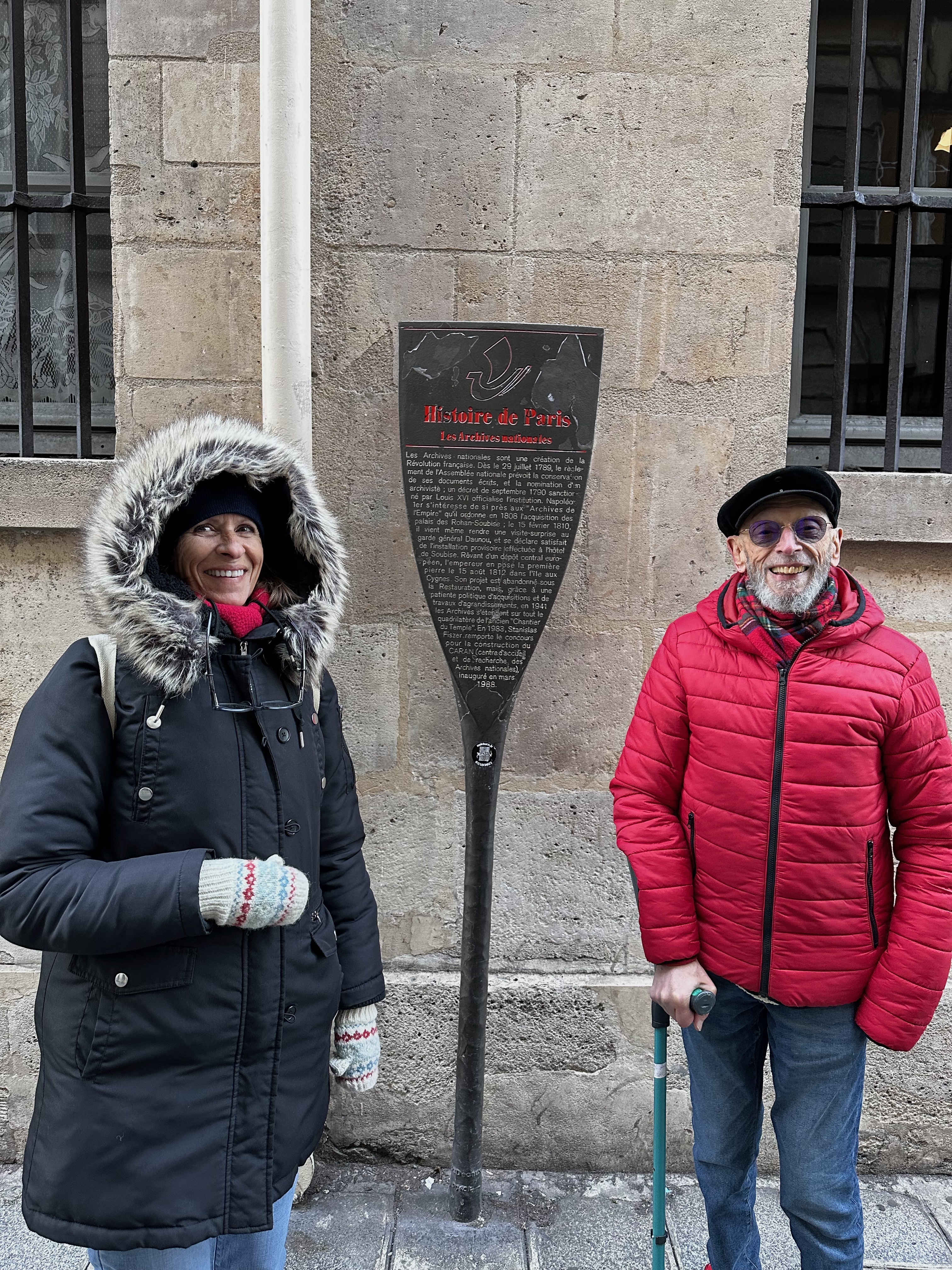

Looking back, that day has become one of my favorite memories of our week in Paris. Seeing those medieval stones through Jacky’s eyes made the history of Philip II Augustus feel remarkably alive.
Why Philip II Augustus Changed France
1. Territorial expansion and military success
- Defeat of the Angevin Empire: Philip successfully weakened the English Plantagenet kings’ vast continental holdings, reclaiming Normandy, Anjou, Maine, and Touraine.
- Battle of Bouvines (1214): He secured a decisive victory over a coalition of rivals, including King John of England and Holy Roman Emperor Otto IV, firmly establishing French royal authority.
2. Administrative and governmental reforms
- Centralization of power: He reduced the influence of powerful feudal lords by relying increasingly on royal officials.
- Baillis and seneschals: These royal administrators governed regions on behalf of the crown—baillis in the north and seneschals in the south.
- Professional administration: These officials were often recruited from the emerging middle class and paid salaries, ensuring their loyalty to the monarchy rather than to local nobility.
3. Transformation of Paris
- Capital city: Philip established Paris as the permanent capital of the kingdom and strengthened its defenses with a major city wall.
- Urban development: He improved infrastructure, helped organize the central market at Les Halles, and initiated the transformation of the Louvre from a fortress into a royal stronghold.
- Education: In 1200, he granted a charter to the University of Paris, reinforcing the city’s status as a major international center of learning.
More than eight centuries after his death, Philip II Augustus remains one of the architects of modern France. His military victories expanded the royal domain, his administrative reforms strengthened the monarchy, and his vision transformed Paris into the kingdom’s political and intellectual heart. For genealogists, understanding rulers like Philip II helps place our ancestors within the broader story of medieval France.
Further reading: Encyclopaedia Britannica, New World Encyclopedia, and the references available on the Wikipedia article provide excellent introductions to the reign of Philip II Augustus.
✨
🌿 Genealogy on my Geneanet tree
Here are the links to several pages on my Geneanet tree related to individuals, events or places mentioned in this post: (FYI: on Geneanet, the little “green circle” on an individual’s image indicates my direct lineage with the individuals).
Note: some individuals or events might be “alone” on my tree but check links to other pages.
- Philippe II Auguste (1165-1223)
- Capetian Dynasty (987-1328)
- The Louvre Palace (built in 1190)
- Wall of Philip II Augustus (L’enceinte de Philippe Auguste) (built in 1190)
- Third Crusade (Troisième Croisade) (1189-1192)
- Empire Plantagenet (1154-1216)
- Battle of Bouvines (July 27, 1214)
Philippe II Augustus might have been born at “Le Petit Jard”, a hamlet of Vert-Saint-Denis, where I grew up
- Vert-Saint-Denis (Seine-et-Marne, 77)
- Church of Vert-Saint-Denis (built before 1168)
- Cemetery of Vert-Saint-Denis (built before 1492)
- First school in Vert-Saint-Denis (1700)
- History of France
- History of Europe

