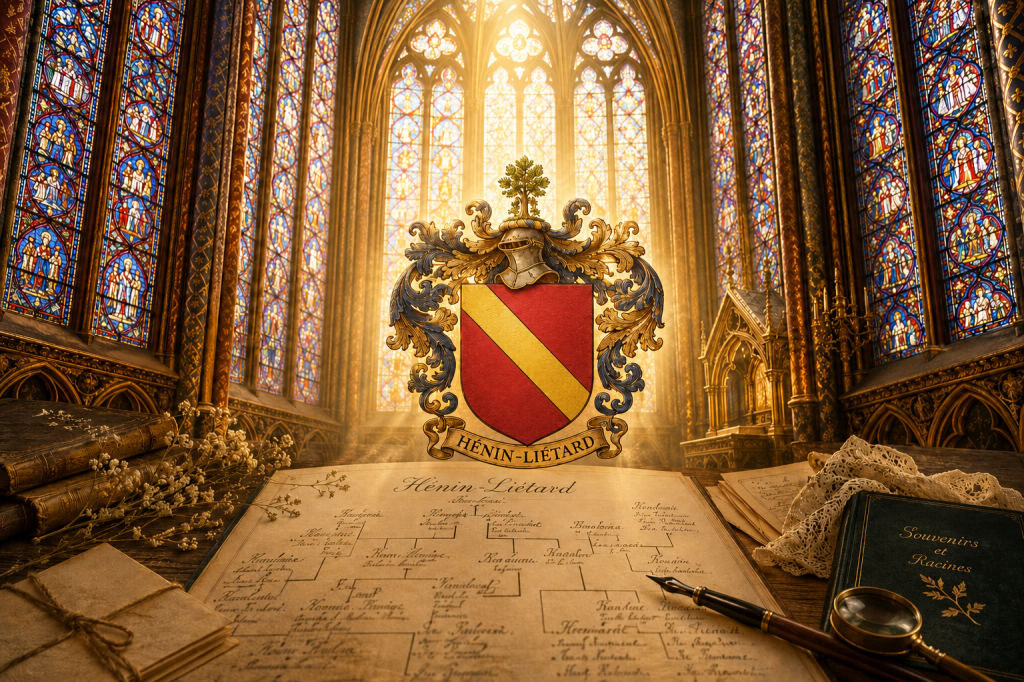
It was while researching the ancestry of Madeleine de Hénin-Liétard (ca 1640-after 1694) that I uncovered our first direct lineage to Louis IX of France and Margaret of Provence—a discovery I will never forget.
Madeleine de Hénin-Liétard: one of those ancestors we remember
By now, most genealogists come to accept a fascinating truth: if we go far enough back, we all connect—at some point—to royalty.
And yet… knowing this in theory is one thing.
Seeing it unfold in your own family tree is something entirely different.
About Madeleine de Hénin-Liétard
Madeleine lived in the 17th century. She was born at the end of the reign of Louis XIII of France, “the Just” and lived the rest of her life during the reign of his son, Louis XIV of France, “The Sun King”.
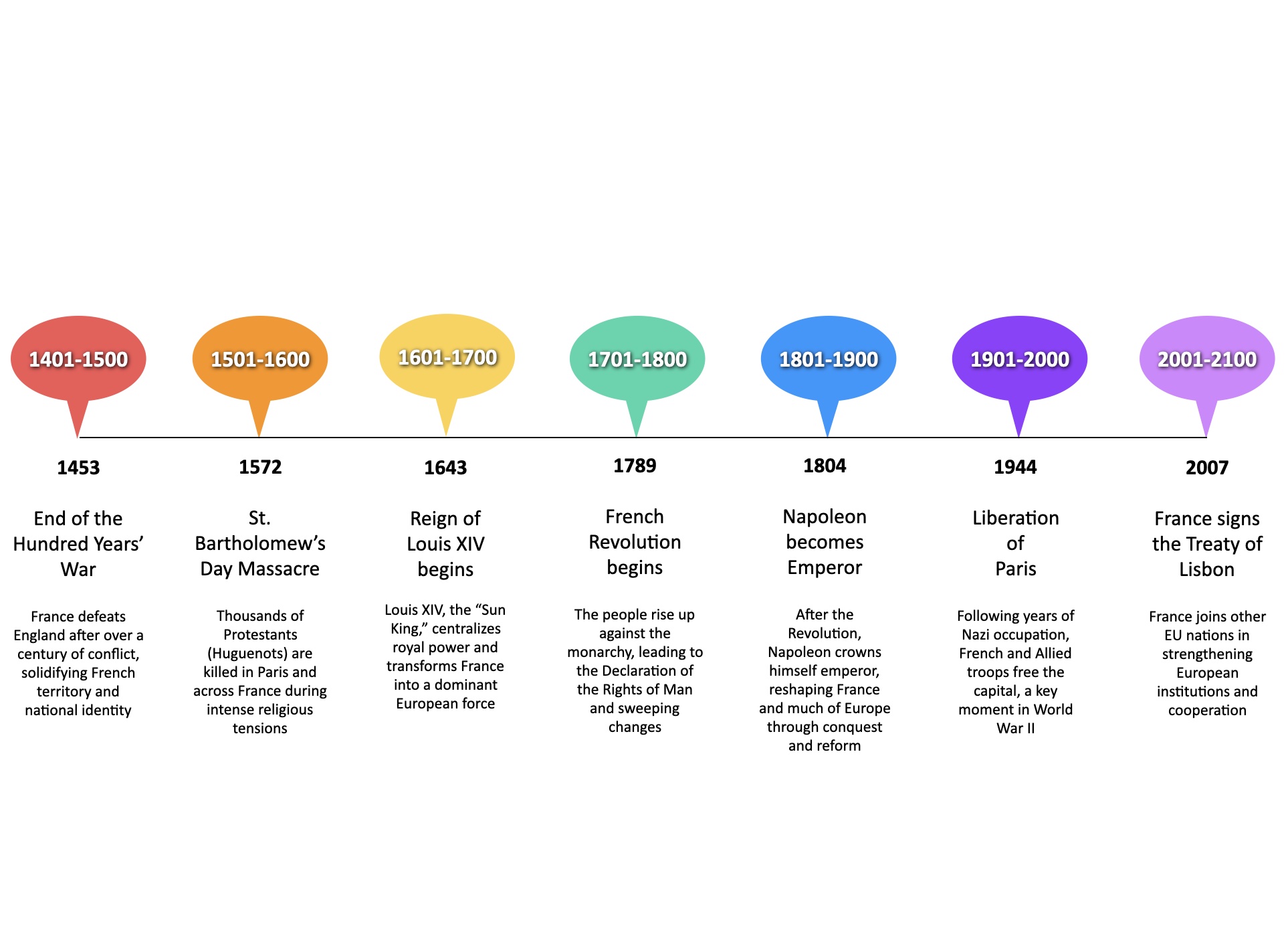
(See my Timeline page for the 17th and other centuries. Each century contains a few Historical events in France and in the World that might help you place your French ancestors within the events that shaped their lives).
I haven’t found neither Madeleine’s birth nor death records, yet. I only have her marriage contract, dated May 15, 1661. She married Charles I de L’Escuyer (ca 1633-1694), Lord of Montigny (Montigny-sur-Vence today) and co-Lord of Harzillemont (both fiefs of the Ardennes, France).
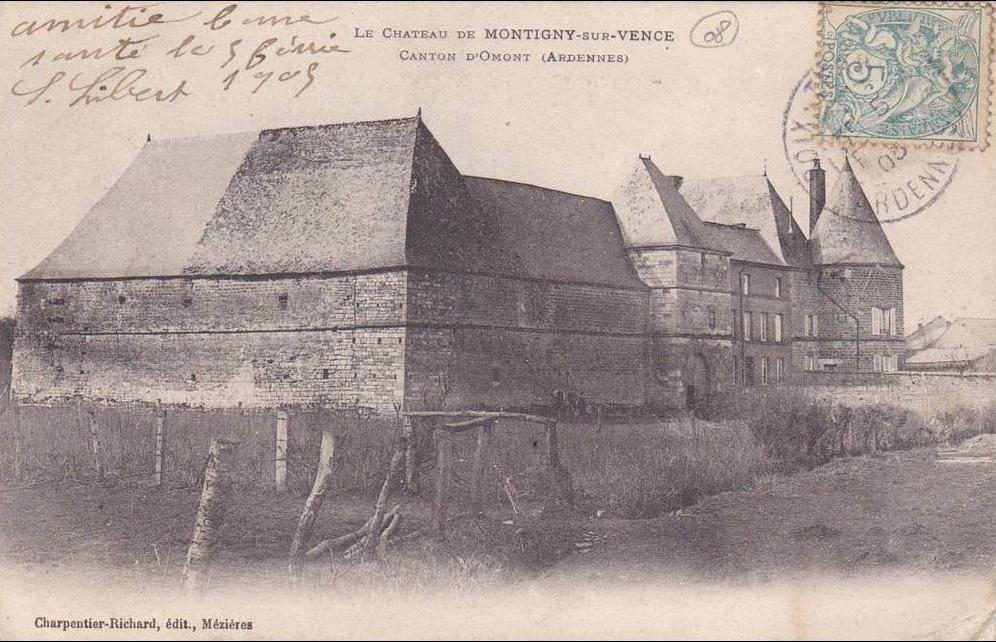
(Photo credit: Geneanet)
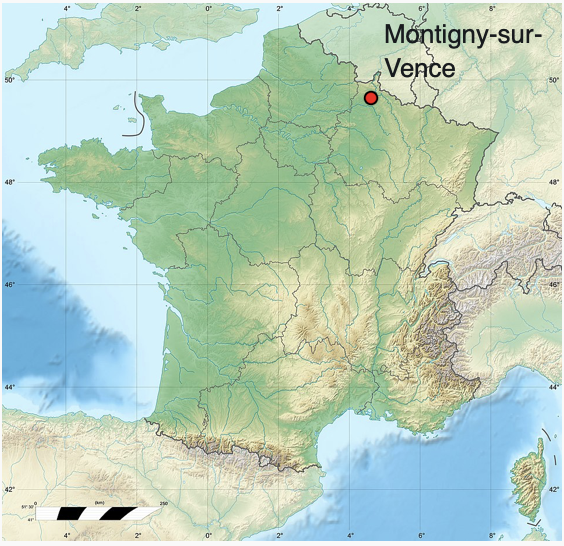
(Photo credit: Wikipedia)
They were the paternal great-grandparents of Charles Louis Joseph de L’Escuyer d’Hagnicourt, guillotined during the French Revolution (here is my post about him). As for Charles I de L’Escuyer, he was the great-grandson of Aléaume, another ancestor dear to my heart (here is my post about Aléaume).
When history becomes personal
Because I had already entered into my tree a multitude of individuals who made the history of France and Europe (and who, I must admit, were responsible for some of my less-than-stellar grades in history class long ago!), discovering Madeleine’s lineage to Louis IX of France and Margaret of Provence suddenly transformed them into something entirely different:
my direct ancestors.
I still remember the moment I realized what was happening.
I quite literally gasped.
From a 17th-century ancestor… to a 13th-century king:
genealogy collapses centuries in a single discovery.
In that moment, history stopped being something I had learned…
and became something I belonged to.
Louis IX of France (Saint Louis): A king unlike the others
Louis IX of France (1214–1270), known as Saint Louis, ruled France from 1226 until his death and remains one of the most admired kings in French history. Deeply committed to justice and faith, he was known for hearing the grievances of his subjects personally, sometimes seated beneath an oak tree, striving to rule with fairness rather than force. He strengthened royal authority while promoting moral governance, led two crusades, and left a lasting mark on Paris through the construction of the magnificent Sainte-Chapelle, built to house sacred relics. Canonized only a few decades after his death, he became a model of Christian kingship—so much so that his name still echoes across the world, from the Île-Saint-Louis in Paris, to St. Louis in Senegal, Missouri (U.S.), Brazil…), to the Cathedral-Basilica of Saint Louis, in New-Orleans (the list is very long).
A cascade of names… and meaning
Through Madeleine, my family line now connected to an extraordinary constellation of historical figures.
Among them:
- Philippa of Hainault and her husband Edward III of England
- His parents, Edward II of England and Isabella of France
- Philip IV of France and Joan I of Navarre
And beyond them, generation after generation:
- Philip II Auguste of France
- Eleanor of Aquitaine
- Henry II of England
- Geoffrey V of Anjou
- William the Conqueror
Not to mention the great families of Europe: Luxembourg, Burgundy, Valois, Castile, Aragon, Les Baux…
At that point, my head was spinning, and I remember thinking—half amused, half overwhelmed—
How on earth would I ever fit all of these names on a business card?
A different way to see history
There is something profoundly moving about discovering that the figures you once studied in school are no longer just distant names in a textbook—but part of your own story.
Had I learned history through genealogy, I suspect I would have paid much closer attention… and probably earned better grades!
So among all the names in my tree, Madeleine will always remain one of those I remember.
✨
Keep searching for your ancestors.
🌿 Genealogy on my Geneanet tree
Here are the links to several pages on my Geneanet tree related to individuals or events mentioned in this post: (FYI: on Geneanet, the little “green circle” on an individual’s image indicates my direct lineage with the individuals).
- Madeleine de Hénin-Liétard (ca 1640-after 1694) and her husband Charles I de L’Escuyer (ca 1633-1694)
- Their great-grandson Charles Louis Joseph de L’Escuyer d’Hagnicourt (1741-1793)
- Aléaume de L’Escuyer (before 1537-ca 1580) (great-grandfather of Charles I de L’Escuyer)
- Louis XIII “the Just” (1601-1643) and his son Louis XIV “The Sun King” (1638-1715)
- Louis IX of France (Saint Louis) (1214-1270) and his wife Margaret of Provence (1221-1295)
- Sainte-Chapelle of Paris (built by Louis IX in 1241)
- Philippa of Hainault (ca 1314-1369) and her husband Edward III of England (1312-1377)
- His parents, Edward II of England (1284-1327) and Isabella of France (ca 1291-1358)
- Her parents Philip IV of France (1268-1314) and Joan I of Navarre (1273-ca 1305)
- Philip II Auguste of France (1165-1223) and Isabella of Hainault (1170-1190) (paternal grandparents of Louis IX)
- Eleanor of Aquitaine (1122-1204) (also here in a previous post) and her second king husband Henry II of England (1133-1189)
- William the Conqueror (ca 1027-1087) and his wife Matilda of Flanders (ca 1032-1083)
- Geoffrey V Plantagenet, Count of Anjou (1113-1151) and his wife Empress Matilda (1102-1167)

