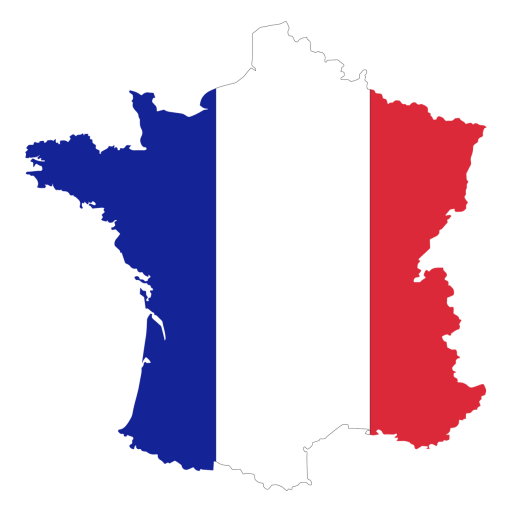
Aaaaah, yes… France and its long love affair with bread and cheese… I would know: I was born in the Brie region of France, where Brie de Melun is made! Melun lies right at the border between la Brie française and le Gâtinais.
Growing up, we would have a piece of baguette for breakfast, spread with butter and jam or honey, and dipped in hot chocolate. Baguette again at lunch (with anything), for an afternoon snack (with a chocolate bar), and at dinner (with anything).
When I was living in the 11th arrondissement of Paris, near Place de la Nation, there were a couple of bakeries on my way to the métro. The bread was baked in the basement, and they had ventilation grilles right at the sidewalk level! The smell was irresistible… You had to stop and buy something!
As for cheese, well… My parents probably added cheese to my baby bottles… I LOVE cheese! I can’t remember a meal without it! Except breakfast, of course. I can’t imagine dipping Roquefort in my hot chocolate or coffee…
After I remarried, my son Jérémy and I took David to France. It was his very first time in France, let alone outside of the United States (except for a quick trip to Canada when he was in high school).
During our first family meal with my parents, siblings, niece and nephews, David’s first reaction was: “I had no clue that such young children could eat all kinds of cheese, even the strongest ones, and actually go back for seconds!”
In France, cheese is often introduced to children at a young age, and developing an appreciation for different flavors is part of everyday food culture.
Why I’m even writing this post so early this morning is beyond me… Too late now: I guarantee you that we’re having cheese fondue tonight!! Yesterday’s Thanksgiving turkey leftovers will have to wait. (Happy belated Thanksgiving to anyone celebrating it!)
The breads of France
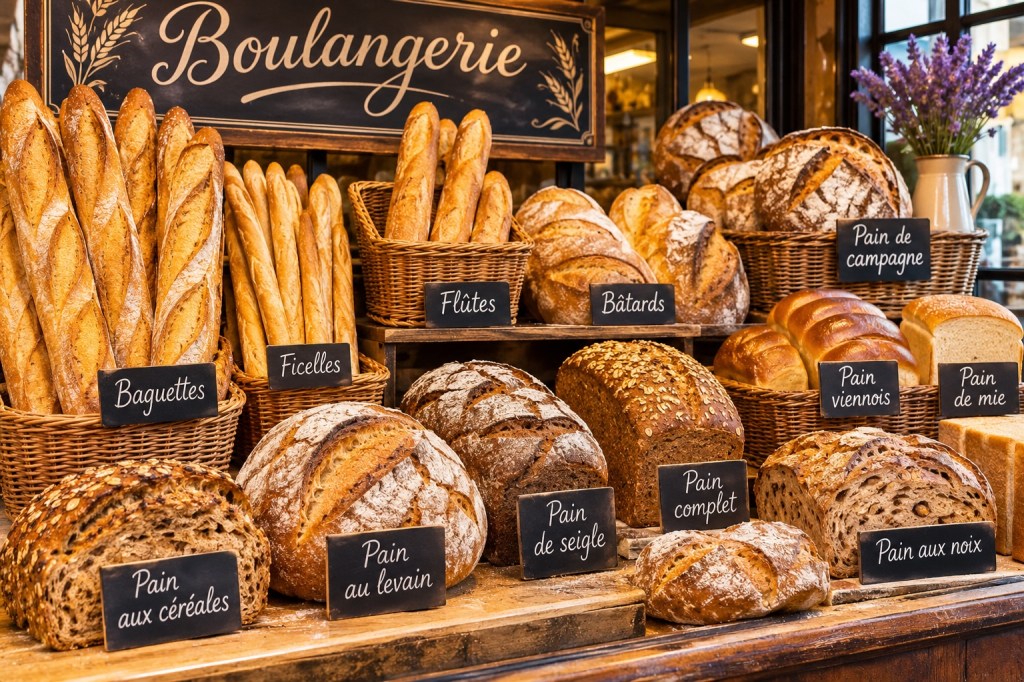
Baguette, pain de campagne, pain viennois, bâtard, ficelle, flûte, pain de mie, pain au levain, pain complet, pain bis, pain de seigle, pain aux céréales, pain aux noix…!!
And that’s just a small selection of the breads you’ll find in France!
For those who don’t speak French, here’s a little explanation guide:
- Baguette — Long, thin French bread
- Ficelle — Very thin, slender baguette
- Flûte — A longer or thicker baguette-style loaf, depending on the bakery
- Pain de campagne — Country bread
- Pain viennois — Viennese-style bread, slightly sweet and soft
- Bâtard — Shorter, thicker loaf than a baguette
- Pain de mie — Soft sandwich bread
- Pain au levain — Sourdough bread
- Pain complet — Whole-grain bread
- Pain bis — Partially wholemeal bread, traditionally made with less-refined flour
- Pain de seigle — Rye bread
- Pain aux céréales — Multigrain bread
- Pain aux noix — Walnut bread
In France, asking for bread is not quite as simple as walking into a bakery and saying, “I’ll have a loaf, please.” You need to know what you’re asking for! And believe me, the French take their bread seriously.
Let’s not forget the viennoiseries! (French pastries). Here are a few of them:
- Pain au chocolat — Buttery, flaky pastry filled with chocolate
- Croissant — Buttery, flaky crescent-shaped pastry
- Croissant aux amandes — Buttery, flaky crescent-shaped pastry with almonds
- Pain aux raisins — Swirled pastry with raisins
- Chausson aux pommes — Flaky pastry filled with apple compote
- Brioche — Rich, soft, slightly sweet enriched bread
Personally, I don’t discriminate. I’ll happily eat any of them.
The cheeses of France
No. Camembert is NOT the only cheese France has to offer. If that’s all you know, we need to have a serious conversation.
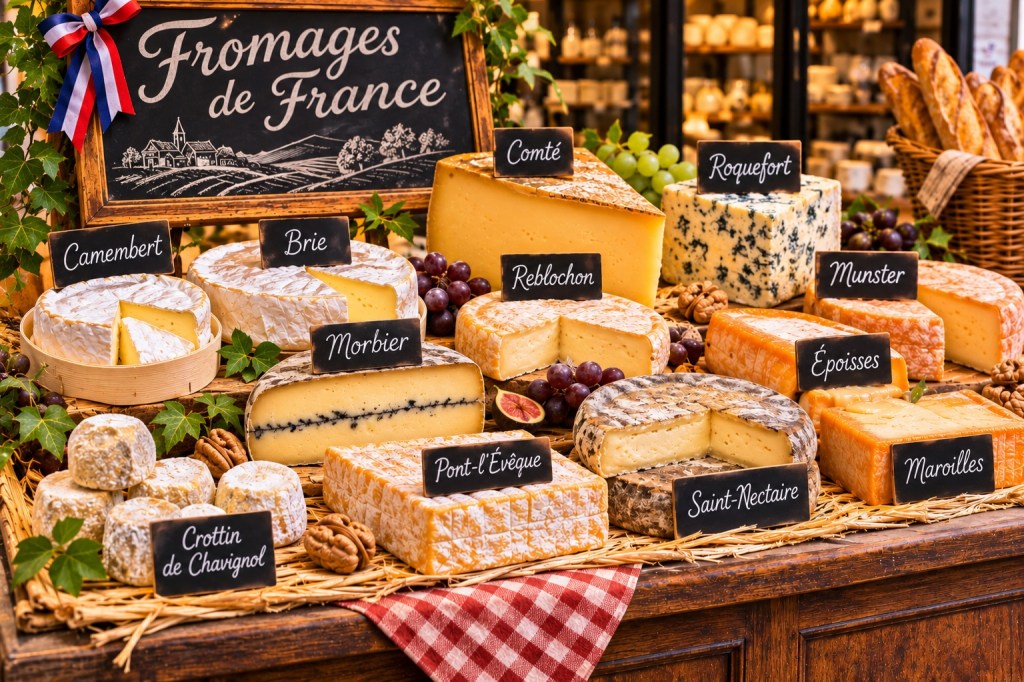
Camembert, Brie, Comté, Roquefort, Reblochon, Munster, Époisses, Morbier, Crottin de Chavignol, Pont-l’Évêque, Saint-Nectaire, Maroilles…!!
And that’s just a tiny taste of what’s waiting for you in France!
If you think all cheeses taste the same, you haven’t met Époisses, Roquefort, Munster, and their rather… distinctive personalities!
French cheeses are not all made from cow’s milk. France also has a wonderful tradition of goat’s milk and sheep’s milk cheeses. In France, even the animals contribute to our national heritage. Cows, goats and sheep: everybody has a role to play!
For those who don’t speak French, here’s a little explanation guide:
🐄 Cow’s milk cheeses (fromage au lait de vache)
- Camembert — Soft, creamy cheese with a white, bloomy rind
- Brie — Soft, buttery cheese with a delicate white rind
- Comté — Firm, aged cheese with a rich, nutty flavor
- Reblochon — Soft, creamy cheese with a washed rind
- Munster — Soft cheese with a distinctive orange rind and powerful aroma
- Époisses — Very creamy, pungent cheese with a washed rind
- Morbier — Semi-soft cheese traditionally marked by a thin layer of vegetable ash through its center
- Pont-l’Évêque — Soft, fragrant cheese with a washed rind
- Saint-Nectaire — Semi-soft cheese with an earthy, nutty flavor
- Maroilles — Soft cheese with an orange washed rind and a strong aroma
🐐 Goat’s milk cheeses (fromage au lait de chèvre)
- Crottin de Chavignol — Small goat’s milk cheese, ranging from fresh and mild to dry and tangy as it ages
- Rocamadour — Small, round, creamy goat’s cheese from southwestern France.
🐑 Sheep’s milk cheeses (fromage au lait de brebis)
- Roquefort — Strong, tangy blue cheese with distinctive blue-green veins
- Ossau-Iraty — Firm, smooth sheep’s milk cheese with a rich, buttery, nutty flavor and a slightly sweet finish. It comes from the Basque Country and Béarn, in the Pyrenees.
These are the traditional milk types for the named AOP cheeses. AOP stands for Appellation d’Origine Protégée, or Protected Designation of Origin. It is a European quality label that guarantees a product originates from a specific geographical area and is made according to established local traditions and specifications.
In short: if you find a Roquefort “made in California”, run! You haven’t found Roquefort. You’ve found an identity crisis in a cheese wrapper!
Some cheese families or similarly named products may have other versions, so the geographical designation matters.
Cheeses have their regions, too!
Just like French wines, French cheeses have their own regions of origin. Each region has its specialties, traditions, and flavors. From Normandy’s creamy cheeses to the mountain cheeses of the Alps, every corner of France has something delicious to offer.
And believe me, we are just as proud of our regional cheeses as we are of our wines!
Ze right way to eat cheese (yes… there is a right way and a wrong way…)
Don’t attack the cheese platter as if you haven’t eaten in three days. There is a certain order to these things. We are civilized people. Well… most of us… and most of the time…
Always start with the milder cheeses and finish with the super-duper-strong ones. If you did the opposite, your milder cheese might seem to have no flavor at all—or, rather, might taste like the strongest cheese you just ate.
Traditionally, cheese is served after the main course and before dessert. And it is generally presented on a platter rather than as a succession of individual portions. It’s called “plateau de fromages”.
When I was living in France, the proper étiquette was that if you were presented with a plateau de fromages featuring a wide selection of cheeses, you would take a small portion of only three different cheeses. Once you had finished those, you could go back and take another three. I’m not sure whether people still follow this tradition today, but that’s how I grew up with and remember it!
Did you know?
A famous saying, often attributed to Charles de Gaulle, goes: « Comment voulez-vous gouverner un pays où il existe 258 variétés de fromage ? » (“How can you govern a country that has 258 different varieties of cheeses?”)
Now… there are several different quotes with the actual number of cheeses varying, but you get the point. Cheese is in our DNA.
Speaking of which…
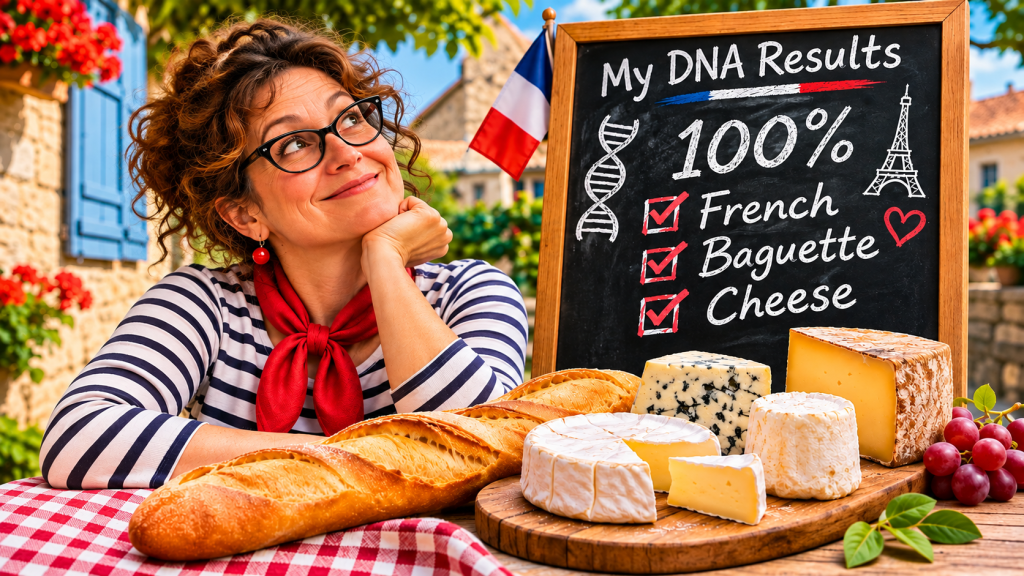
My DNA Results
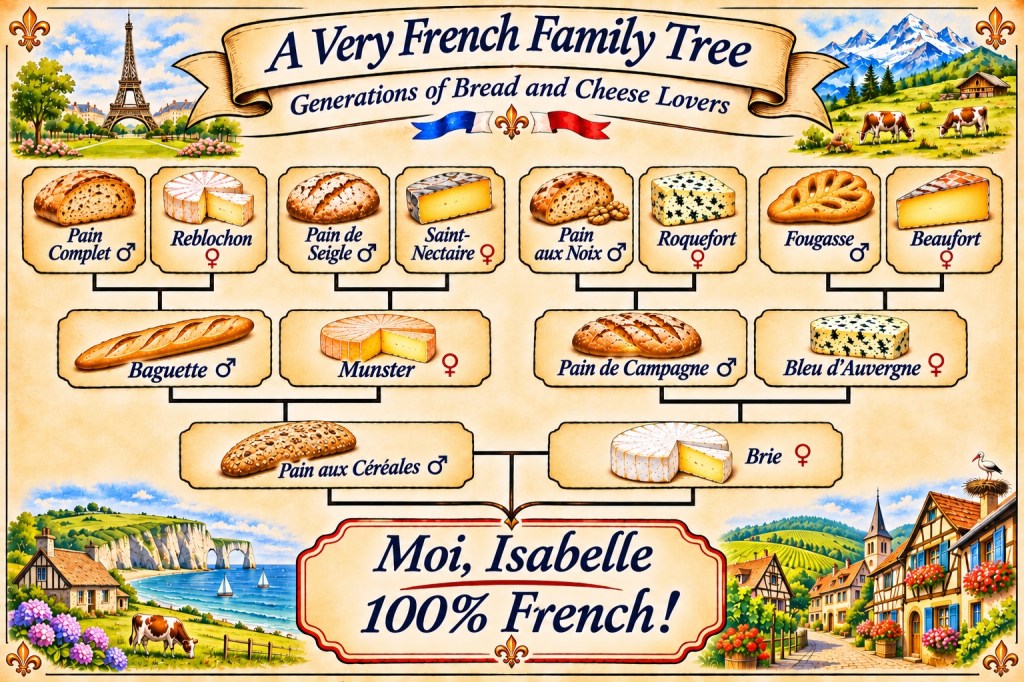
I don’t need to take a DNA test to discover my ancestry. I already know what the results would be: 100% bread and cheese!
I could spend money on a DNA test, wait weeks for the results, only to discover that my ancestors came from Normandy, Brittany, Burgundy, or Alsace.
Or I could simply look at my cheese platter and conclude that my ancestry is unmistakably French.
100% bread and cheese. 100% gluten-full. 0% lactose intolerance.
So, whether your ancestors came from Normandy, Provence, Brittany, Alsace, or anywhere in between, chances are they knew a thing or two about cheese.
My Cheese Fondue Recipe: Fondue Savoyarde
Anyone living in a foreign country knows that sometimes you simply can’t find the foods you grew up with. So you make do with what you have!
Cheese fondue is one of those dishes. There are several ways to prepare it, but a traditional fondue savoyarde is usually made with three cheeses.
My favorite version in France is made with Beaufort, Comté and Emmental. Here in Arizona, we’ve found Beaufort only once in 34 years… Not exactly a regular occurrence! We can usually find Comté and Gruyère at Costco, though, so that’s what I use for my fondue savoyarde. And if we happen to find Emmental, I add that too. (Gruyère is Swiss, but France and Switzerland are neighbors, so that works too!).
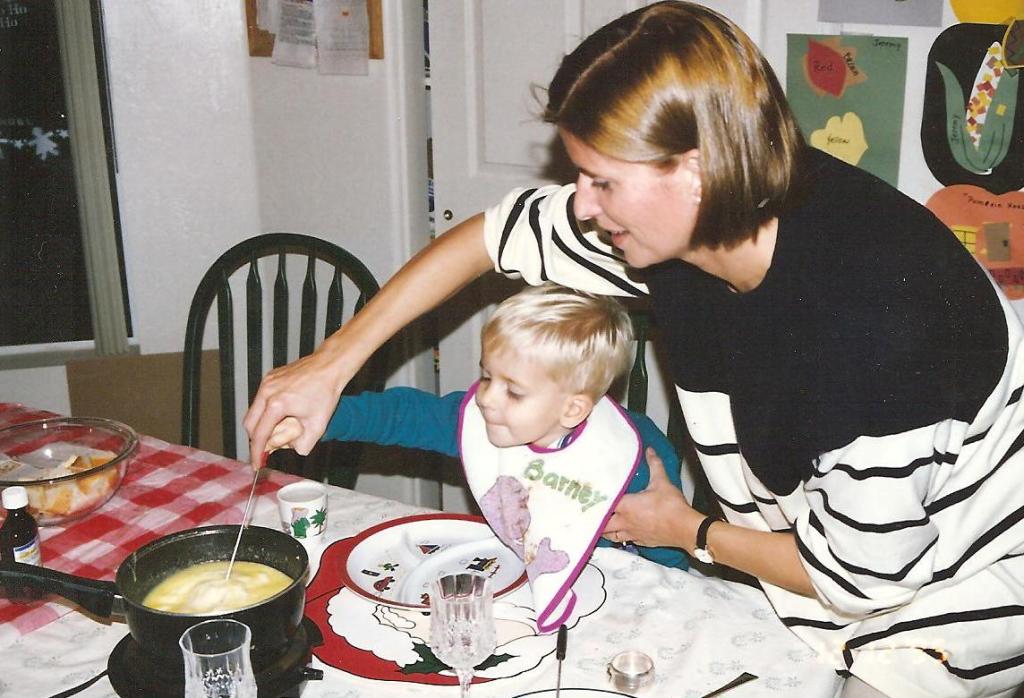
Here is my personal version of Fondue Savoyarde, which I’ve been making au pif for years, so the quantities below are approximate! Feel free to adjust the ingredients to get the consistency and flavor you like.
What you need
- A fondue pot with fondue forks, or a regular saucepan and regular forks.
- An electric or gel-fuel burner.
Ingredients
- 150 g of a cheese blend of your choice per person (approximately 5.3 oz, or 1/3 lb, per person)
- 1 garlic clove per person (I use Trader Joe’s frozen garlic cubes)
- 75-90 ml (1/3 cup) of white wine per person (adjust au pif!)
- Pepper
- Bread cut into large cubes (¾- to 1¼-inch cubes, making sure each piece has a little crust). Baguette, country bread, gluten-free bread, etc. — but choose a bread that’s firm enough to hold together when dipped.
Preparation
- Rub the inside of your fondue pot or saucepan with the crushed garlic.
- Grate the cheeses or cut them into thin slices, then add them to the pot.
- Add the wine.
- On the stove, melt everything over medium heat, stirring constantly with a wooden spoon.
- Once the cheese is completely melted and the mixture is smooth, add pepper.
- Bring the fondue pot or saucepan to the table and place it on the burner.
Let me know how it turned out!
Bon appétit !
✨

