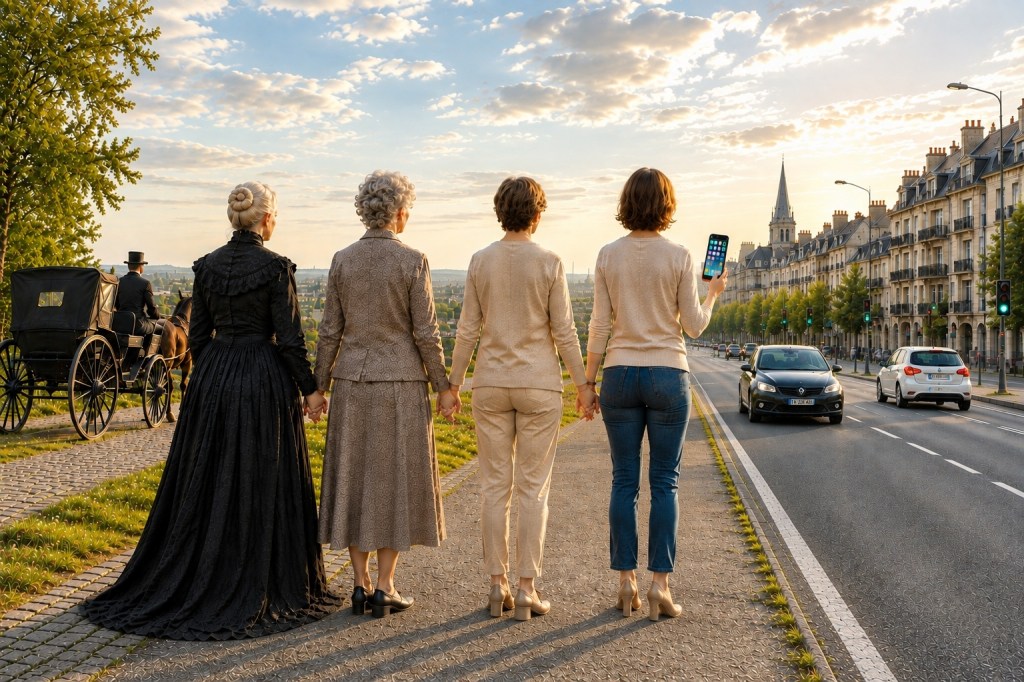
From my great-grandparents to me, four generations witnessed extraordinary progress, discoveries, breakthroughs, acts of courage, greater freedoms, and millions of people quietly making the world better. Here are some of the good things that happened between 1874 and 2026.
✨
I was sipping my coffee on the patio this morning, watching the sunrise over the mountains, and waiting in anticipation for the first birds to sing and fight for their breakfast (the early bird gets the worm, but the second mouse gets the cheese!). My very favorite time of the day! Hello, new day, full of promises!
Out of nowhere images started to pop into my mind of all the good things that have already happened during my own lifetime. I then got into a spiral of thinking about the good things that also happened during my parents’, my grandparents’, and my great-grandparents’ lifetimes.
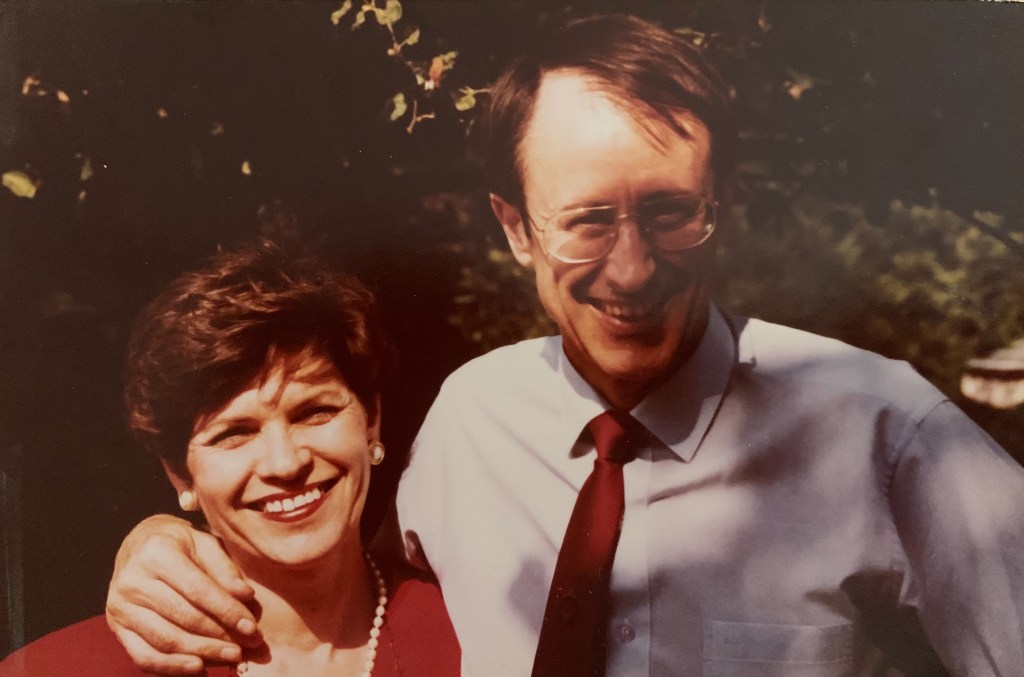
This is us:
My 8 great-grandparents’ lifetime: 1874–1974
My 4 grandparents’ lifetime: 1908–2016
My parents’ lifetime: 1942–2024
My lifetime: 1967–?
Together, our lifetimes span more than 150 years of history!! A century and a half!!
It seems to me that every generation has wondered at some point: “Can you imagine if, one day, this or that happened?” — “Running water and electricity in our house?” — “People flying like birds?” — “A man on the Moon?” — “No… not possible!” — “Why not have a computer in our hand?” — “Um… what’s a computer?”
And yet, somehow, those impossible things became reality—and so many more.
Here are some of the good things, interesting moments, and milestones in history, that happened during the lifetimes of my family. Some of the events below already appear in my Timeline of Historical Events, but not all of them.
🌿 My great-grandparents’ lifetime: 1874-1974
Meet my 8 great-grandparents (click on the image to view them on my Geneanet tree):

1874 — Birth of my oldest great-grandparent
1974 — Death of my last surviving great-grandparent
My eight great-grandparents witnessed an astonishing transformation of the world. Born into a world of horses, gas lamps, wells and limited medical care, they lived to see television, antibiotics, commercial aviation, nuclear energy and the beginning of the Space Age.
Click here to see (or hide) the good things, interesting moments, and milestones in history, that happened during my Great-grandparents‘ lifetime (1874-1974):
1874 🇫🇷 — Impressionism is born. The first Impressionist exhibition opens in Paris, featuring Monet, Renoir, Degas, Pissarro and others. The term Impressionism is coined by critic Louis Leroy after seeing Monet’s Impression, Sunrise.
1874 🌎 — The Universal Postal Union is established. Countries agree to cooperate on international postal services, making communication across borders easier.
1875 🇫🇷 — The Paris Opera’s Palais Garnier opens. A magnificent cultural landmark that remains one of Paris’s great symbols.
1876 🌎 — The telephone is patented by Alexander Graham Bell. ☎️
Communication is about to change forever.
1876 🌎 — Nikolaus Otto develops the practical four-stroke internal-combustion engine. 🚗
This becomes one of the foundations of the modern automobile. It will be demonstrated a year later.
1876 🇫🇷 — The first Impressionist exhibition is followed by a second, showing that the new artistic movement is becoming established rather than disappearing after its controversial debut.
1877 🌎 — Thomas Edison demonstrates the phonograph. 🎵
For the first time, people can record and reproduce sound. Suddenly, voices and music can survive beyond the moment in which they were created.
1877 🌎 — The telephone begins moving toward practical communication, with early telephone exchanges and switchboards appearing soon afterward.
1878 🇫🇷 — The first electric street lighting is demonstrated in Paris. 💡
Electricity is beginning to transform everyday urban life.
1878 🇫🇷 — The Exposition Universelle opens in Paris, showcasing new technology and inventions to an international audience, such as the first mass-marketed motor vehicle, “La Mancelle”, invented by Amédée Bollée.
1878 🌎 — The first practical hydroelectric power generation begins at Cragside in England. ⚡
1878 🌎 — Eadweard Muybridge’s photographic experiments capture movement frame by frame, an important step toward motion pictures. 🎞️
1879 🌎 — Thomas Edison demonstrates a practical long-lasting incandescent light bulb. 💡
Electric lighting begins its transition from scientific experiment to everyday technology.
1880 🇫🇷 — Pierre and Jacques Curie discover piezoelectricity. ⚡
Their discovery eventually becomes important in microphones, ultrasound, sensors and countless other technologies.
1880 🇫🇷 — Charles Louis Alphonse Laveran discovers the parasite responsible for malaria. 🦠 This is a very important medical milestone. His work eventually leads to our understanding of how malaria is transmitted and treated.
1880 🇫🇷 — Louis Pasteur develops a vaccine against chicken cholera and identifies the staphylococcus bacterium. 💉
1880 🌎 — The first electrically lit town, Wabash, Indiana, is illuminated by electric streetlights.
1881 🇫🇷 — Louis Pasteur develops a vaccine against anthrax and identifies the pneumococcus bacterium.
1881 🇫🇷 — Gustave Trouvé demonstrates the world’s first electric vehicle, a battery-powered electric tricycle, on a Paris street.
1881 🇫🇷 — The International Exhibition of Electricity opens in Paris, displaying technologies that would help shape the electrical age.
1881 🇫🇷 — Appearance of the first telephone box. ☎️ The first subscribers are connected to the network. In 1881 Lyon had 23 subscribers, Marseille 25 subscribers and Nantes 19 subscribers.
1882 🇫🇷 — The first permanent French electrical distribution network is established at Bellegarde-sur-Valserine. ⚡
1882 🌎 — The first trolleybus is demonstrated in Berlin, an early step toward electric urban transportation.
1882 🌎 — The first commercial electric fan appears.
It gives us a glimpse of electricity beginning to enter ordinary domestic life.
1883 🇫🇷 — The Pasteur Institute is founded in Paris. 🧪
Louis Pasteur establishes the institute devoted to research, infectious diseases, and vaccination. Its legacy in public health is enormous.
1883 🌎 — The Orient Express begins service. 🚂
The famous train begins connecting Paris with Constantinople (modern Istanbul), becoming a symbol of a world that is increasingly connected.
1884 🌎 — The International Meridian Conference establishes Greenwich as the prime meridian. 🌍
A wonderfully practical example of international cooperation: countries agree on a common reference for measuring longitude and, eventually, global timekeeping.
1884 🇫🇷 — The right to divorce is restored (Naquet Law).
1885 🇫🇷 — Louis Pasteur develops the first successful rabies vaccine. 💉
LouisPasteur successfully treats Joseph Meister, a nine-year-old boy bitten by a rabid dog. It is one of the great milestones in the history of medicine.
1886 🌎 — The Statue of Liberty, gift from the French to the U.S., is dedicated in New York. 🗽
Not a scientific breakthrough, of course, but an extraordinarily powerful symbol of liberty, friendship, and welcome.
1886 🌎 — Karl Benz’s automobile receives its patent. 🚗
One of the foundations of the modern automobile.
1888 🌎 — The Kodak camera is introduced. 📷
Photography becomes dramatically more accessible, allowing ordinary people—not just professional photographers—to preserve memories.
1888 🌎 — Nikola Tesla demonstrates the rotating magnetic field and alternating-current motor technology. ⚡
This becomes an important foundation of modern electrical power.
1889 🇫🇷 — The Eiffel Tower opens in Paris. 🗼
Built for the Exposition Universelle, it becomes an extraordinary symbol of engineering and modernity.
My great-grandfather Eugène Berjot was 3 years old when the construction began! He and his family lived just 7,5 km (4.5 miles) from the Eiffel Tower! I wonder if the family witnessed the construction and went to the opening.
Here is my post about this event: They lived 7,5 km from where the Eiffel Tower was being built
1889 🌎 — The Second International establishes May 1 as a day of international workers’ solidarity.
1890 🌎 — The first Pan-American Conference begins. 🤝
One of the early major attempts at systematic cooperation among the nations of the Americas.
1891 🌎 — Basketball is invented by Canadian physical education instructor James Naismith. 🏀
1893 🌎 — The World’s Columbian Exposition opens in Chicago, showcasing electricity, engineering, architecture and inventions to millions of visitors.
1893 🇳🇿 — New Zealand becomes the first self-governing country in which women have the right to vote in parliamentary elections. 👩🗳️
France wouldn’t follow until 1944.
1894 🌎 — The first international Olympic Congress is held, laying groundwork for the revival of the modern Olympic Games.
1895 🇫🇷 — Cinema is born. The Lumière brothers hold their first public film screening in Paris.
1896 🌎 — X-rays are discovered, revolutionizing medical diagnosis.
1896 🌎 — The first modern Olympic Games are held in Athens, reviving an ancient international tradition. Imagined by Frenchman Pierre de Coubertin, 14 nations participated in Athens from April 5 to April 15.
Decades later, my father became part of that Olympic history, competing in four Olympic Games in fencing and bringing a medal home each time: 1964 (Tokyo), 1968 (Mexico City), 1972 (Munich), and 1976 (Montréal).
Here is my page about the Olympic Games on Geneanet.
1898 🌎 — The first electric hearing aid is invented, using electricity to amplify sound and help people with hearing loss.
1901 🌎 — The first Nobel Prizes are awarded, recognizing achievements in science, literature and the pursuit of peace.
1903 🌎 — The Wright brothers achieve the first successful powered airplane flight.
1903 🇫🇷/🌎 — Marie Curie receives her first Nobel Prize in the field of Physics, shared with her husband Pierre Curie and physicist Henri Becquerel.
1905 🌎 — Albert Einstein publishes his groundbreaking work on relativity, transforming our understanding of space, time and energy.
1906 🇫🇷 — Beginnings of home electric lighting. New legislation regulated the distribution of electricity to families who had the “popular lamp” installed in their largest room.
1907 🇫🇷 — The age for marrying without parental consent becomes 21 for both men and women. Since 1804, women had been able to marry without parental consent at 21, while men had to wait until 25. The 1907 law finally abolished this distinction.
1908 🌎 — The Ford Model T enters production, helping make the automobile accessible to ordinary people.
1909 🇫🇷 — Louis Blériot crosses the English Channel by airplane, demonstrating the possibilities of aviation.
1911 🇫🇷/🌎 — Marie Curie receives her second Nobel Prize in the field of Chemistry, becoming the first person to win Nobel Prizes in two different scientific fields (Physics in 1903).
1914 🌎 — The Panama Canal opens, dramatically shortening sea routes between the Atlantic and Pacific.
1919 🌎 — First international commercial flight. Following a commercial flying boat service established in Florida in 1914, the world’s first international commercial flight took place between Paris and London; two days later, flights between Paris and Brussels began.
1920s 🌎 — Radio becomes a mass medium, bringing news, music and entertainment into people’s homes.
Around 1949, my great-grandmother Madeleine Lescuyer received her very first radio (TSF) as a gift. See my post about her here.
1928 🌎 — Penicillin is discovered by Alexander Fleming, opening the door to the antibiotic era.
1928 🌎 — Television technology takes a major step forward, with the first successful transatlantic television transmission.
1935 🇫🇷 — First television broadcast on the first French television channel.
1936 🇫🇷 — Paid annual leave and the 40-hour workweek are introduced in France, transforming working people’s lives.
1945 🇫🇷 — French women vote for the first time in the municipal elections of April 29, thanks to an order signed on April 21, 1944, by General Charles de Gaulle.
1945 🌎 — The United Nations is created, establishing a new framework for international cooperation.
1948 🌎 — The Universal Declaration of Human Rights is adopted, proclaiming fundamental rights for all human beings.
1948 🌎 — The World Health Organization (WHO) is established. (Organisation Mondiale de la Santé (OMS) in French)
1953 🌎 — The structure of DNA is discovered, opening the modern era of molecular biology.
1953 🌎 — Edmund Hillary and Tenzing Norgay reach the summit of Mount Everest.
1957 🌎 — Sputnik 1 becomes the first artificial satellite, beginning the Space Age.
1959 🌎 — Luna 2 becomes the first human-made object to reach the Moon.
1960 🇫🇷 — Washing machines begin becoming common in French homes, with about one household in four owning one, transforming the daily work of laundry. (Early washing machines could be filled manually with buckets, so some households could have a washing machine even without full indoor running water.)
My great-grandmother Madeleine Lescuyer never had a washing machine. She would go to the “lavoir” (the washhouse) to do the family’s laundry.
1960 🌎 — The first effective oral contraceptive pill becomes available, beginning a profound change in reproductive freedom.
1961 🌎 — Yuri Gagarin becomes the first human in space.
1962 🇫🇷 — Running water reaches most French homes, with about 78% of principal residences now having water inside the dwelling. 💧
My four maternal great-grandparents never had running water or electricity in their house. I am not sure about my paternal great-grandparents.
1966 🇫🇷 — Married French women can open a bank account and sign checks without their husband’s permission.
1967 🌎 — WHO launches an intensified worldwide campaign to eradicate smallpox, bringing countries on opposite sides of the Cold War together around a common goal.
1967 🌎 — Christiaan Barnard performs the world’s first human heart transplant. ❤️
1967 🇫🇷 — The Neuwirth Law legalizes contraception in France.
1969 🌎 — Apollo 11: humans walk on the Moon for the first time. 🌙
1974 🇫🇷 — Civil majority at 18 (previously, 21 was the age of majority).
1974 🌎 — WHO establishes the Expanded Programme on Immunization, bringing systematic vaccination against major childhood diseases to countries around the world.
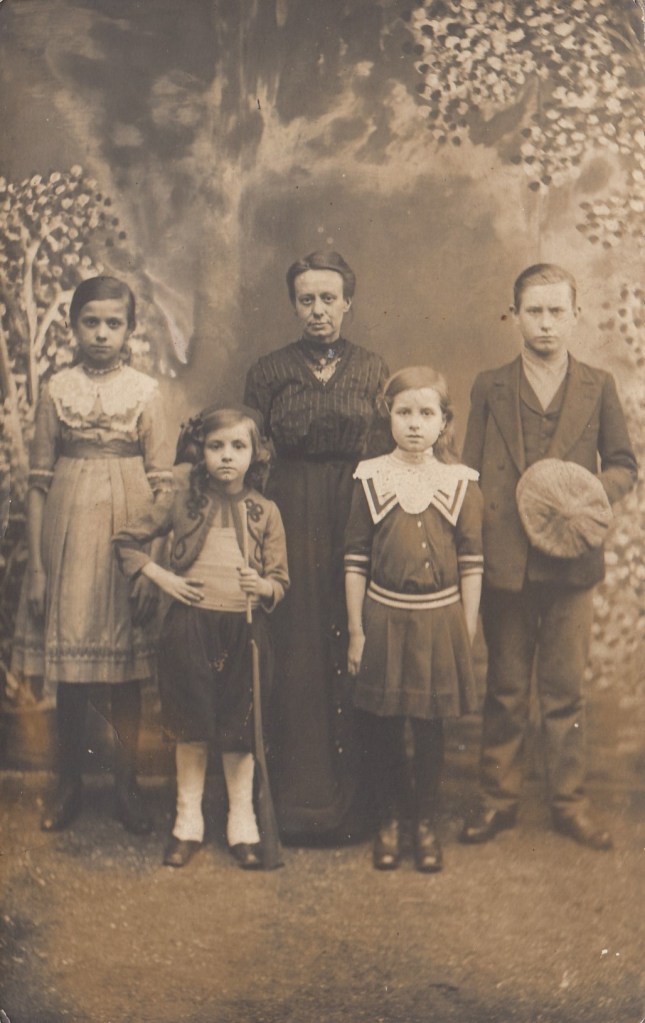
Marthe, my grandmother Irène (hand on her hip), Louise and Marcel.
Haumont, Nord-Pas-de-Calais, France, ca. 1916
🌿 My grandparents’ lifetime: 1908-2016
Meet my 4 grandparents (click on the image to view them on my Geneanet tree):

1908 — Birth of my oldest grandparent
2016 — Death of my last surviving grandparent
My four grandparents’ lives encompassed an extraordinary transformation: from a world before commercial aviation and television to one with the Internet, smartphones, genetic medicine and space telescopes.
Click here to see (or hide) the good things, interesting moments, and milestones in history, that happened during my Grandparents’ lifetime (1908-2016):
1908 🌎 — The Ford Model T enters production, helping make the automobile accessible to ordinary people.
1909 🇫🇷 — Louis Blériot crosses the English Channel by airplane, demonstrating the possibilities of aviation.
1911 🇫🇷/🌎 — Marie Curie receives her second Nobel Prize in the field of Chemistry, becoming the first person to win Nobel Prizes in two different scientific fields (Physics in 1903).
1914 🌎 — The Panama Canal opens, dramatically shortening sea routes between the Atlantic and Pacific.
1919 🌎 — First international commercial flight. Feb 7, 1919. Following a commercial flying boat service established in Florida in 1914, the world’s first international commercial flight took place between Paris and London; two days later, flights between Paris and Brussels began.
1920s 🌎 — Radio becomes a mass medium, bringing news, music and entertainment into people’s homes.
1928 🌎 — Penicillin is discovered by Alexander Fleming, opening the door to the antibiotic era.
1928 🌎 — Television technology takes a major step forward, with the first successful transatlantic television transmission.
1935 🇫🇷 — First television broadcast on the first French television channel.
1936 🇫🇷 — Paid annual leave and the 40-hour workweek are introduced in France, transforming working people’s lives.
1945 🇫🇷 — French women vote for the first time in the municipal elections of April 29, thanks to an order signed on April 21, 1944, by General Charles de Gaulle.
1945 🌎 — The United Nations is created, establishing a new framework for international cooperation.
1948 🌎 — The Universal Declaration of Human Rights is adopted, proclaiming fundamental rights for all human beings.
1948 🌎 — The World Health Organization (WHO) is established. (Organisation Mondiale de la Santé (OMS) in French)
1953 🌎 — The structure of DNA is discovered, opening the modern era of molecular biology.
1953 🌎 — Edmund Hillary and Tenzing Norgay reach the summit of Mount Everest.
1957 🌎 — Sputnik 1 becomes the first artificial satellite, beginning the Space Age.
1959 🌎 — Luna 2 becomes the first human-made object to reach the Moon.
1960 🇫🇷 — Washing machines begin becoming common in French homes, with about one household in four owning one, transforming the daily work of laundry. (Early washing machines could be filled manually with buckets, so some households could have a washing machine even without full indoor running water.)
My grandmother “Mamie Lu” spoke many times about the joy she felt when she got her first washing machine (around 1958). She would remind me that she had raised four children—and that meant a lot of laundry to wash by hand at the “lavoir”!
1960 🌎 — The first effective oral contraceptive pill becomes available, beginning a profound change in reproductive freedom.
1961 🌎 — Yuri Gagarin becomes the first human in space.
1962 🇫🇷 — Running water reaches most French homes, with about 78% of principal residences now having water inside the dwelling. 💧
1966 🇫🇷 — Married French women can open a bank account and sign checks without their husband’s permission.
1967 🌎 — WHO launches an intensified worldwide campaign to eradicate smallpox, bringing countries on opposite sides of the Cold War together around a common goal.
1967 🌎 — Christiaan Barnard performs the world’s first human heart transplant. ❤️
1967 🇫🇷 — The Neuwirth Law legalizes contraception in France.
1969 🌎 — Apollo 11: humans walk on the Moon for the first time. 🌙
1974 🇫🇷 — Civil majority at 18 (previously, 21 was the age of majority).
1974 🌎 — WHO establishes the Expanded Programme on Immunization, bringing systematic vaccination against major childhood diseases to countries around the world.
1976 🇫🇷🇨🇦 🏅 — The Concorde carries members of the French Olympic delegation to Montréal, in one of the aircraft’s inaugural passenger services, flying across the Atlantic at supersonic speed.
My father, Daniel Revenu, was among the French athletes who flew on the Concorde to the 1976 Olympic Games in Montréal, as a member of the French foil team. He always spoke with amazement about “passer le mur du son”—breaking the sound barrier—and watching the aircraft’s speed indicator as they flew at supersonic speed.
1978 🌎 — The world’s first baby conceived through IVF, Louise Brown, is born.
1980 🌎 — Smallpox is officially eradicated, the first human infectious disease to be eliminated worldwide.
1981 🇫🇷 — The 1980s music era begins, filling French radio and television with hits from France, Britain, the U.S. and beyond—and becoming the soundtrack of my teenage years.
1981 🇫🇷 — France abolishes the death penalty.
1982 🇫🇷 — Eddy Mitchell’s La Dernière Séance begins airing on French television, bringing classic American films and Westerns into French homes (see my own memories of this event in my own section).
1989 🌎 — The Berlin Wall falls after 28 years of separating families and dividing Berlin, becoming a powerful symbol of the end of the Cold War.
1990 🌎 — Nelson Mandela is released after 27 years in prison, beginning the final transition toward democratic South Africa.
1991 🌎 — The World Wide Web is released, beginning the transformation of global communication and access to information.
1994 🇫🇷/🇬🇧 — The Channel Tunnel opens.
1994 🌎 — South Africa holds its first democratic, multiracial election, and Nelson Mandela becomes president.
1997 🌎 — Mother Teresa dies after a lifetime devoted to helping the poor, sick, homeless and abandoned. The Missionaries of Charity she founded now have 594 missions in 123 countries, and her work has touched the lives of hundreds of thousands of people.
1999 🇫🇷 — PACS is introduced in France, giving legal recognition to couples regardless of sex.
2001 🌎 — The first draft of the human genome (our complete DNA sequence) is announced, opening new possibilities for medicine and genetics.
2002 🇫🇷/🇪🇺 — Euro banknotes and coins enter circulation, making European integration part of everyday life.
2004 🌎 — Facebook is launched, helping transform how people connect, communicate and share information online.
2007 🌎 — The iPhone is introduced, accelerating the smartphone revolution.
2010 🇫🇷 — Only 184 electric cars are registered in France.
2012 🌎 — The Higgs boson is discovered at CERN, confirming the existence of the Higgs field, which fills the universe and gives mass to many elementary particles.
2012 🌎 — A person with paralysis controls a robotic arm with their thoughts, allowing her to reach, grasp objects and even feed herself using a brain-computer interface. This was demonstrated by researchers at the University of Pittsburgh and UPMC.
2013 🇫🇷 — France legalizes same-sex marriage, becoming the 14th country in the world to do so.
2015 🇫🇷/🌎 — The Paris Agreement on climate change is adopted. It is signed in Paris on December 12, 2015, and enters into force the following year.
2016 🌎 — A paralyzed man feels through a mind-controlled robotic arm. Electrodes implanted in Nathan Copeland’s brain allowed him to control a robotic arm and, for the first time demonstrated in a human, experience sensations such as pressure and touch through the artificial hand.
2016 🌎 — Drones begin delivering blood and other medical supplies to remote communities in Rwanda, dramatically reducing delivery times to rural hospitals. The program later expanded to vaccines, medicines and other essential supplies.
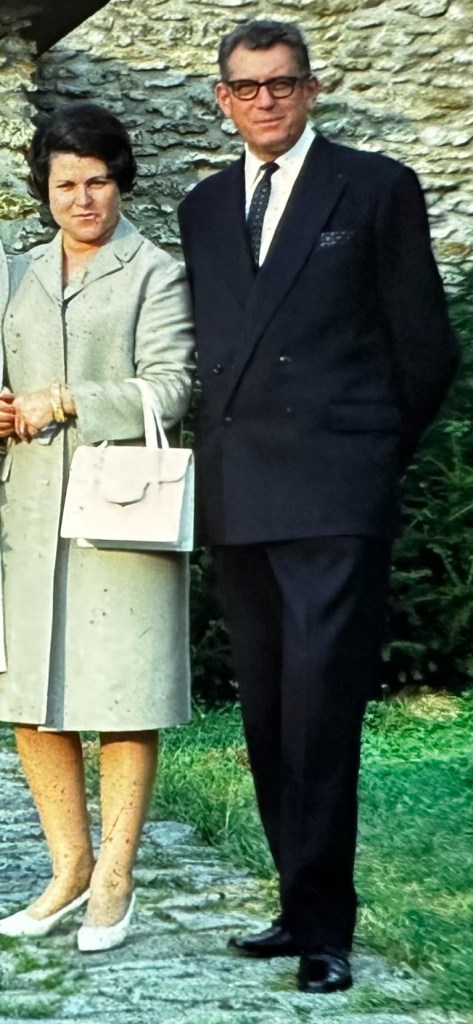
My grandparents, Lucienne (née Radet) and Paul Berjot. Normandie, France, ca. 1968
🌿 My parents’ lifetime: 1942-2024
My parents were born during World War II and lived long enough to see humans land on the Moon, the Internet emerge, the fall of the Berlin Wall, smartphones, the human genome, same-sex marriage and the James Webb Space Telescope.
Click here to see (or hide) the good things, interesting moments, and milestones in history, that happened during my Parents’ lifetime (1942-2024):
1945 🇫🇷 — French women vote for the first time in the municipal elections of April 29, thanks to an order signed on April 21, 1944, by General Charles de Gaulle.
1945 🌎 — The United Nations is created, establishing a new framework for international cooperation.
1948 🌎 — The Universal Declaration of Human Rights is adopted, proclaiming fundamental rights for all human beings.
1948 🌎 — The World Health Organization (WHO) is established. (Organisation Mondiale de la Santé (OMS) in French)
1953 🌎 — The structure of DNA is discovered, opening the modern era of molecular biology.
1953 🌎 — Edmund Hillary and Tenzing Norgay reach the summit of Mount Everest.
1957 🌎 — Sputnik 1 becomes the first artificial satellite, beginning the Space Age.
1959 🌎 — Luna 2 becomes the first human-made object to reach the Moon.
1960 🇫🇷 — Washing machines begin becoming common in French homes, with about one household in four owning one, transforming the daily work of laundry. (Early washing machines could be filled manually with buckets, so some households could have a washing machine even without full indoor running water.)
1960 🌎 — The first effective oral contraceptive pill becomes available, beginning a profound change in reproductive freedom.
1961 🌎 — Yuri Gagarin becomes the first human in space.
1962 🇫🇷 — Running water reaches most French homes, with about 78% of principal residences now having water inside the dwelling. 💧
1966 🇫🇷 — Married French women can open a bank account and sign checks without their husband’s permission.
1967 🌎 — WHO launches an intensified worldwide campaign to eradicate smallpox, bringing countries on opposite sides of the Cold War together around a common goal.
1967 🌎 — Christiaan Barnard performs the world’s first human heart transplant. ❤️
1967 🇫🇷 — The Neuwirth Law legalizes contraception in France.
1969 🌎 — Apollo 11: humans walk on the Moon for the first time. 🌙
My parents spoke about this moment many times, remembering how they watched Neil Armstrong take his first steps on the Moon with such emotion and wonder.
1974 🇫🇷 — Civil majority at 18 (previously, 21 was the age of majority).
1974 🌎 — WHO establishes the Expanded Programme on Immunization, bringing systematic vaccination against major childhood diseases to countries around the world.
1976 🇫🇷🇨🇦 🏅 — The Concorde carries members of the French Olympic delegation to Montréal, in one of the aircraft’s inaugural passenger services, flying across the Atlantic at supersonic speed.
My father, Daniel Revenu, was among the French athletes who flew on the Concorde to the 1976 Olympic Games in Montréal, as a member of the French foil team. He always spoke with amazement about “passer le mur du son”—breaking the sound barrier—and watching the aircraft’s speed indicator as they flew at supersonic speed.
1978 🌎 — The world’s first baby conceived through IVF, Louise Brown, is born.
1980 🌎 — Smallpox is officially eradicated, the first human infectious disease to be eliminated worldwide.
1981 🇫🇷 — The 1980s music era begins, filling French radio and television with hits from France, Britain, and the U.S..
This became the soundtrack of my teenage years—and, judging by how loudly I played it from my bedroom, probably the soundtrack of my parents’ headaches too!
1981 🇫🇷 — France abolishes the death penalty.
1982 🇫🇷 — Eddy Mitchell’s La Dernière Séance begins airing on French television, bringing classic American films and Westerns into French homes (see my own memories of this event in my own section).
1989 🌎 — The Berlin Wall falls after 28 years of separating families and dividing Berlin, becoming a powerful symbol of the end of the Cold War.
1990 🌎 — Nelson Mandela is released after 27 years in prison, beginning the final transition toward democratic South Africa.
1991 🌎 — The World Wide Web is released, beginning the transformation of global communication and access to information.
1994 🇫🇷/🇬🇧 — The Channel Tunnel opens.
1994 🌎 — South Africa holds its first democratic, multiracial election, and Nelson Mandela becomes president.
1997 🌎 — Mother Teresa dies after a lifetime devoted to helping the poor, sick, homeless and abandoned. The Missionaries of Charity she founded now have 594 missions in 123 countries, and her work has touched the lives of hundreds of thousands of people.
A personal connection: While volunteering at one of Mother Teresa’s homes in Paris in the mid-1980s, my mother had the opportunity to meet Mother Teresa herself. She never forgot their encounter.
1999 🇫🇷 — PACS is introduced in France, giving legal recognition to couples regardless of sex.
2001 🌎 — The first draft of the human genome (our complete DNA sequence) is announced, opening new possibilities for medicine and genetics.
2002 🇫🇷/🇪🇺 — Euro banknotes and coins enter circulation, making European integration part of everyday life.
2004 🌎 — Facebook is launched, helping transform how people connect, communicate and share information online.
2007 🌎 — The iPhone is introduced, accelerating the smartphone revolution.
2010 🇫🇷 — Only 184 electric cars are registered in France.
2012 🌎 — The Higgs boson is discovered at CERN, confirming the existence of the Higgs field, which fills the universe and gives mass to many elementary particles.
2012 🌎 — A person with paralysis controls a robotic arm with their thoughts, allowing her to reach, grasp objects and even feed herself using a brain-computer interface. This was demonstrated by researchers at the University of Pittsburgh and UPMC.
2013 🇫🇷 — France legalizes same-sex marriage, becoming the 14th country in the world to do so.
2015 🇫🇷/🌎 — The Paris Agreement on climate change is adopted. It is signed in Paris on December 12, 2015, and enters into force the following year.
2016 🌎 — A paralyzed man feels through a mind-controlled robotic arm. Electrodes implanted in Nathan Copeland’s brain allowed him to control a robotic arm and, for the first time demonstrated in a human, experience sensations such as pressure and touch through the artificial hand.
2016 🌎 — Drones begin delivering blood and other medical supplies to remote communities in Rwanda, dramatically reducing delivery times to rural hospitals. The program later expanded to vaccines, medicines and other essential supplies.
2019 🌎 — The first image of a black hole is revealed.
2019 🌎 — Medical drones expand to Ghana, delivering blood, vaccines, medicines and other essential supplies to hard-to-reach health facilities.
2020 🌎 — The first COVID-19 vaccines begin to receive emergency/conditional authorization, an extraordinary scientific achievement accomplished in less than a year.
2021 🌎 — The James Webb Space Telescope is launched, opening a new window onto the universe and helping us understand its origins, galaxies, stars and planets. 🔭🌌
2022 🌎 — Webb’s first images are released, revealing the universe in unprecedented infrared detail.
2022 🌎 — A wireless brain implant designed to provide artificial vision is implanted in a blind person for the first time. The device bypasses the retina and optic nerves and connects directly to the brain’s visual cortex, with the goal of helping people with blindness perceive visual information.
2022 🌎 — ChatGPT is launched, bringing generative artificial intelligence into the hands of the general public.
2023 🌎 — The first malaria vaccines begin to be recommended and deployed, bringing new hope in the fight against one of humanity’s oldest diseases.
🌿 My lifetime: 1967-…
I was born in France, in 1967, and what a time to be alive! I have witnessed humans walk on the Moon (well… I actually don’t remember Neil Armstrong that very day, but I saw this event many, many times on replays!), the birth of the Internet, smartphones, the sequencing of the human genome (DNA), artificial intelligence, and the James Webb Space Telescope. I am writing this post in 2026, but I’m planning on sticking around to see more wonderful events and what comes next!
Click here to see (or hide) the good things, interesting moments, and milestones in history, that have happened so far during my lifetime (1967-…):
1967 🌎 — WHO launches an intensified worldwide campaign to eradicate smallpox, bringing countries on opposite sides of the Cold War together around a common goal.
1967 🌎 — Christiaan Barnard performs the world’s first human heart transplant. ❤️
1967 🇫🇷 — The Neuwirth Law legalizes contraception in France.
1969 🌎 — Apollo 11: humans walk on the Moon for the first time. 🌙
I remember watching this historic moment with my family many times while growing up in France, as it was shown often on television. Seeing Neil Armstrong take those first steps on the Moon and hearing those famous words he spoke never lost its sense of wonder for me.
1974 🇫🇷 — Civil majority at 18 (previously, 21 was the age of majority).
1974 🌎 — WHO establishes the Expanded Programme on Immunization, bringing systematic vaccination against major childhood diseases to countries around the world.
1976 🇫🇷🇨🇦 🏅 — The Concorde carries members of the French Olympic delegation to Montréal, in one of the aircraft’s inaugural passenger services, flying across the Atlantic at supersonic speed.
My father, Daniel Revenu, was among the French athletes who flew on the Concorde to the 1976 Olympic Games in Montréal, as a member of the French foil team. He always spoke with amazement about “passer le mur du son”—breaking the sound barrier—and watching the aircraft’s speed indicator as they flew at supersonic speed.
1978 🌎 — The world’s first baby conceived through IVF, Louise Brown, is born.
1980 🌎 — Smallpox is officially eradicated, the first human infectious disease to be eliminated worldwide.
1981 🇫🇷 — The 1980s music era begins, filling French radio and television with hits from France, Britain, and the U.S..
This became the soundtrack of my teenage years—and, judging by how loudly I played it from my bedroom, probably the soundtrack of my parents’ headaches too!
1981 🇫🇷 — France abolishes the death penalty.
1982 🇫🇷 — Eddy Mitchell’s La Dernière Séance begins airing on French television, bringing classic American films and Westerns into French homes.
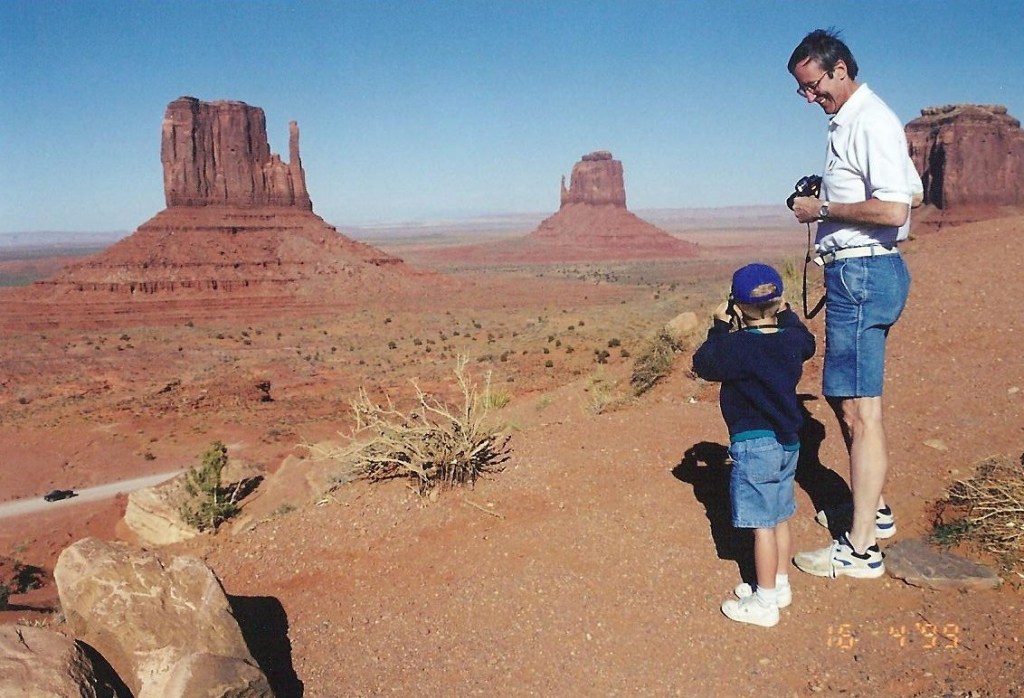
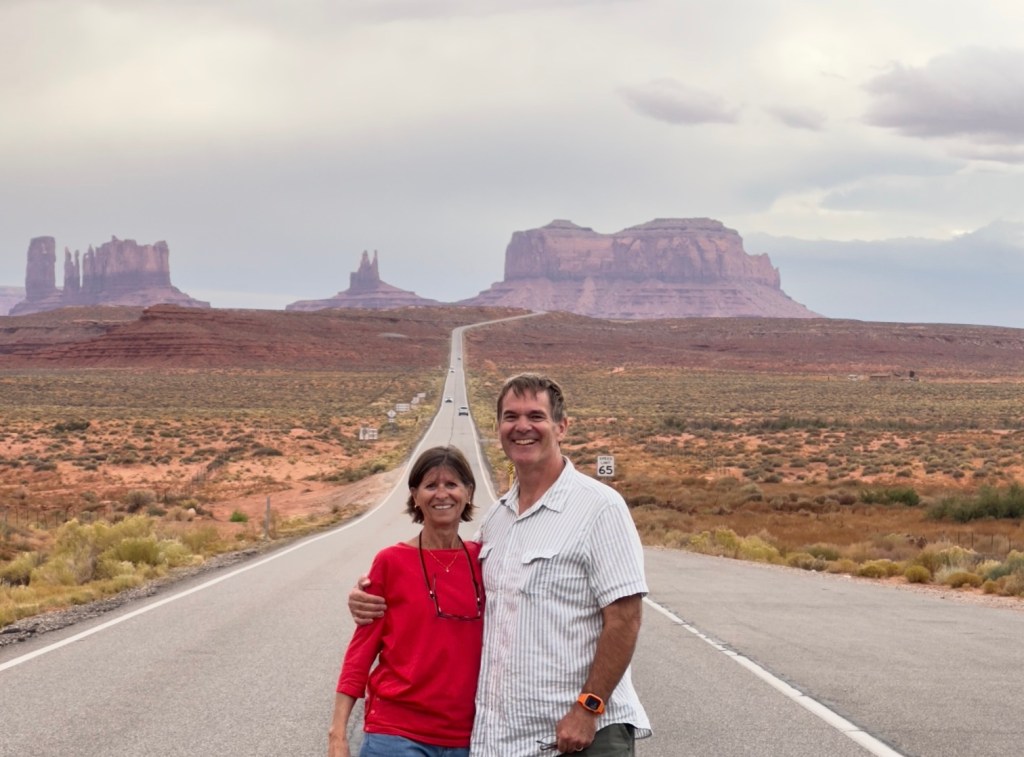
When I was a teenager, Tuesday nights were special in our house. It was time for “La Dernière Séance” with Eddy Mitchell, a French singer and actor with a deep love for American cinema and culture. My siblings and I were allowed to stay up and watch the first Western of the evening—there were two movies in a row—because we didn’t have school the next day. I absolutely loved Tuesday nights! I loved watching those Westerns, especially the ones filmed in Monument Valley.
I could never have imagined that one day I would be living just a few hours away from Monument Valley and visit that very place myself several times. And so, for the closing of my own section of this timeline, I chose a photo of my father and my son at Monument Valley in 1999, and another one of my husband and me in 2024.
1989 🌎 — The Berlin Wall falls after 28 years of separating families and dividing Berlin, becoming a powerful symbol of the end of the Cold War.
I vividly remember that day, watching this unfold in my little studio in Paris. What an extraordinary moment to witness… Seeing families reunited after 28 years of separation (since 1961) was just incredible and deeply moving.
1990 🌎 — Nelson Mandela is released after 27 years in prison, beginning the final transition toward democratic South Africa.
I also vividly remember that day and being deeply touched by his release. I remember wondering how anyone could possibly rebuild their life after so many years in captivity. And yet, Nelson Mandela did exactly that.
1991 🌎 — The World Wide Web is released, beginning the transformation of global communication and access to information.
1994 🇫🇷/🇬🇧 — The Channel Tunnel opens.
1994 🌎 — South Africa holds its first democratic, multiracial election, and Nelson Mandela becomes president.
1997 🌎 — Mother Teresa dies after a lifetime devoted to helping the poor, sick, homeless and abandoned. The Missionaries of Charity she founded now have 594 missions in 123 countries, and her work has touched the lives of hundreds of thousands of people.
A personal connection: While volunteering at one of Mother Teresa’s homes in Paris in the mid-1980s, my mother had the opportunity to meet Mother Teresa herself. She never forgot their encounter.
1999 🇫🇷 — PACS is introduced in France, giving legal recognition to couples regardless of sex.
2001 🌎 — The first draft of the human genome (our complete DNA sequence) is announced, opening new possibilities for medicine and genetics.
2002 🇫🇷/🇪🇺 — Euro banknotes and coins enter circulation, making European integration part of everyday life.
This one was funny. I visited my family in France in 1998, when the currency was still French francs. When I returned in 2003, there was a new currency! I remember feeling as if I were playing Monopoly—those banknotes looked so unusual to me! I even felt like I was in a foreign country, having to check the coins carefully to make sure I was giving the right amount of money. I half expected to hear: “Do not pass Go. Do not collect $200”!!
2004 🌎 — Facebook is launched, helping transform how people connect, communicate and share information online.
2007 🌎 — The iPhone is introduced, accelerating the smartphone revolution.
2010 🇫🇷 — Only 184 electric cars are registered in France.
2012 🌎 — The Higgs boson is discovered at CERN, confirming the existence of the Higgs field, which fills the universe and gives mass to many elementary particles.
2012 🌎 — A person with paralysis controls a robotic arm with their thoughts, allowing her to reach, grasp objects and even feed herself using a brain-computer interface. This was demonstrated by researchers at the University of Pittsburgh and UPMC.
2013 🇫🇷 — France legalizes same-sex marriage, becoming the 14th country in the world to do so.
2015 🇫🇷/🌎 — The Paris Agreement on climate change is adopted. It is signed in Paris on December 12, 2015, and enters into force the following year.
2016 🌎 — A paralyzed man feels through a mind-controlled robotic arm. Electrodes implanted in Nathan Copeland’s brain allowed him to control a robotic arm and, for the first time demonstrated in a human, experience sensations such as pressure and touch through the artificial hand.
2016 🌎 — Drones begin delivering blood and other medical supplies to remote communities in Rwanda, dramatically reducing delivery times to rural hospitals. The program later expanded to vaccines, medicines and other essential supplies.
2019 🌎 — The first image of a black hole is revealed.
2019 🌎 — Medical drones expand to Ghana, delivering blood, vaccines, medicines and other essential supplies to hard-to-reach health facilities.
2020 🌎 — The first COVID-19 vaccines begin to receive emergency/conditional authorization, an extraordinary scientific achievement accomplished in less than a year.
2021 🌎 — The James Webb Space Telescope is launched, opening a new window onto the universe and helping us understand its origins, galaxies, stars and planets. 🔭🌌
2022 🌎 — Webb’s first images are released, revealing the universe in unprecedented infrared detail.
2022 🌎 — A wireless brain implant designed to provide artificial vision is implanted in a blind person for the first time. The device bypasses the retina and optic nerves and connects directly to the brain’s visual cortex, with the goal of helping people with blindness perceive visual information.
2022 🌎 — ChatGPT is launched, bringing generative artificial intelligence into the hands of the general public.
2023 🌎 — The first malaria vaccines begin to be recommended and deployed, bringing new hope in the fight against one of humanity’s oldest diseases.
2024 🇫🇷 — France constitutionally protects the freedom to access abortion.
2024 🇫🇷/🌎 — Paris hosts the Olympic and Paralympic Games, bringing athletes from around the world together.
2024 🇪🇺 — Ariane 6 makes its inaugural flight, strengthening Europe’s independent access to space.
2026 🇫🇷 — More than 1.4 million fully electric cars are now in circulation in France.
2026 🌎 — Women continue to break barriers, flying airplanes, leading companies, and working as scientists, astronauts, surgeons, and presidents…
The two photos below are to illustrate my event titled “1982 🇫🇷 — Eddy Mitchell’s La Dernière Séance begins airing on French television“.
✨
Sources to prepare this timeline page: Merci à Geneanet, FamilySearch, Wikipedia.

