At first glance, genealogy may seem like a solitary hobby. One person. One family tree. One archive at a time.
But the reality is completely different.
Every day, thousands of people around the world photograph parish registers, transcribe old records, preserve cemeteries, index censuses, restore archives, translate ancient handwriting, publish articles, answer questions in genealogy forums, and share family trees online.
Each contribution may seem small on its own. But together, they create something extraordinary.
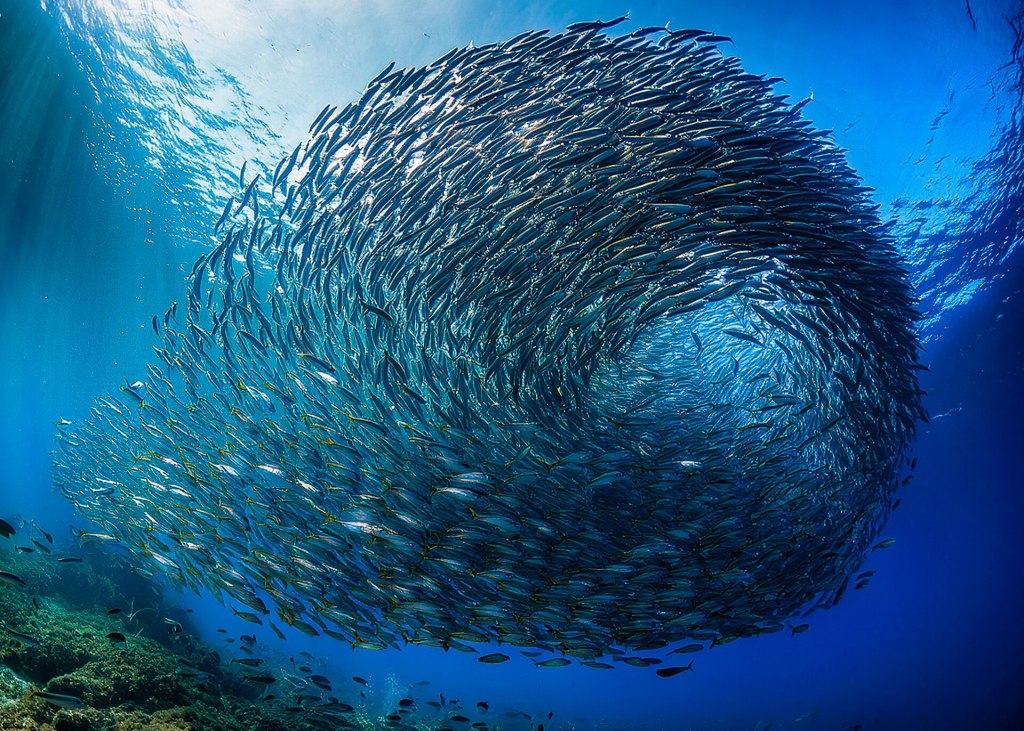
Just like the fish in this photograph. No single fish creates the beautiful swirling pattern. The pattern exists because each one responds to the movements of the others.
Life works much the same way. So does genealogy. Perhaps you discover the birthplace of an ancestor and publish it online. Years later, someone else recognizes the surname, connects another family branch, or finds the missing marriage record that had remained hidden for centuries.
Without ever meeting, people separated by countries, languages, and generations help one another reconstruct the stories of families that would otherwise have been forgotten.
That, to me, is a wonderful example of what I like to think of as our collective consciousness. In a deeply human sense, but also in a mystical one.
Each of us carries only a tiny fragment of knowledge. When we willingly share those fragments, they become part of something much larger than ourselves.
Genealogy is built that way.
Science advances that way.
History is preserved that way.
And perhaps that’s one of the most beautiful aspects of genealogy. We’re not simply researching the past. We’re participating in an ongoing conversation across generations, leaving behind a little more knowledge than we ourselves received.
✨
About the photograph:
Earlier this month, I received an email that included the photograph featured in this post. I was literally drawn to the image. Before I even thought about who had sent the email, I immediately thought, “That’s exactly what life—and genealogy—are to me. We are all together.”
The email was from the Wikimedia Foundation, thanking me for supporting their mission (I have been donating to them for several years now).
I very often rely on Wikipedia—not only for everyday questions, but also for my genealogy research. Whether I am looking up an unfamiliar historical figure or one of my own ancestors, understanding an old province of France, learning about a battle, a religious order, or a forgotten village, Wikipedia is often my first stop before diving into archival records and specialized sources.
After benefiting from this incredible resource for so many years, I felt it was only fair to give something back. So, a few years ago, I became a regular donor to the Wikimedia Foundation.
I simply love what Wikipedia represents. No advertising. Articles available in dozens of languages. References listed at the bottom of nearly every page. Thousands of volunteers sharing knowledge freely with anyone, anywhere in the world. In a time when so much information sits behind paywalls or subscription services, that feels almost extraordinary.
In their emails, they always include the following sentence: “Less than 2% of readers give.” Now, I certainly wasn’t in the top 2% of my mathematics classes growing up… But I have to admit. Being part of the 2% of readers who help keep this remarkable project alive is something I’m genuinely proud of.
Thank you to all the volunteers at Wikipedia whose countless hours of work make knowledge freely available to millions of people around the world.
Image credit: Wikimedia Commons

