
The first census of the “modern era” in France took place in 1801. Starting in 1946, date of the creation of the INSEE (Institut National de la Statistique et des Études Économiques, National Institute of Statistics and Economic Studies), all the “communes” (villages, towns) of France have been listed at irregular intervals (every 6 to 9 years). The general population censuses ended in 1999. Since 2004, the census has been based on an annual collection of information, successively concerning all towns with less than 10,000 inhabitants and 40% of towns with more than 10,000 inhabitants. (Source: INSEE).
The census is a great way to find out more information about your ancestor. Did you have difficulty finding their birth record? Maybe the census will indicate that they were born in Italy! (No, I don’t have an Italian website… my knowledge of Italian stops at “ravioli”, “spaghetti”, and “pizza”!).
You will also find their year or birth, or age, but keep in mind that it should only be an indication. There’s always the possibility that the person recording the information made an error, or that the person giving their age “cheated” about it. However, it’s a great indication of when and where to search for their birth record since usually the place of birth is also indicated, as well as their nationality.
Information usually located on census records:
- Name of the neighborhood or town
- Street name in the town
- House number
- Family number
- How many individuals are living at this address in this particular family
- Last name of each person
- First/middle name of each person
- Year of birth
- Place of birth
- Nationality
- Relationship to the head of household
- Profession
- Whether this person is a business owner or an employee
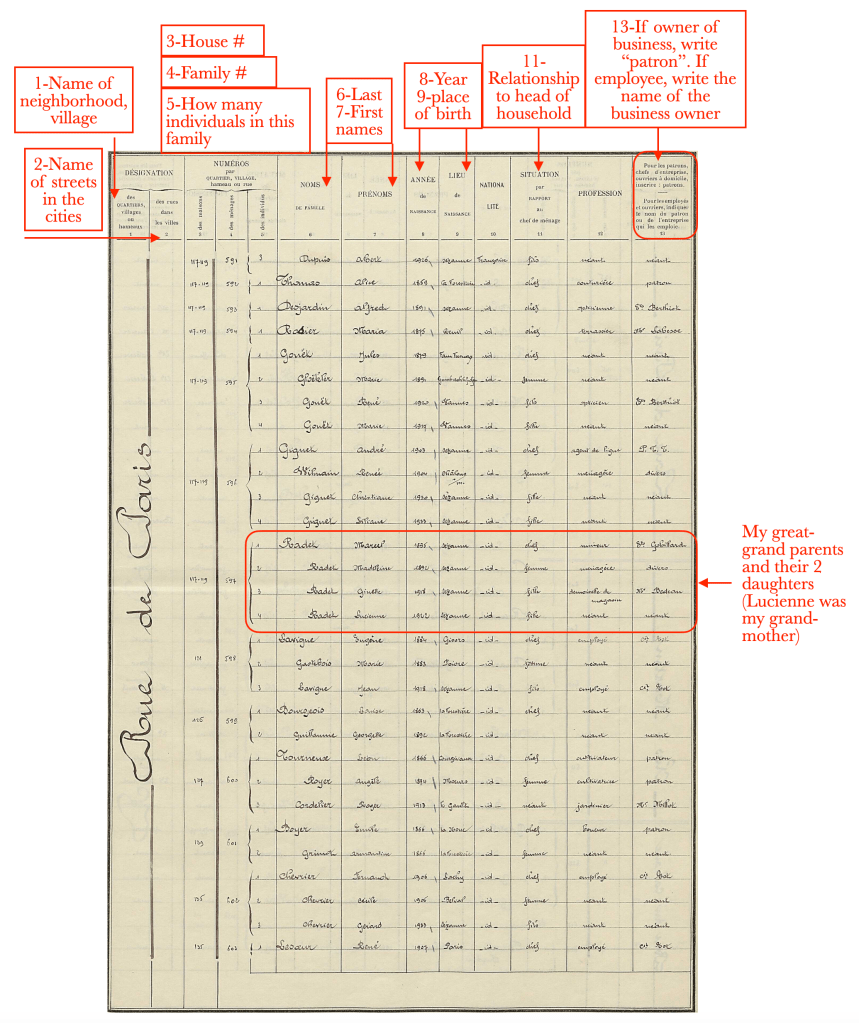
Archives départementales de la Marne. Vue 29 of 85
Example to access census records
I will give the steps to find my great-grandparents census record in Sézanne (51), using the site of the Archives de la Marne.
1) Go to the online departmental archives
- Do an online search for “Archives de la Marne“.
- Go to their site: https://archives.marne.fr/.
- In the top menu, hover over “Rechercher” (“research”) and select “Archives numérisées” (online archives).

You should arrive on this page:
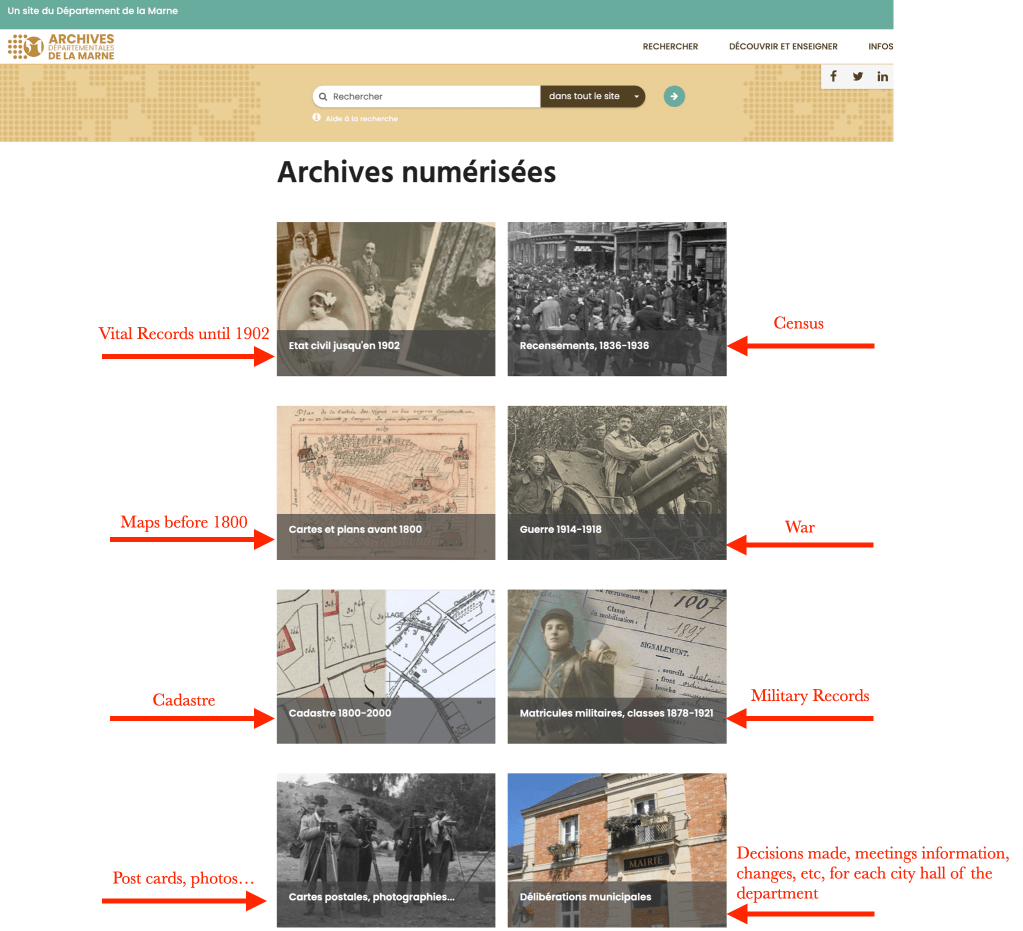
- Click on “Recensements, 1836-1936“
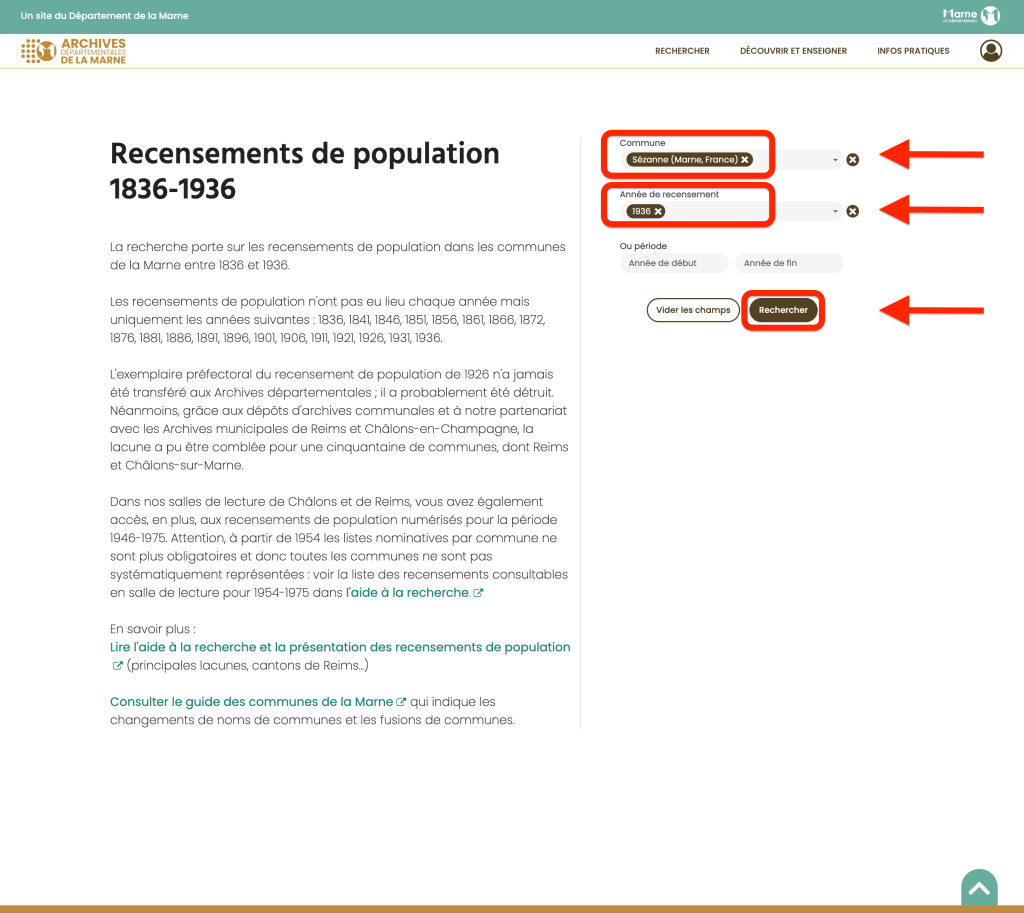
- In the upper right corner, under “Commune” (city, town), use the drop-down menu to select the city (certain websites will give you an error message if you don’t type the exact name of the city, for instance with an accent. If available, locate the city using the drop-down menu of the site). For example, if you type “Sezanne” with no accent, you will see “aucun résultat“, which means “no result”. However, Sézanne (with an accent) is listed in the drop-down menu.
- In the “Année de recensement” field (census year), use the drop-down menu to view the census years available, and select the one you need. You can also search within a range of years (année de début, année de fin).
- Click on “Rechercher” (search).
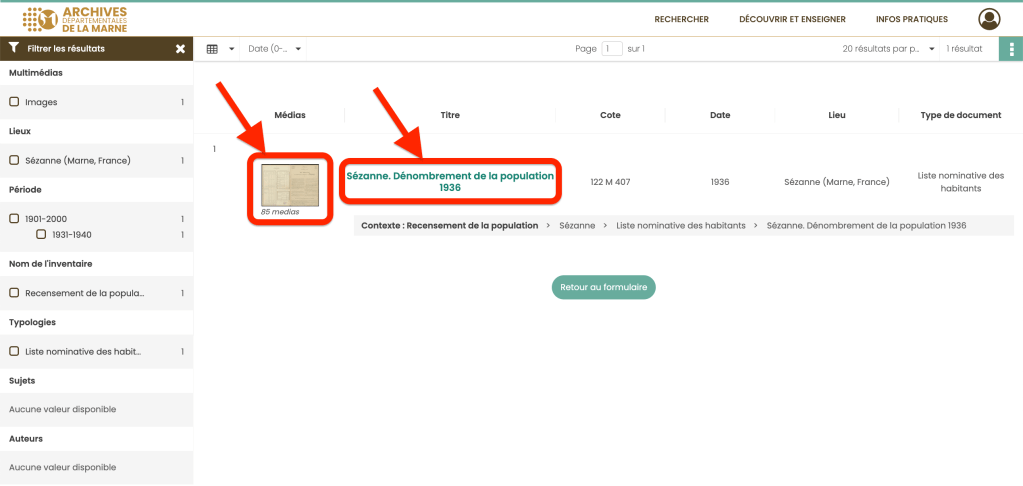
- You’ll see the page below. Click either on the media link, or on the title link.
- Click on an image to open the actual census document.
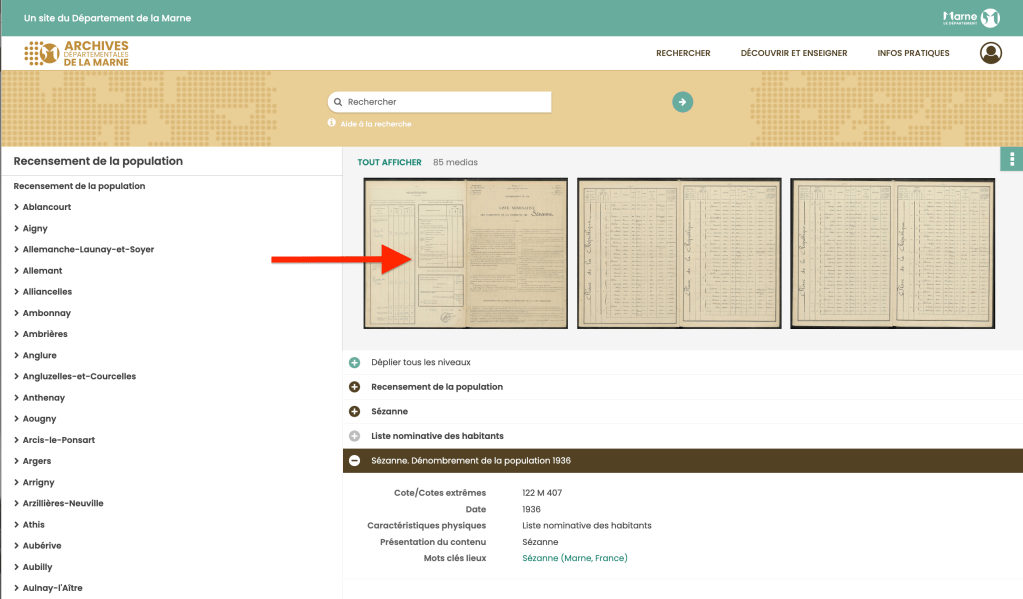
- Click on an image. The first image opens the very first page of the register.
- Search through all the pages to find your ancestors’ family members. As you go through pages, get familiar with the names of individuals, as well as the names of the streets. I found that very often, people stayed quite a few years in the same house or street, and with the same neighbors. Those neighbors might even become friends and/or godparents of the new children.
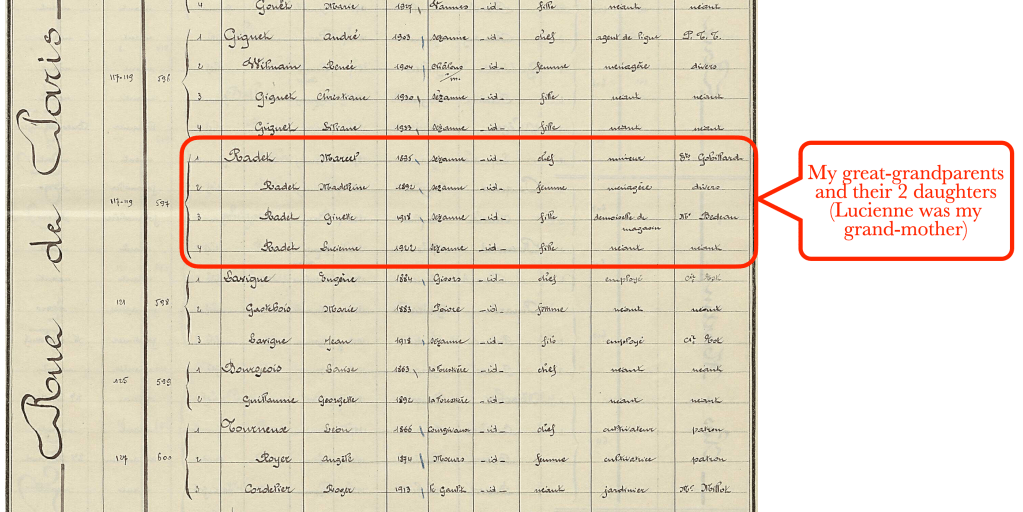
Archives départementales de la Marne. Vue 29 of 85
 My French Lineage