

François Théodore Berjot was my 3rd great-grandfather (great-great-great-grandfather). He was born the day after Christmas 1814, in Montenils, Seine-et-Marne, just an hour and a half from where I grew up!
He was the son of Eleonor Pélagie Delorosoy (1790-1878) and Jean Baptiste Louis Berjot (1786-1861), my ancestor who almost died at birth (see my post about him: “Enfant en danger de mort”: The Baptism Record That Almost Ended My Lineage).
François Théodore Berjot married Rosalie Julienne Alexandrine Rouillon on March 29, 1843, in Marchais-en-Brie, Aisne, commune where she was born. Note that Marchais-en-Brie was merged in 2016 into the new commune Dhuys-et-Morin-en-Brie.
This is them on my Geneanet tree (click the image to access it). As a reminder, the little “green circle” indicates my direct lineage. So on their descendance, Émile Zacharie Berjot is my ancestor.
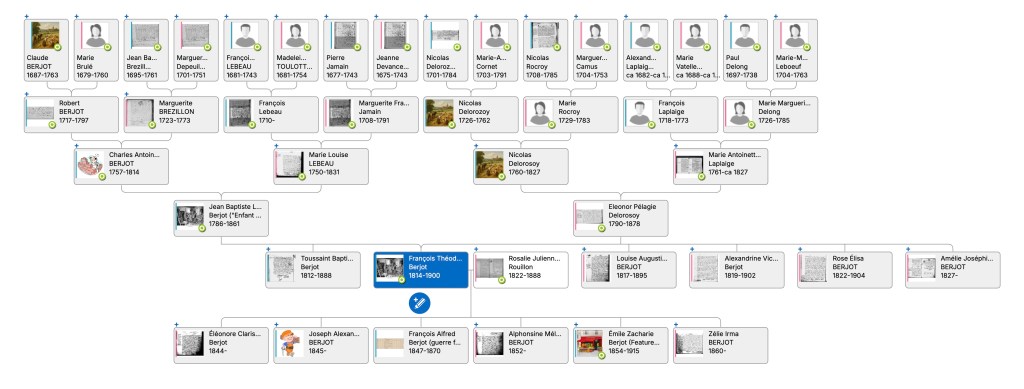
I first found them living in Montenils on the 1866 census, town where they spent all their life. However, sometime after Rosalie Julienne Alexandrine’s death on November 10, 1888, François Théodore moved to Mécringes, Marne, where he died on June 4, 1900.
So the three major events of his life were in three different towns and in three different départements!
- Birth: Montenils (Seine-et-Marne)
- Marriage: Marchais-en-Brie (today Dhuys-et-Morin-en-Brie) (Aisne)
- Death: Mécringes (Marne)
No cars back then! They had to walk or travel by horse-drawn cart. How did François Théodore and Rosalie Julienne Alexandrine meet? In what circumstances?
The next logical step was to visit Google Maps… And… Aaaaah… Now I understand better! While those three towns are each located in a different département, they are at the junction of each département, and very close to each other!
I had been wondering how he managed to live his life in three different départements. Turns out they were practically neighbors! I thought that was funny (it doesn’t take much to amuse me…)
Here are the distances shown on Google Maps:
- Marchais-en-Brie (Aisne) to Montenils (Seine-et-Marne): 1h14m-walk (9-minute drive).
- Montenils (Seine-et-Marne) to Mécringes (Marne): 1h-walk (5-minute drive).
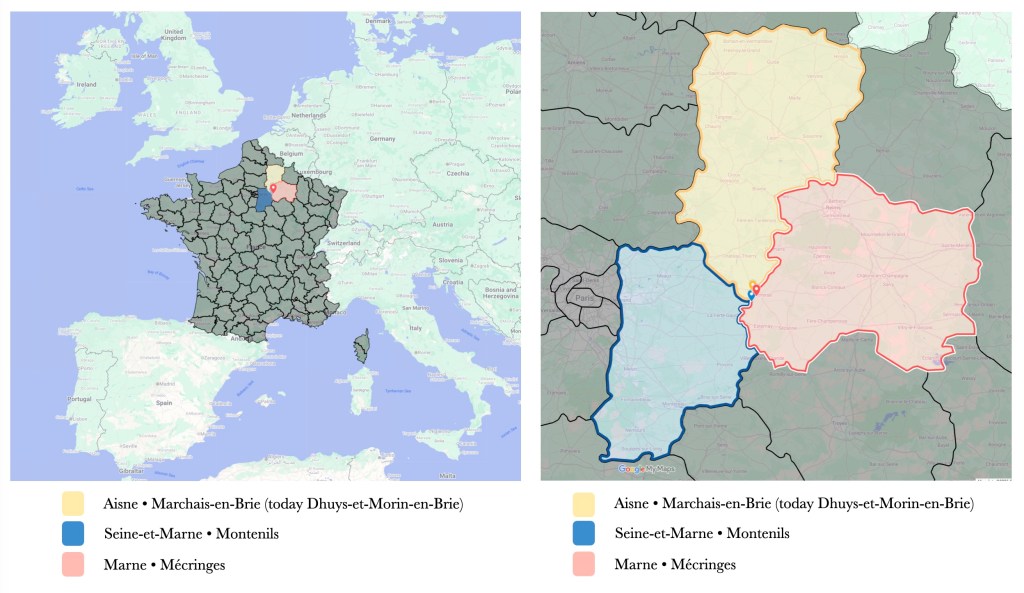
This is a good reminder that Google Maps can be a helpful tool in genealogy. When researching your ancestors, try locating the towns mentioned in their records. Seeing where they are in relation to one another can help you better understand your ancestors’ lives and the distances they may have travelled.
Another mystery solved!!
Well, not quite. I still don’t know the circumstances of their encounter, but since François Théodore was a charron (wheelwright)—a craftsman who made and repaired wooden wheels and wagon parts—he might have been called to Marchais-en-Brie for a job, where he met Rosalie Julienne Alexandrine.
The lifetime of François Théodore Berjot (1814-1900) and Rosalie Julienne Alexandrine Rouillon (1822-1888) in historical context
I’m always fascinated by the historical events that happened during my ancestors’ lives (see my “Timeline of Historical Events” if you are interested in what happened in France and in the world from the 1st century to today). Which major discoveries made their lives easier? Did they take part in world events, such as a war? Did they live through a pandemic, a famine, or an event that greatly affected their daily lives?
So I checked the events that happened during their lives. Because François Théodore lived longer than Rosalie, I researched a few of the major events that happened during his lifetime.
Note: all the hyperlinks within each section below take you to the respective events, monuments, or individuals on my Geneanet tree.
From birth to age 10 (1814–1824)
Political events and rulers
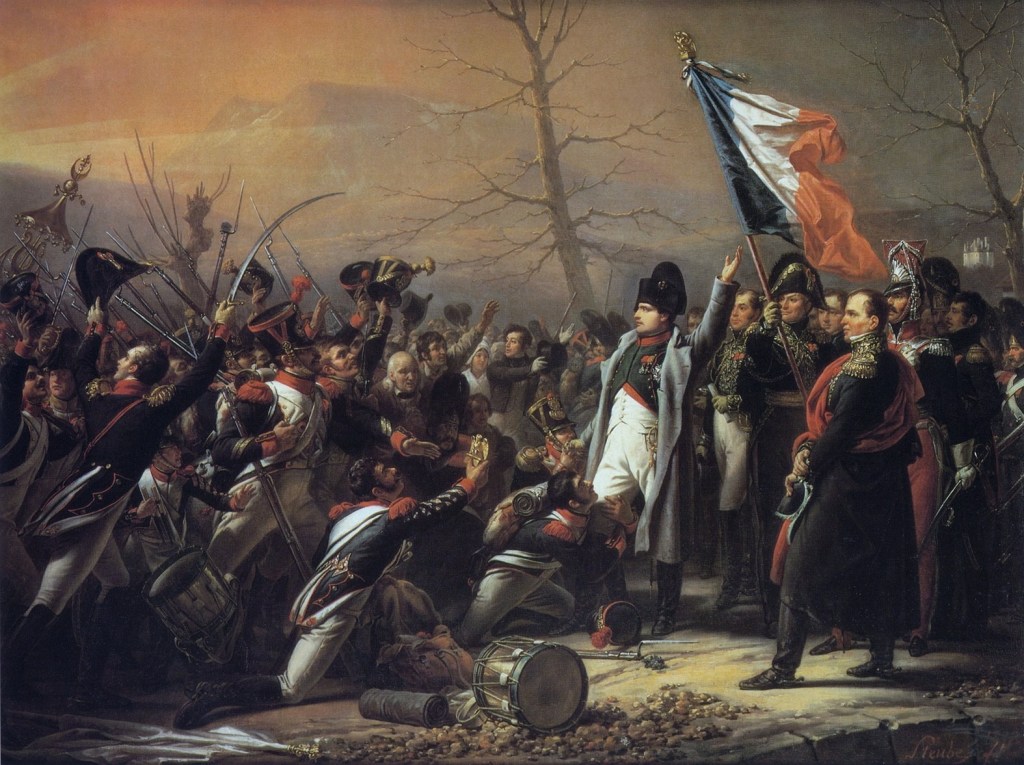
- April 1814: Napoleon I abdicated, and the Bourbon monarchy was restored under Louis XVIII.
- March 20, 1815: Napoleon I returned to Paris during the Hundred Days.
- July 1815: Louis XVIII returned to power after Napoleon’s final defeat.
- September 1824: Charles X succeeded Louis XVIII as King of France.
Everyday life and discoveries
- Horse-drawn carts and walking remained essential for rural travel and transporting goods.
- Gas lighting began to illuminate streets in some major cities, but rural communities continued to rely largely on traditional lighting.
From age 11 to age 20 (1825–1834)
Political events and rulers
- 1827: Restoration of press censorship.
- July 26–29, 1830: The July Revolution, known as the Trois Glorieuses, overthrew Charles X.
- August 9, 1830: Louis-Philippe I became King of the French.
Everyday life and discoveries
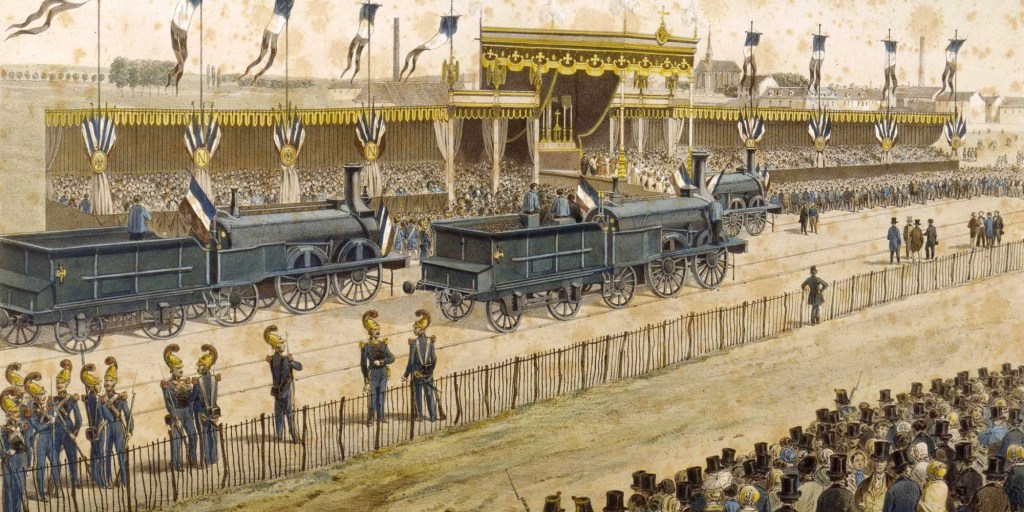
- June 1827: The railway between Saint-Étienne and Andrézieux began operating, initially using horse power to transport coal.
- 1828: One of the early public gas-lighting installations in Paris marked the expansion of gas lighting.
- 1832: A devastating cholera epidemic struck France, causing more than 18,000 deaths in Paris. The disease spread well beyond the capital.
The railway was still a novelty, and its benefits would reach different regions at different times.
From age 21 to age 30 (1835–1844)

Daguerreotype camera built by La Maison Susse Frères in 1839 based on Daguerre’s instructions. (Wikipedia)
Political and social events
- 1840: Napoleon I’s remains were returned to France and placed at Les Invalides.
- 1842: France passed a major railway law establishing the framework for a national railway network.
Everyday life and discoveries
- August 1839: The daguerreotype process was publicly announced, marking a major milestone in photography.
- Railway development gradually opened new possibilities for transporting people and goods.
Imagine being able to preserve a photograph of a family member for future generations—a possibility that had not existed in the same way before photography.
From age 31 to age 40 (1845–1854)
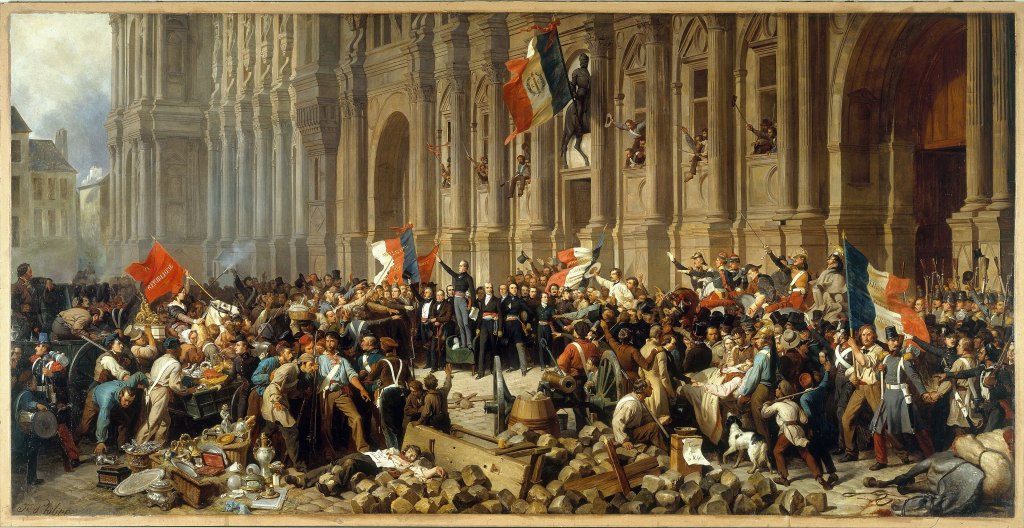
Lamartine Rejecting the Red Flag in Front of the City Hall by Henri Félix Emmanuel Philippoteaux – Wikipedia
Political events and rulers
- February 22–24, 1848: The February Revolution overthrew Louis-Philippe I.
- June 23–26, 1848: The June Days uprising took place in Paris.
- December 20, 1848: Louis-Napoléon Bonaparte (Napoléon III) became the 1st President of the French Republic.
- December 2, 1852: Louis-Napoléon became Emperor Napoleon III.
Everyday life and Social changes
- Food crisis of 1846-1847: poor harvests and high bread prices created serious hardship in France.
- The Revolution of 1848 brought the establishment of the Second Republic
- April 27, 1848: abolition of slavery in French colonies
- In 1850, the Falloux Law changed the organization of education and expanded the role of religious schools.
From age 41 to age 50 (1855–1864)
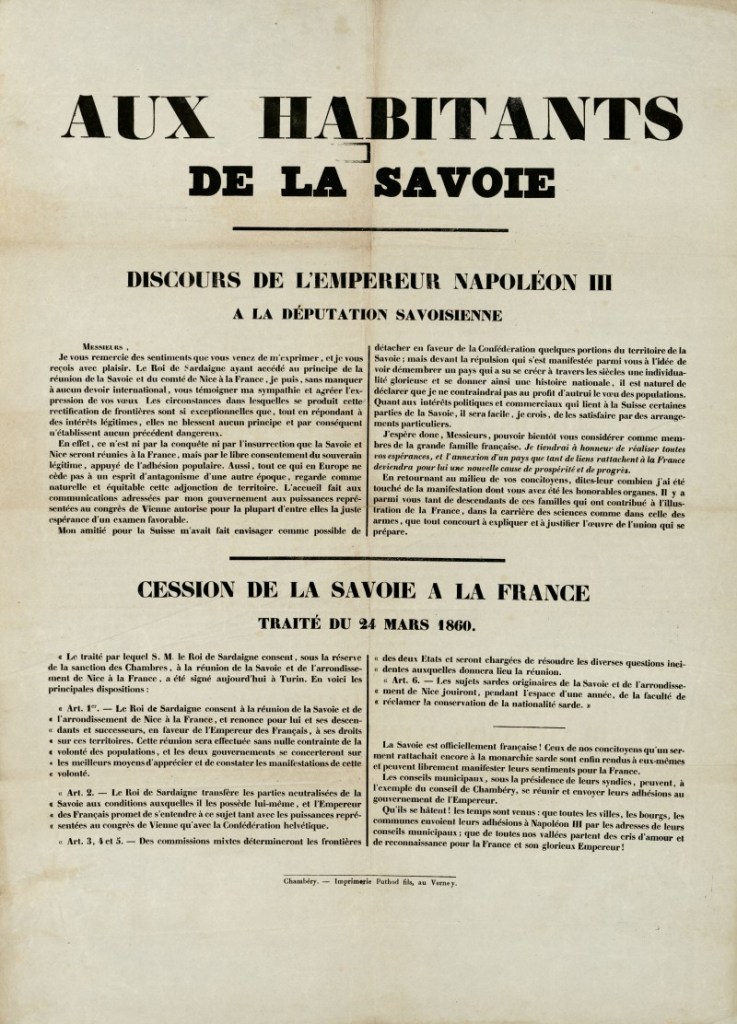
Poster reproducing the text of the Treaty of Turin – Speech by Emperor Napoleon III – Wikipedia
Political events
- 1859: The French campaign in Italy, including the battles of Magenta and Solferino, helped bring about the political changes that led to the annexation of Nice and Savoy.
- March 24, 1860: The Treaty of Turin provided for the cession of Nice and Savoy to France; the annexation followed that year.
- 1861: the French intervention in Mexico began, an important foreign-policy episode during Napoleon III‘s reign.
Everyday life and discoveries
- 1855: the Exposition Universelle in Paris showcased products of Agriculture, industry and the Fine Arts.
- Railway construction expanded considerably under Napoleon III.
- Industrialization and improved transport gradually changed commerce, travel, and the movement of goods.
For a “charron” (wheelwright) like François Théodore, these changes are especially interesting: his trade depended on horses, carts, and the transport needs of his community.
From age 51 to age 60 (1865–1874)
Political events and rulers
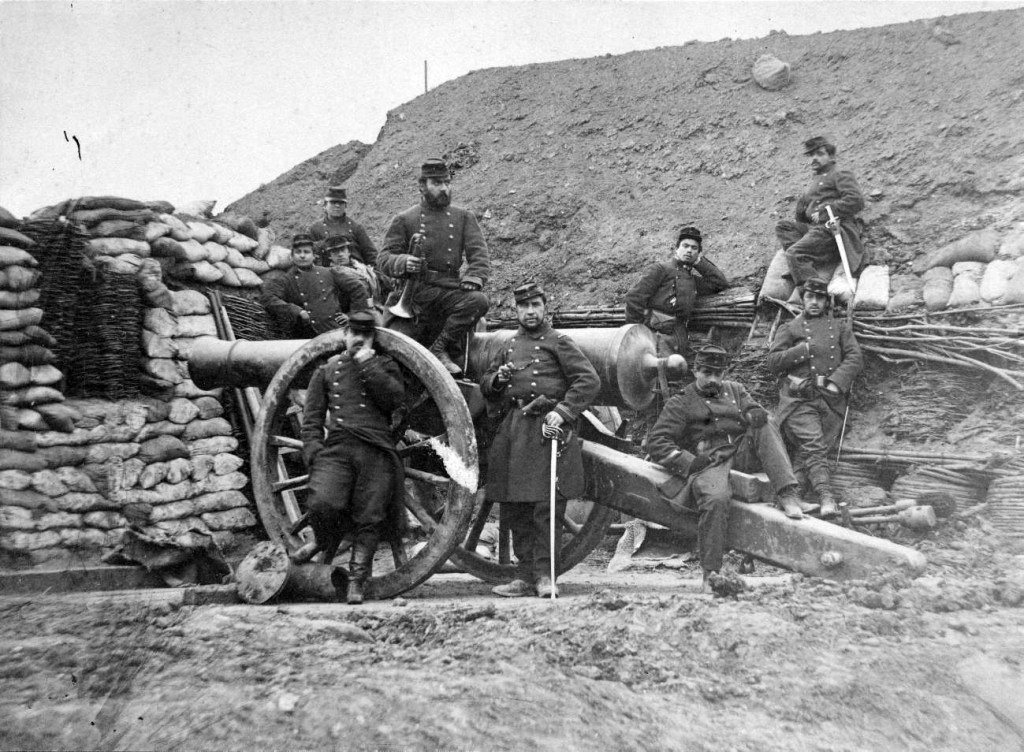
- July 19, 1870: The Franco-Prussian War began.
- September 4, 1870: The Third Republic was proclaimed following the fall of the Second Empire.
- March 18–May 28, 1871: The Paris Commune took place.
- May 10, 1871: Alsace and part of Lorraine were ceded to the German Empire under the Treaty of Frankfurt.
- August 31, 1871: Adolphe Thiers became the 2nd President of the French Republic.
- May 24, 1873: Patrice de Mac-Mahon succeeded Thiers as the 3rd President.
Everyday life
- War and political upheaval could affect local communities through mobilization, disrupted trade, and economic hardship.
- For families in rural France, the impact varied considerably according to their location and circumstances.
François Théodore was 55 when the Franco-Prussian War began. He and Rosalie Julienne Alexandrine lost a son to that war. His name was François Alfred Berjot (1847-1870). He died in the military hospital in Metz, Lorraine, on December 7, 1870.at the age of 23. Although Metz had surrendered to Prussian forces in October, the formal cession of Alsace-Lorraine to Germany would not take place until 1871.
From age 61 to age 70 (1875–1884)
Political events and rulers
- January 30, 1879: Jules Grévy became the 4th President of the French Republic.
- July 1881: A new press law expanded freedom of the press.
- July 1884: The Naquet Law restored divorce in France.
Everyday life and discoveries
- 1875: Construction of the Basilica of the Sacred Heart of Montmartre begins
- 1878: The Exposition Universelle in Paris showcased industrial and technological advances, including new developments in electric lighting.
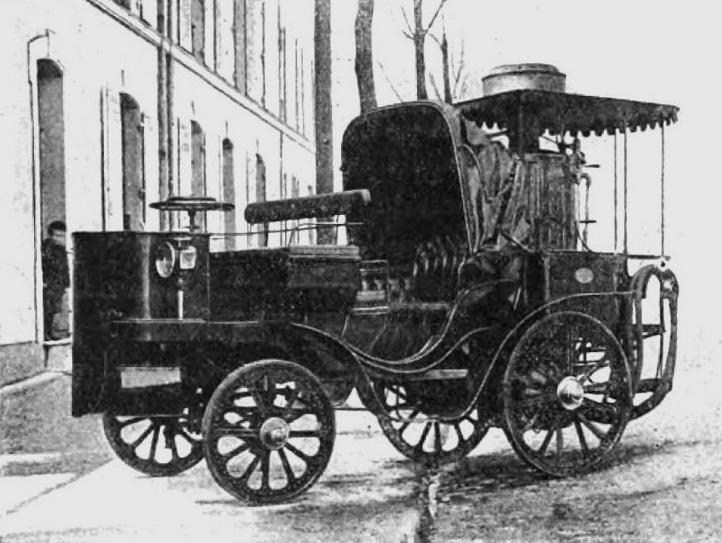
- 1878: Amédée Bollée’s La Mancelle, a steam-powered road vehicle, was an important early step in the development of automobiles.
- 1879: Telephone services and public telephone facilities began developing in France, though access remained limited.
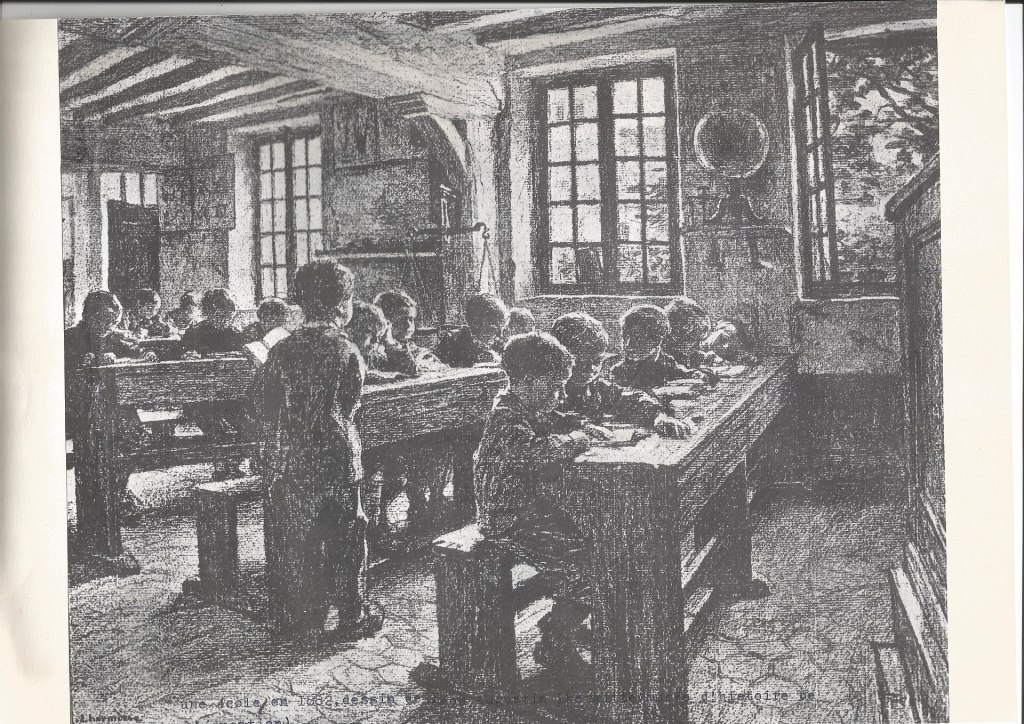
- The 1880s saw important reforms in French public education. Primary education became free in 1881 and mandatory and secular (laïque) in 1882. These reforms, known as the “Jules Ferry Laws” (Lois Jules Ferry), were introduced under the leadership of Jules Ferry.
- The expansion of railways and new transport technologies gradually changed how people and goods travelled.
François Théodore was a charron, a wheelwright. He made and repaired wooden wheels and wagon parts. As new forms of transport emerged, how might these changes have affected his profession?
Their son, Émile Zacharie Berjot, my great-great-grandfather, and his second wife Rosalie Herbach, my great-great-grandmother, were living in Paris when construction of the Basilica of the Sacred Heart of Montmartre began in 1875, just 2 km away! I wonder if they went to see them! See my post about this: “They lived 7,5 km from where the Eiffel Tower was being built“.
From age 71 to age 80 (1885–1894)
Political events and rulers
- December 3, 1887: Sadi Carnot became the 5th President of the French Republic.
- June 27, 1894: Jean Casimir-Perier became the 6th President.
Social changes and discoveries
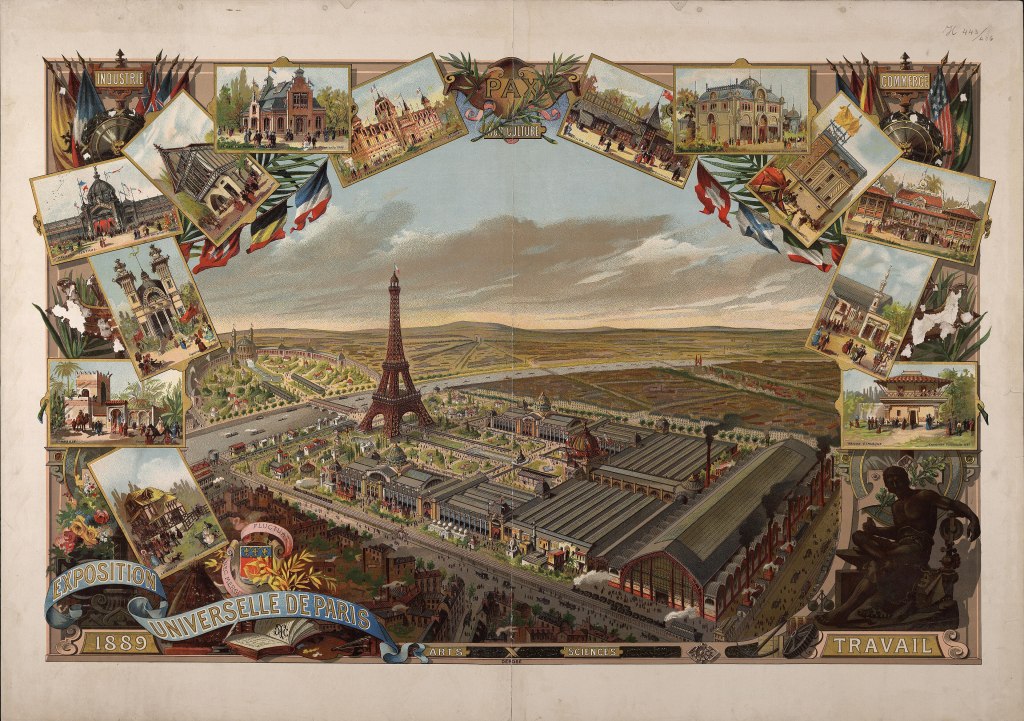
- 1889: the Exposition Universelle in Paris celebrated technological progress and marked the inauguration of the Eiffel Tower.
- 1891: The first telephone cable between France and England was laid, an interesting milestone in communications.
- Photography became increasingly accessible, although it was not yet an everyday possession for every family.
- Electric lighting and telephones continued to develop, but their adoption varied greatly between cities and rural communities.
By this time, François Théodore had lived through enormous political, social, and technological changes. Yet everyday life in his village may still have followed many familiar traditions.
Their son, Émile Zacharie Berjot, my great-great-grandfather, and his second wife Rosalie Herbach, my great-great-grandmother, were still living in Paris when the Eiffel Tower was built in 1889 and when the Exposition Universelle was held in 1900. I wonder if they went to see them! See my post about this: “They lived 7,5 km from where the Eiffel Tower was being built“.
From age 81 to his death in 1900 (1895–1900)
Political events and rulers
- January 17, 1895: Félix Faure became the 7th President of the French Republic.
- February 18, 1899: Émile Loubet became the 8th President.
Discoveries and everyday life
- December 28, 1895: The Lumière brothers (Auguste Lumière and Louis Lumière) held a landmark public screening of motion pictures in Paris.
- April 6–15, 1896: The first modern Olympic Games were held in Athens.
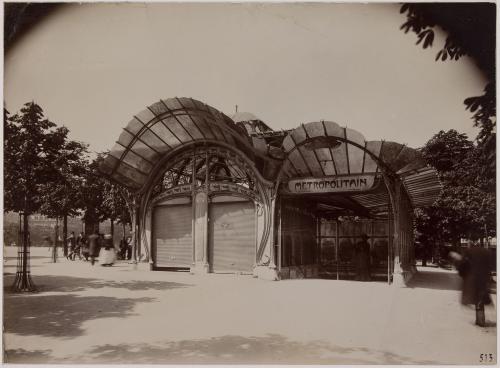
- 1900: The Exposition Universelle in Paris celebrated the achievements of the 19th century, showcasing scientific, technological, and artistic advances from around the world. It highlighted innovations such as electricity, cinema, and the newly opened Paris Métro.
- By the late 1890s, automobiles were beginning to appear on French roads, although they remained rare.
François Théodore died on June 4, 1900, aged 85. He had been born into a world of horse-drawn transport and died as the twentieth century was about to bring even more dramatic changes to everyday life.
Looking at the events that marked François Théodore’s lifetime makes me wonder what he witnessed and what he thought about all these changes. By the time of his death in 1900, the world was almost unrecognizable compared with the one into which he had been born in 1814.
Did he ever see a train? What did he think of the first automobiles, especially as a wheelwright? Did he realize how much the world was changing around him?
I wish I could ask him!
When researching our ancestors, I find it fascinating to look beyond their birth, marriage, and death dates. Historical events help us imagine the world they lived in and bring their stories a little closer to our own.
✨

