
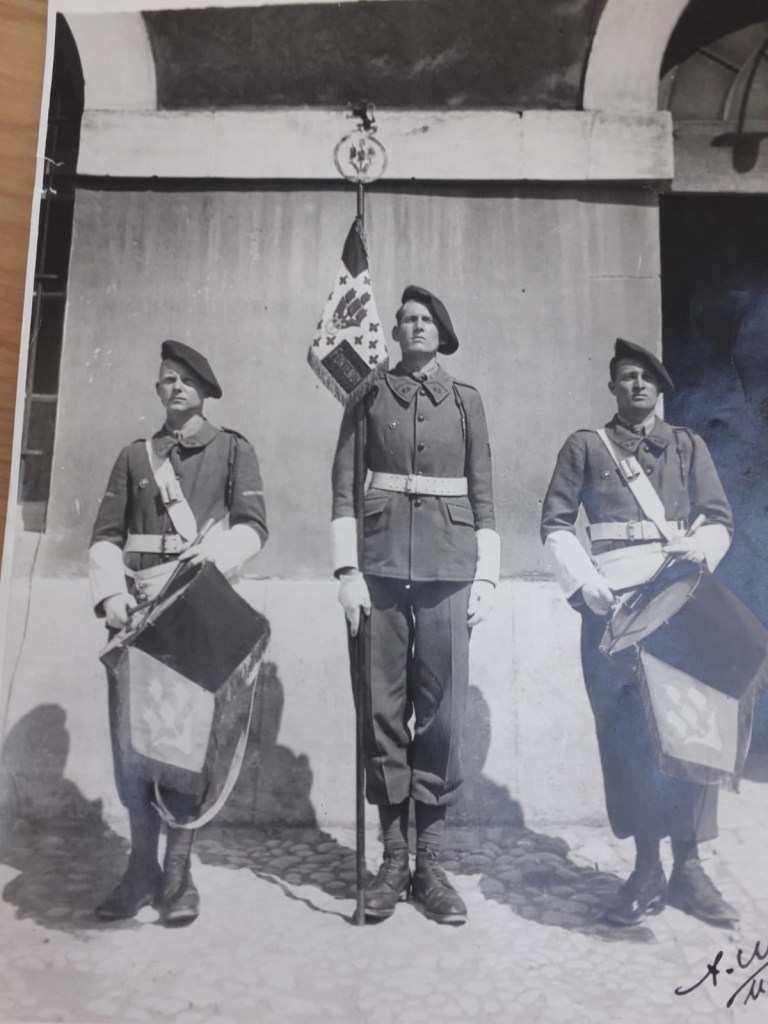
I dedicate this post to my maternal grandfather (in the middle), flag bearer of the French 43rd Infantry Regiment during WWII.
I also dedicate this post to all the victims of wars, civilians and soldiers. My heart goes out to everyone who still suffers today from past and present wars, especially children… You would think we would have learned from the past, by now…
On June 6, 2024, we will be commemorating the 80th anniversary of D-Day and the Battle of Normandy. Maurice Solomon, the father of one of my American friends, landed on Omaha Beach that day… I wanted to go back to this time in France that my family and so many others went through.
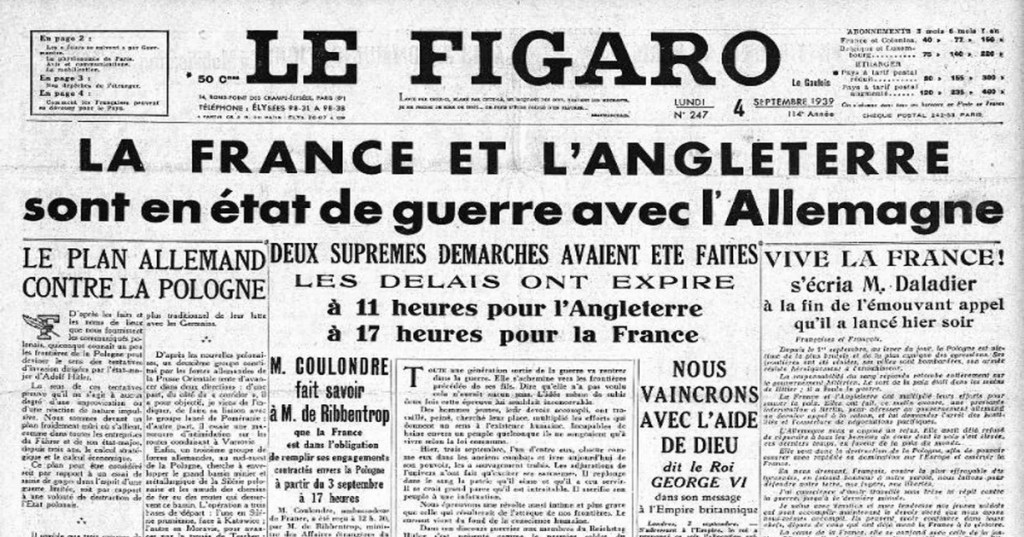
In France, the Second World War lasted from September 3, 1939 (2 days after Nazi Germany invaded Poland) until May 8, 1945 (Germany’s surrender).
Many of my family members have lived through World War II. My father was born in the middle of it, and my mother toward the end. Both my grandfathers fought in that war; both my grandmothers went through “l’Exode de 1940” (the 1940 exodus), as well as several of my great-grandparents.
Timelines of WWII in France
There are just too many events, dates and horrors during WWII to mention in this post. Here are just a few major dates:
- 1939
- September 1:
- 4:45am: invasion of Poland by Germany.
- General mobilization in France and the United Kingdom.
- September 3: United Kingdom, France, Australia and New-Zealand declare war on Germany
- September 1:
- 1940
- January 26: then Colonel Charles de Gaulle alerts 80 political and military figures about the dangers that a German mechanical offensive would pose to France.
- May 10: German armies invade Belgium, Luxembourg, the Netherlands and France. It’s called the “Bataille de France” (Battle of France), which lasted until June 25, 1940, and which prompted the exodus my family went through.
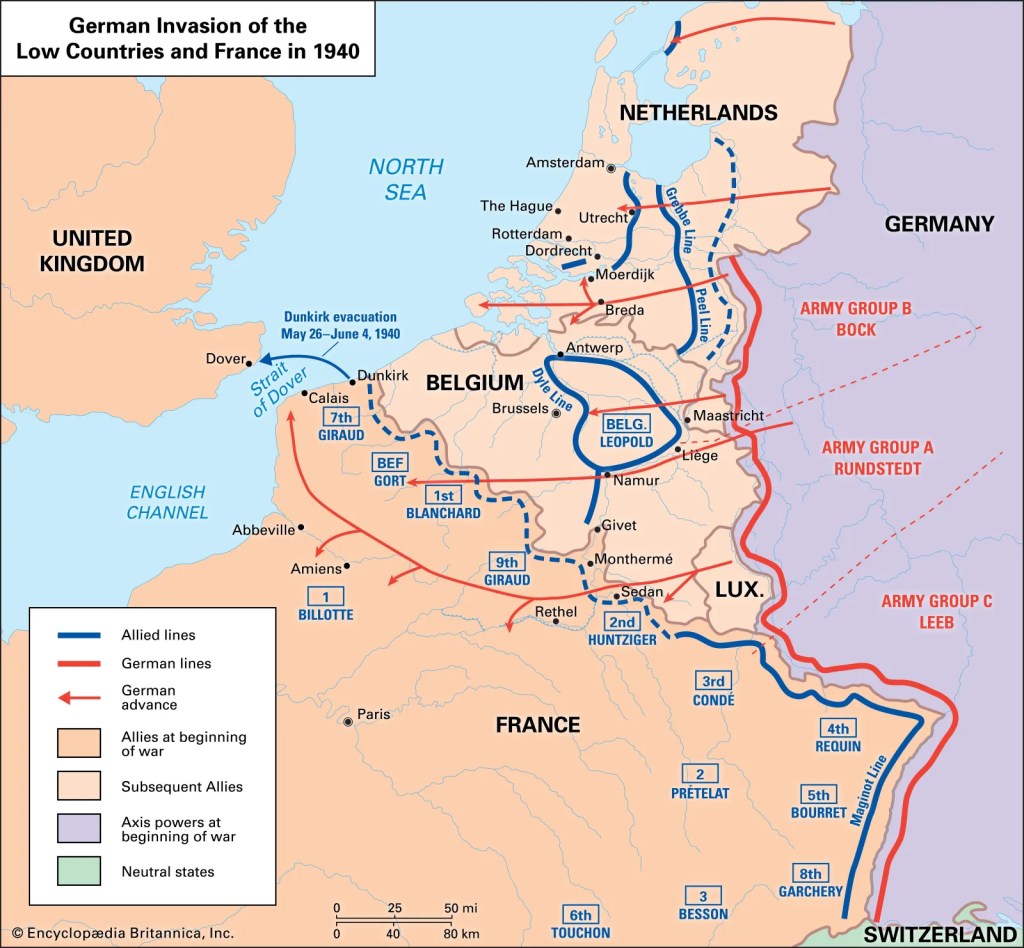
May-June 1940: My Family during the Exodus
The exodus was a massive flight of Belgian, Dutch, Luxembourg and French populations in May and June 1940 when the German army invaded Belgium, the Netherlands, and the majority of French territory during the “Battle of France”. It is one of the largest population movements in the 20th century in Western Europe.
During the summer of 1940 and in the following months, the French had to deal with millions of civilian refugees fleeing the war. Automobiles and horse-drawn carts carrying possessions clogged roads. As the government had not foreseen such a rapid military collapse, there were few plans to cope. Between six and ten million French fled, sometimes so quickly that they left uneaten meals on tables, even while officials stated that there was no need to panic and that civilians should stay. The population of Chartres dropped from 23,000 to 800 and Lille from 200,000 to 20,000, while cities in the south such as Pau and Bordeaux rapidly grew in population. (Wikipedia).
At the time of the exodus, neither of my parents was born, yet:
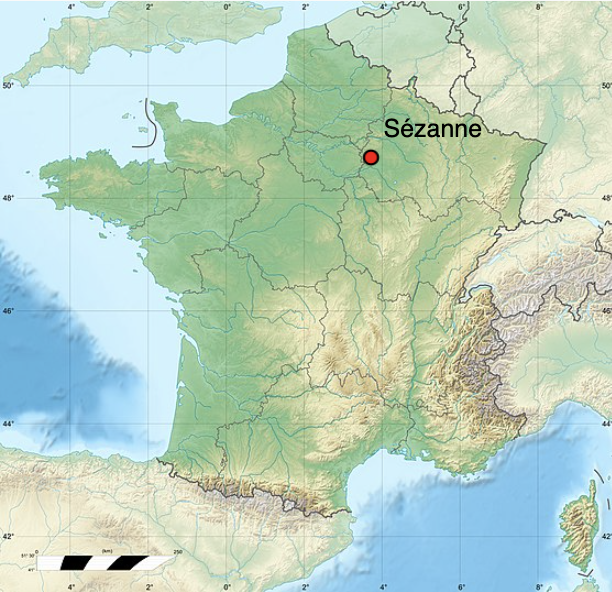
My mother’s family was living in Sézanne (Marne department), East of France. My great-grandfather Marcel Radet decided to stay in the house during the exodus and sent his family away to safety: my great-grandmother Madeleine (Lescuyer) Radet, my grandmother Lucienne who was 17, her sister Ginette (22) with her 4 months-old baby boy, my great-cousin Jacky. All of them fled Sézanne by foot and went to Bethon (Marne), a city not too far, while Italian planes were shooting at them and the crowd on the roads… They only returned home when it was safe to do so, end of June 1940.
(My great-grandfather Marcel Radet received the Croix de Guerre and Médaille Militaire awards for the 1914-1918 Great War. I “used him” to explain how to find military records – see my “Military Archives” page if you need help with this).
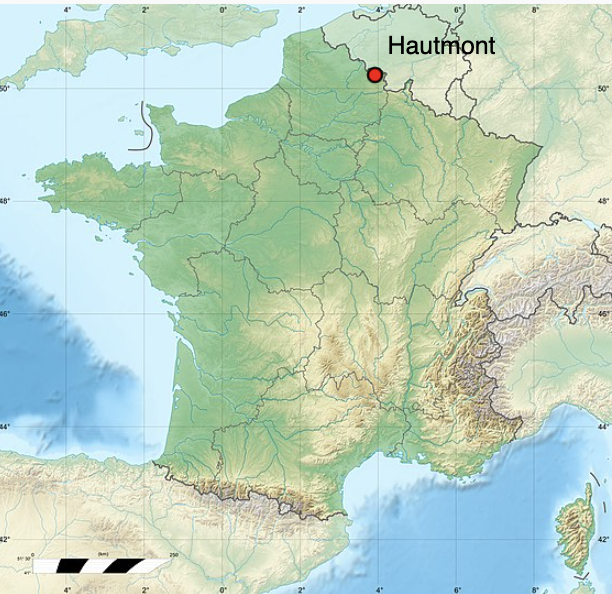
My father’s family was living in Hautmont (Nord department), in the North of France. On May 17, 1940, my great-grandfather Eusèbe Lepoint left home by foot with three of his daughters (my grandmother Irène, Marthe and Denise), and his granddaughter, my aunt, who was 5 years old. (My great-grandmother had passed away 3 months earlier). After going to Amiens and Rouen, they fled to the south of France, where they met with my paternal grandfather, then stationed in Toulouse.
(My great-grandfather Eusèbe Lepoint was a prisoner of war. Here is my post about him “Eusèbe Lepoint: WWI Veteran and POW“).
- 1940 (continued):
- June 10: Italy declares war on France and the United Kingdom.
- June 17: Philippe Pétain announces to the French people that France must stop fighting.
- June 18: Charles de Gaulle says “no way”. From the BBC in London, England, Charles de Gaulle makes his first speech (l’Appel du 18 juin), asking the French people to continue fighting. This is marking the beginning of the Résistance (French Resistance).
- June 22:
- Signature of the armistice between France (Philippe Pétain) and Germany.
- As a result, France is split in two areas: “zone occupée” (“occupied zone”) and “zone libre” (“free zone”).
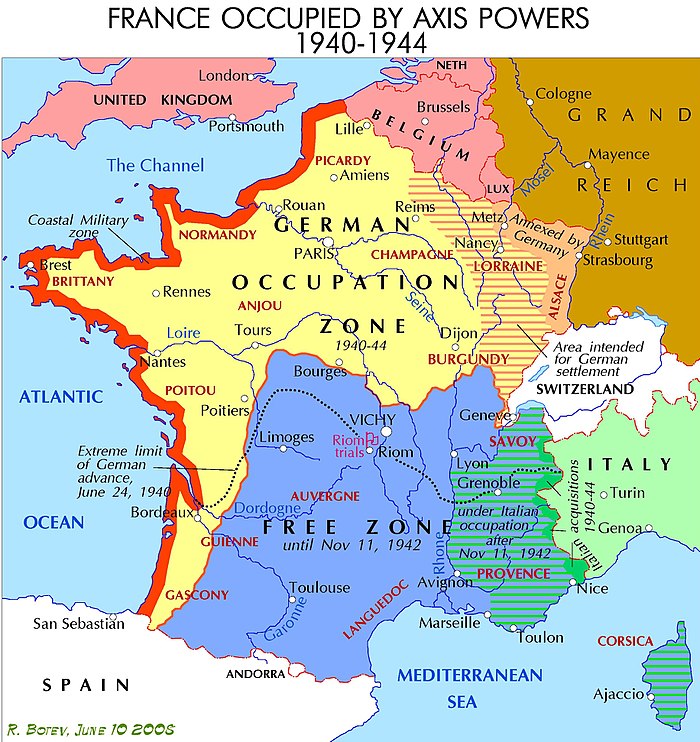
- June 27: The Général de Gaulle becomes the leader of the “Français libres” (“Free French”) who decided to join him on June 18.
- July 10: France is governed by the Régime de Vichy, ran by the Maréchal Philippe Pétain (“Vichy France”, or “Vichy State”). It will last until August 20, 1944.
- 1941
- December 7: Japanese attack on Pearl Harbor, Honolulu, Hawaii
- December 8: Franklin Delano Roosevelt pronounces his “Day of Infamy” speech
- December 11: Germany and Italy declare war on the United States of America.
- 1942
- March 27: Beginning of the deportation of Jews to German camps. It is estimated that around 6 million Jews were murdered during WWII…
- July 16-17: Rafle du Vél’d’Hiv (Vel’ d’Hiv Roundup).
- November 8: Beginning of the Liberation of France: very long process which starts with the liberation of Algeria on November 8, 1942.
I will talk about the liberation of France in my next post. In the meantime, let’s create a great day and be grateful everyday for the little (or big!) joys of life, especially for those of us living in a country at peace…
Genealogy
Here are links to several pages on my Geneanet tree:
– Seconde Guerre mondiale (World War II). This page also links to other individuals and events.
– Paul Berjot, my maternal grandfather (the very handsome flag bearer!)
– Général Charles de Gaulle (my father shook his hand twice! The first time after the 1964 Tokyo Olympic Games, and the second time after the 1968 Mexico Olympic Games)
– Franklin Delano Roosevelt (descendant of Pilgrims from the “Fortune” ship in 1621, so I included on his page the link to the Pilgrims of the “Fortune” ship, as well as other links). Our first common ancestors are Jacqueline de Ghistelles (1386-1451) and Jan van Halewijn (?-1440).
– Philippe Pétain (he is alone on my tree but his page links to other events and individuals)
(FYI: on Geneanet, the little “green circle” indicates my direct lineage with the individuals).
 My French Lineage