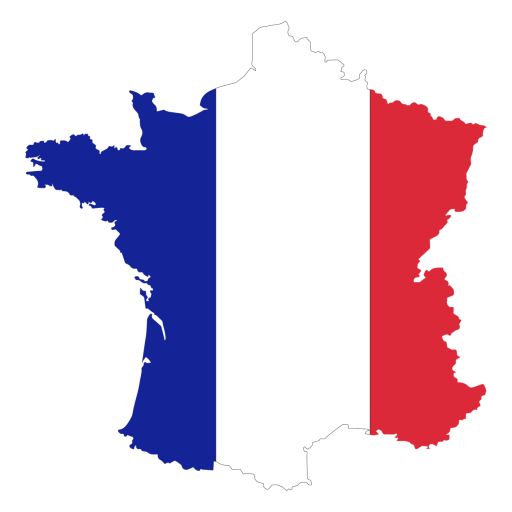
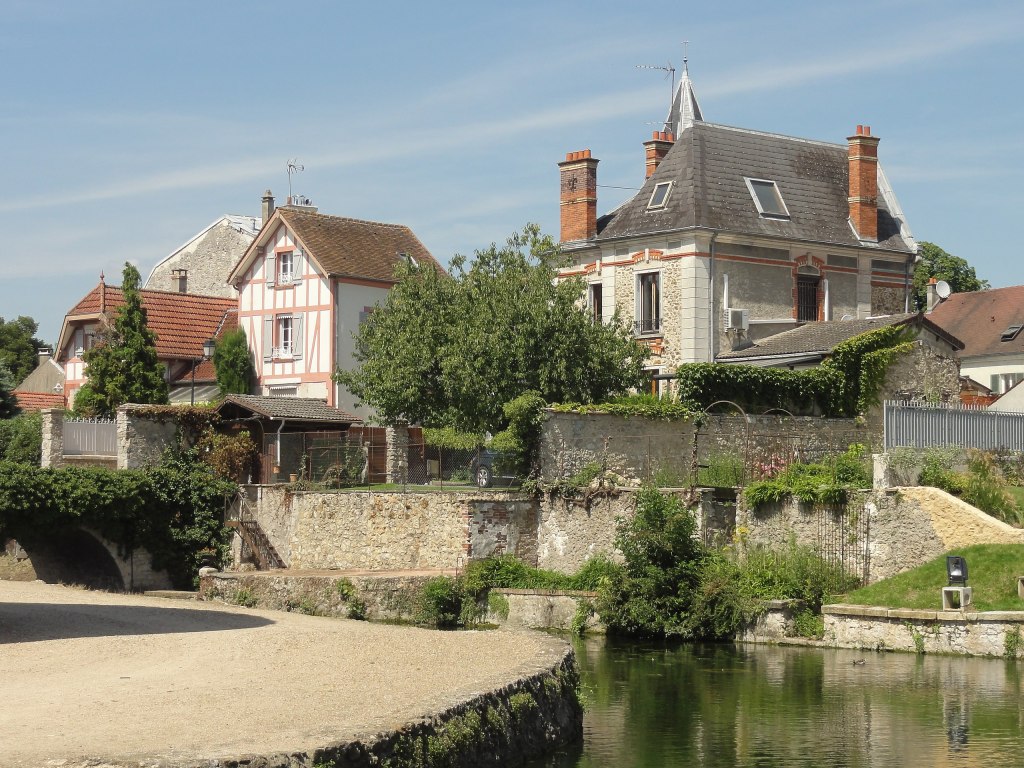
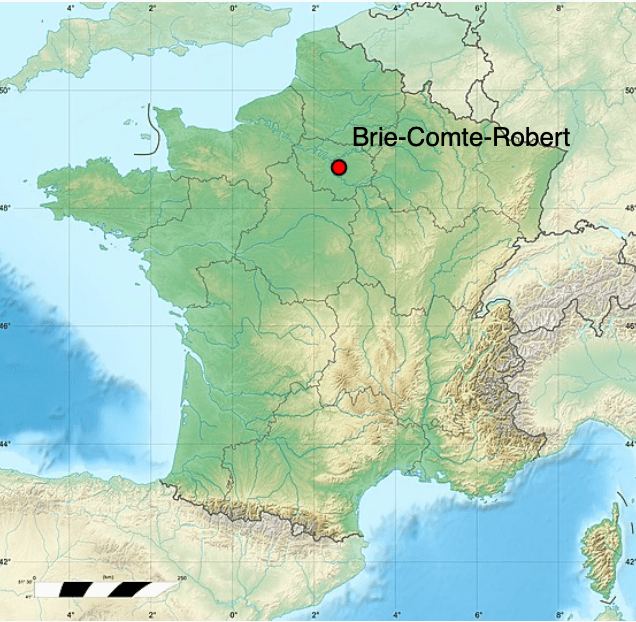
15 minutes from where I grew up is the commune of Brie-Comte-Robert, 28 km (17 miles) South-East of Paris. I went there several times as a child and teenager for fencing competitions. It was also where two of my high school friends lived. That was the extent of my knowledge and interest in this commune. However, it took an entire different meaning the day I discovered that one of my direct ancestors, Robert Ier “le Grand”, Comte de Dreux (Robert Ier “the Great”), founded it! Brie-Comte-Robert is named after him. Don’t you love the nice discoveries that genealogy brings?
- Brie-Comte-Robert (77, Seine-et-Marne)
- Agnès de Baudément, Robert Ier’s wife, founds the Abbatiale Saint-Yved de Braine (02, Aisne)
- Genealogy
Brie-Comte-Robert (77, Seine-et-Marne)
Foundation of the town by Robert Ier de Dreux
I don’t remember much about my ancestor, Robert de France, or Robert Ier de Dreux. He was born in 1125 and died in 1188. He was the brother of Louis VII “le Jeune”, King of the Franks, Eleanor of Aquitaine’s first husband. (Here is my previous post about Eleanor of Aquitaine). Robert was Comte de Dreux (Count of Dreux), a county located between Normandy and Île-de-France (Paris region), which he received in apanage in 1137 from his father, King Louis VI “le Gros” of France.
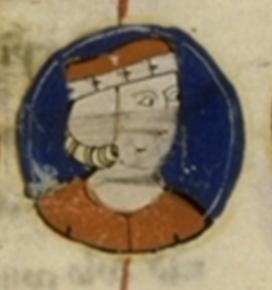
This is Robert Ier “le Grand”, my ancestor (26th generation), founder of Brie-Comte-Robert.
I have his eyes.
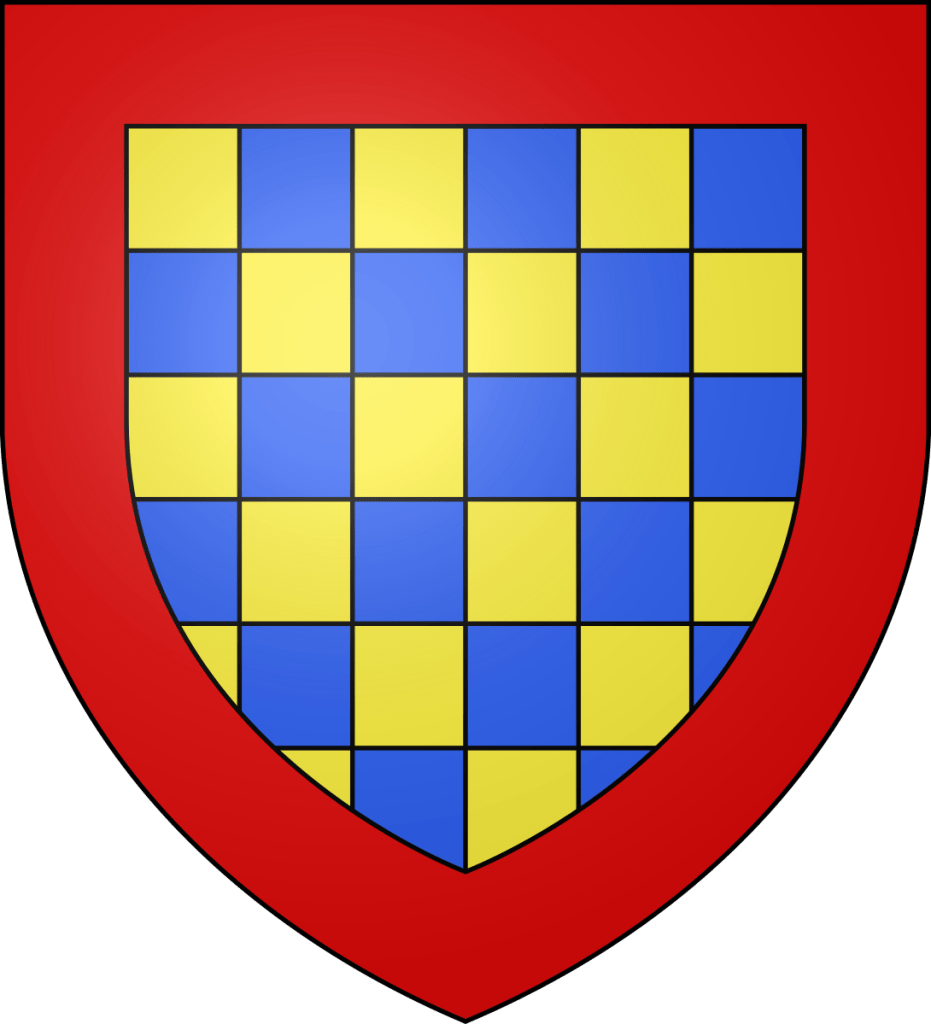
This is the blason des comtes de Dreux (coat of arms of the Counts of Dreux). La Maison de Dreux (the House of Dreux) was a cadet branch of the Capetian dynasty (founded by Hugues Capet).
Like so many others, Robert Ier de Dreux left his mark in the scenery of France. In 1160, he founded Brie-Comte-Robert, a commune in the Seine-et-Marne département of France (77), 28 km (17 miles) South-East of Paris, just 15 minutes from where I grew up!
Foundation of the castle by Robert Ier de Dreux
He then built a château (castle) in the town he had just founded (it makes sense: you needed a place to stay when you would visit your lands and territories because there was no Airbnb back then…). This castle, while in ruins today, is being restored, thanks to the commune of Brie-Comte-Robert and especially to the amazing work of the Association “Les Amis du Vieux Château” (“The Friends of the Old Castle”) whose volunteers have done a tremendous amount of restoration work since 1982. Their website is in French, but you can see some videos, pictures and graphic animations of the castle and the progression of their work. Here is their page about the restoration of the castle.
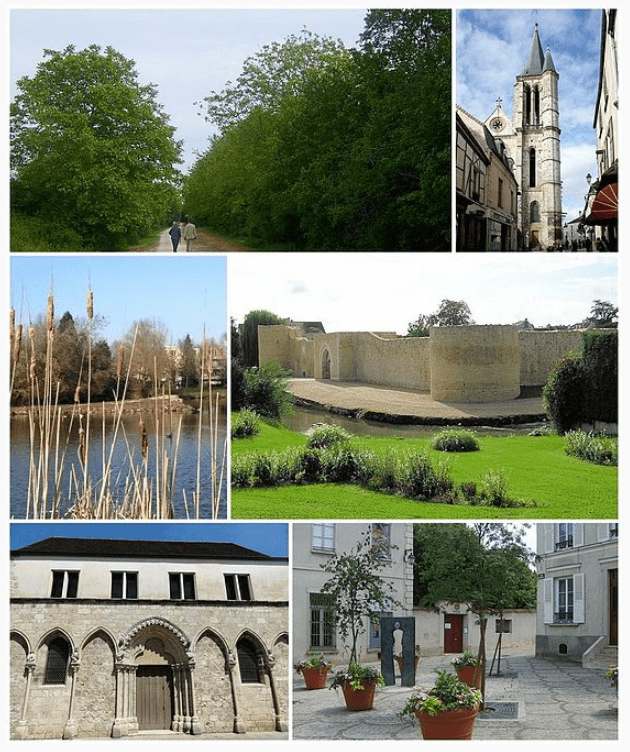
Foundation of the Church and Hôtel-Dieu by Robert II de Dreux, Robert Ier’s son
Robert Ier de Dreux and his third wife, Agnès de Baudément, had 11 children (I can’t imagine the grocery shopping, the “back to school” supplies list, or sitting everyone down to do their homework…). One of them, their son Robert II de Dreux (1154-1218), thought: “Hey… I want to leave my mark in Brie-Comte-Robert too!!” So in 1208, he built the Hôtel-Dieu (to greet pilgrims and treat poor sick people – this building is now used for exhibits), and shortly after, he built the church of Saint-Étienne.

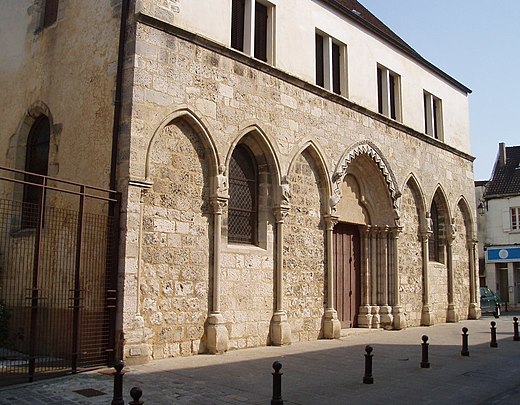
Brie-Comte-Robert passes to Jeanne d’Évreux, Queen of France
Over the years, Brie-Comte-Robert (with its castle, church and Hôtel-Dieu) passed to different individuals and generations (they didn’t make it to me, though…). Quite a few years later, it was the property of Jeanne d’Évreux (1310-1371) who became Queen of France in 1324 and therefore brought Brie-Comte-Robert as her dowry when she married Charles IV le Bel, King of France. (I brought a step-son to David as my dowry when we got married, and that’s way more valuable than a town…!).
Jeanne d’Évreux and Charles IV le Bel were cousins… very frequent in nobility. Besides other relatives in common, they had the same great-grandparents: Louis IX (Saint Louis) and Marguerite de Provence.
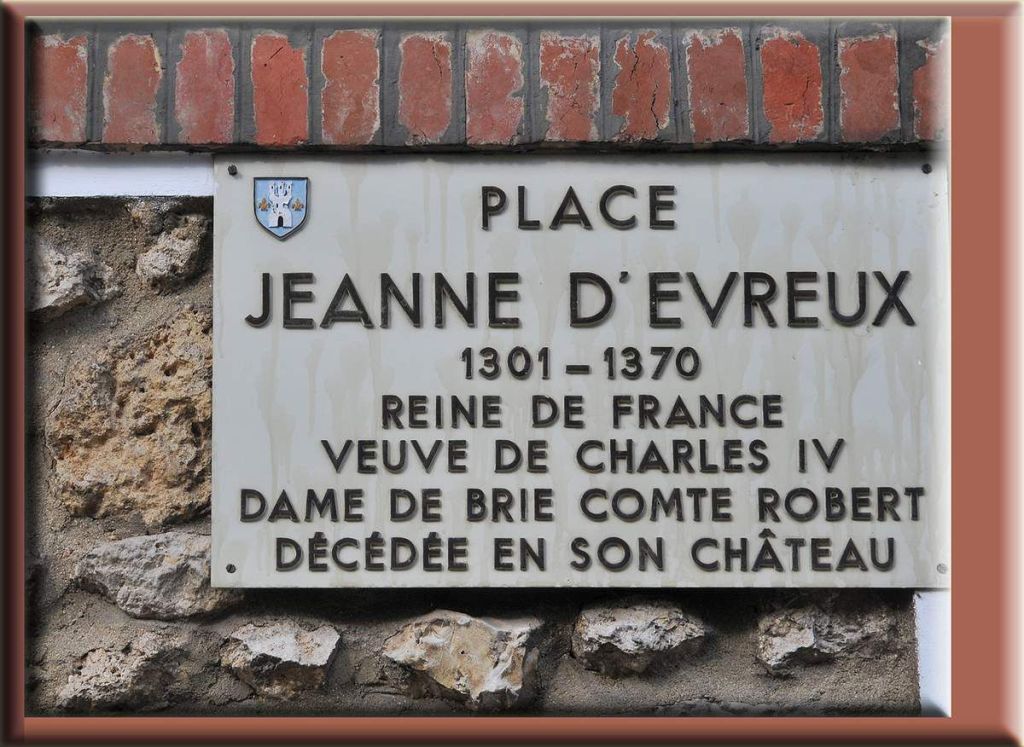
Queen of France Jeanne d’Évreux often visited Brie-Comte-Robert, and made a lot of improvements to the castle, where she died. There is a square named after her in Brie-Comte-Robert.
“Square Jeanne d’Évreux. Queen of France, widow of Charles IV. Lady of Brie Comte Robert. Died in her castle.”
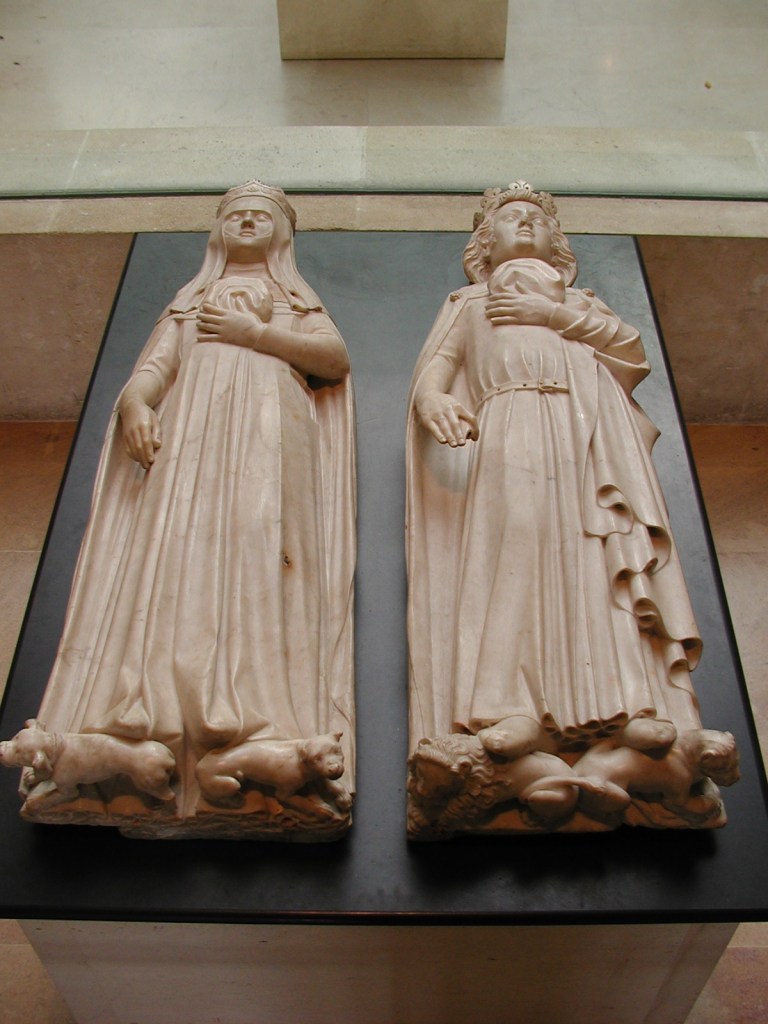
Gisants (tombs featuring lifelike carved recumbent effigies) of Jeanne d’Évreux and Charles IV at the Basilique Saint-Denis (Basilica of Saint-Denis), (93, Seine-Saint-Denis), France.
If you go to Paris, I recommend you visit the Basilique Saint-Denis, which is about 30 minutes north of Paris by subway. The Basilique is the necropolis of Kings and Queens of France, from Arégonde (ca 516-ca 574), Queen of the Franks, to Louis XVIII (1755-1824), King of France and Navarre.
Agnès de Baudément, Robert Ier’s wife, founds the Abbatiale Saint-Yved de Braine (02, Aisne)
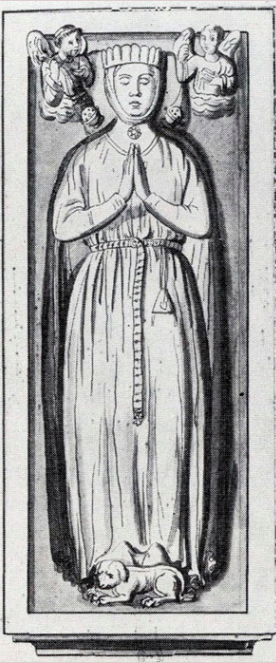
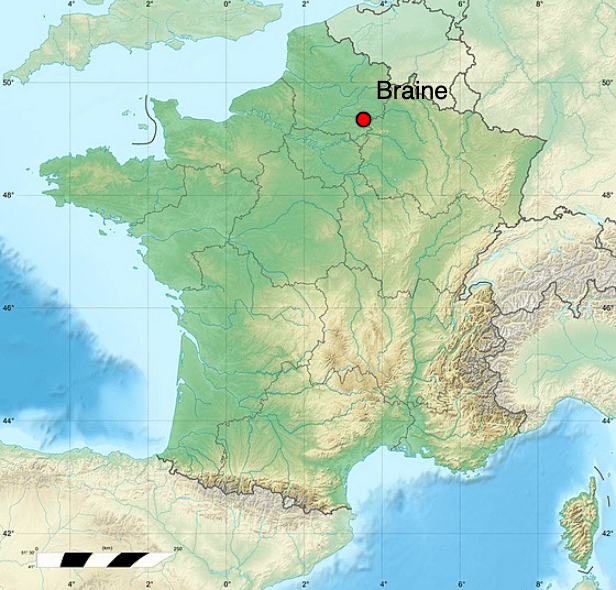
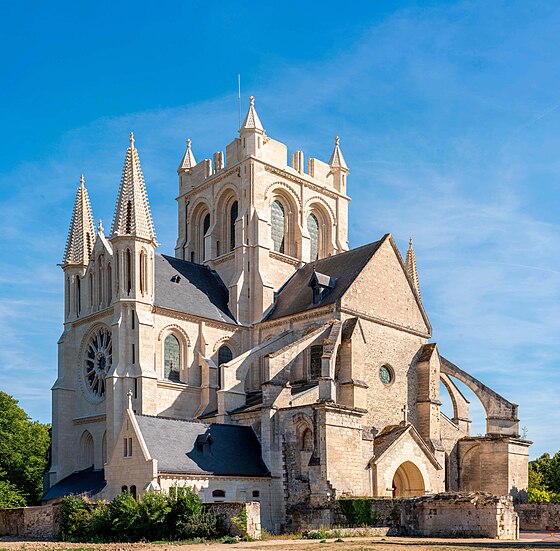
In 1180, Agnès de Baudément (1130-1204), third wife of Robert Ier de Dreux, founded the “Abbatiale Saint-Yved de Braine” (abbey), in Braine (02), Aisne, where she was buried, along with her husband, their son Robert II de Dreux, their daughter-in-law Yolande de Coucy, their grandsons Robert III de Dreux and Pierre Ier de Bretagne, (Pierre Mauclerc), and many more family members and descendants of the Counts of Dreux as the abbatiale became the nécropole of the Dreux family.
The abbatiale, having greatly suffered over the centuries and during the French Revolution, is currently being restored. Restoration started in 2020 and should take about 10 years.
Genealogy
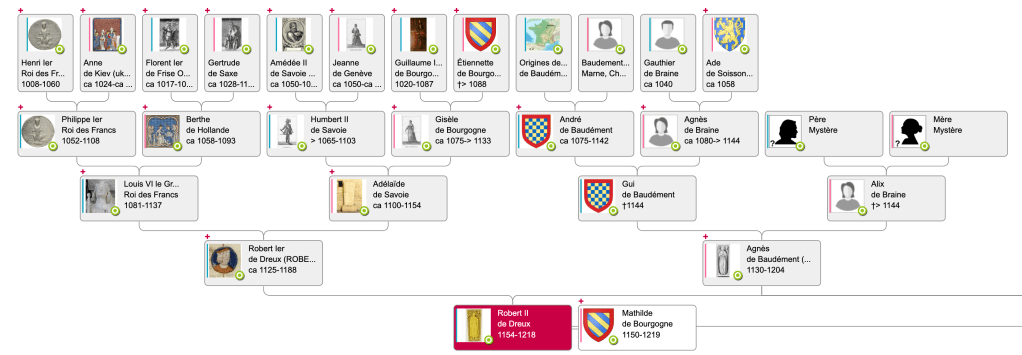
Here are Robert Ier de Dreux (ca 1125-1188), Agnès de Baudément (1130-1204), Robert II de Dreux (1154-1218), Jeanne d’Évreux (1310-1371) and Charles IV le Bel (1294-1328) on my Geneanet tree.
Both David (my 2nd husband, American) and I have direct lineage to them.
(FYI: on Geneanet, the little “green circle” indicates my direct lineage with the individuals, not David’s).
 My French Lineage