

Born and raised in France, my parents regularly took my siblings and me to visit castles and churches. Back then, these outings were simply part of our childhood. Years later, when I began to explore my family history more seriously, those same places took on an entirely different dimension.
Through genealogical research, I discovered that some of my ancestors (and very possibly yours too!) had worked on these monuments—as founders, builders, craftsmen, patrons, or clergy—or were baptized, married or buried within their walls. Realizing that my own family history was woven into stones I had walked past as a child was deeply moving.
If you are new to genealogy, it may feel hard to imagine any real connection between your own ancestors and a magnificent castle or ancient church. But as a family tree grows—generation by generation—patterns begin to emerge. Given enough time and branches, many of us discover links to the French nobility, to notable families, local elites, or to the people who shaped these very monuments. When that happens, visiting these places becomes something else entirely: a deeply personal encounter with ancestors who, in one way or another, connect us all.
Below are a few monuments in France whose history now feels very personal to me. Each monument section contains hyperlinks to the individuals, monuments or events on my Geneanet tree. (Reminder: On Geneanet, the little “green circle” on an individual’s image indicates my direct lineage with the individuals).
In the Loire Valley
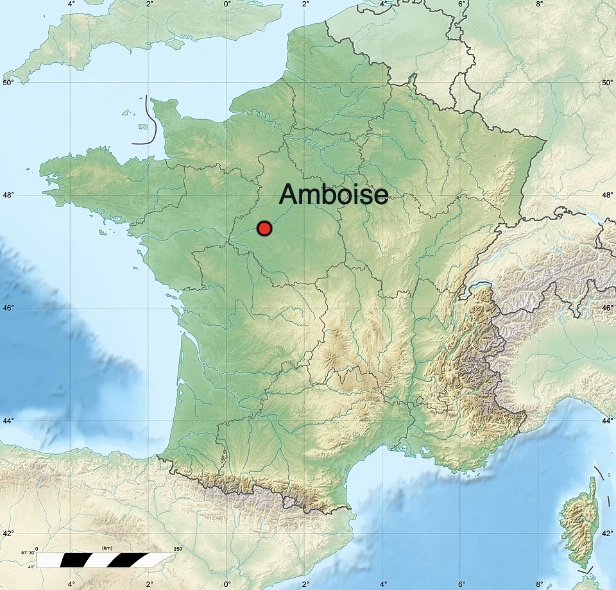
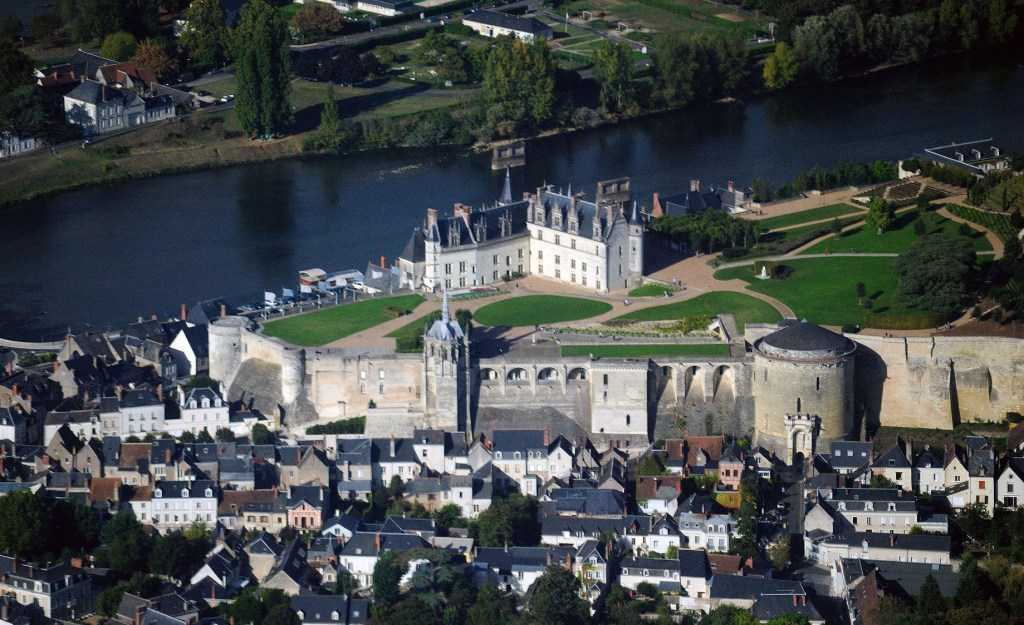
This was my first “ancestor/monument” discovery.
I will always remember that day and the emotion I felt! I was working on Ingelger d’Anjou (ca 850-888) and his bride Adelais de Buzançais (ca 850-893) and discovered that her dowry included Buzençais, Châtillon-sur-Indre, and the fortress of Amboise, which eventually became the royal residence known as the Château d’Amboise.
Ingelger and Adelais were ancestors of Geoffrey V of Anjou (1113-1151), father of Henri II Plantagenêt, King of England (1133-1189), founder of the Plantagenet dynasty of English kings.)
The castle we know today was rebuilt in 1491 by Charles VIII of France.
| Location: | Amboise, Indre-et-Loire département of the Loire Valley |
| Initial fortress (dowry of Adelais): | Already existed in 865 (date of their wedding) |
| Initial owners of the current castle: | Louis d’Amboise Charles VIII |
| Current owner: | Fondation Saint-Louis |
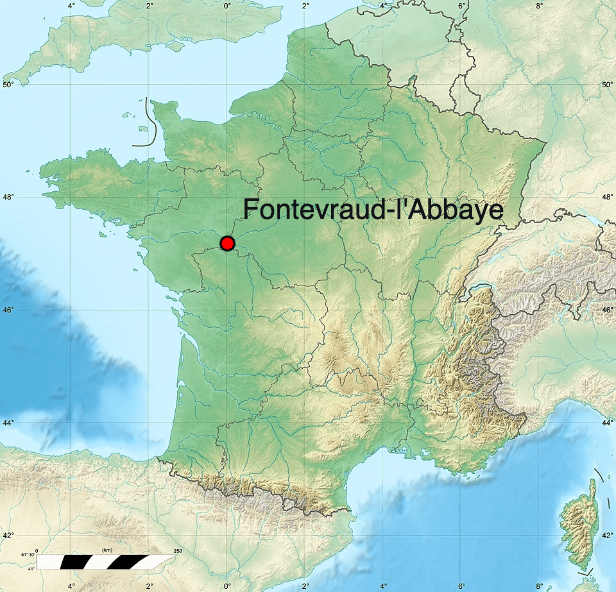

The Fontevraud Abbey was built in 1101. 4 famous “gisants” (tomb effigies) are exposed at Fontevraud Abbey:
Eleanor of Aquitaine (Aliénor d’Aquitaine) (1122-1204) and her husband King Henry II of England (Plantagenêt)
Their son Richard the Lionheart (Richard Cœur de Lion) (1157-1199) and their daughter Joan of England (Jeanne d’Angleterre) (1165-1199)
Fontevraud Abbey (Abbaye de Fontevraud)
To read more about Eleanor of Aquitaine, see my post here.
In Paris
The following 3 monuments are on the Île de la Cité, minutes from each other (walking distance)
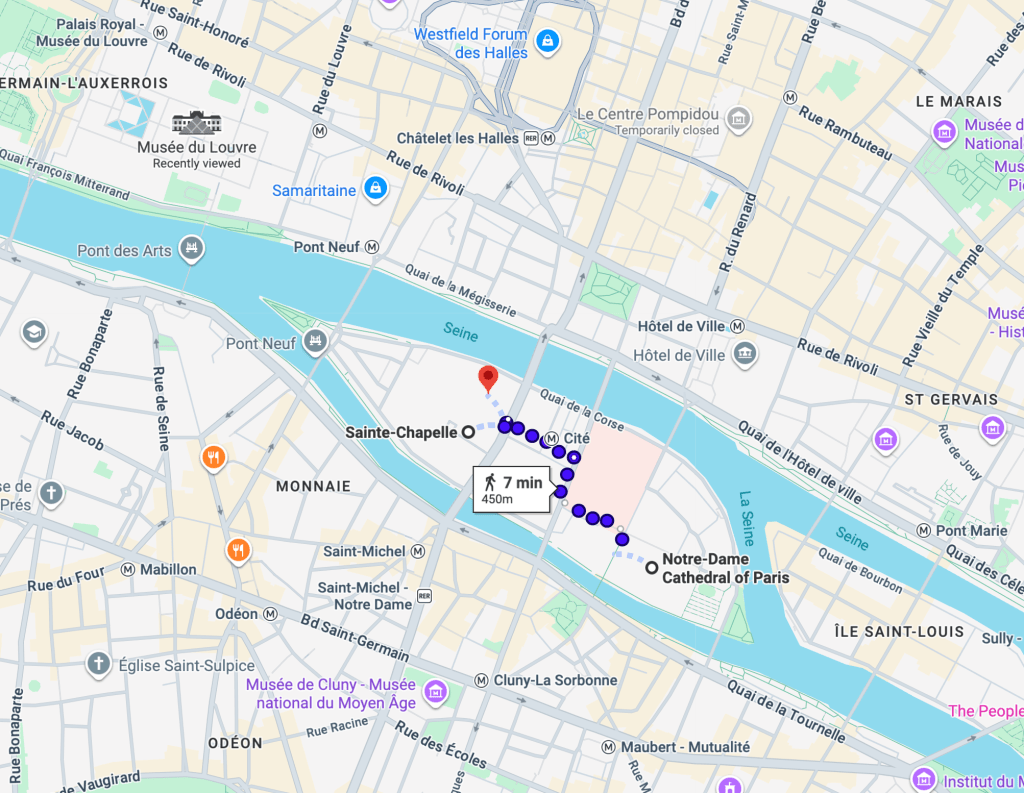
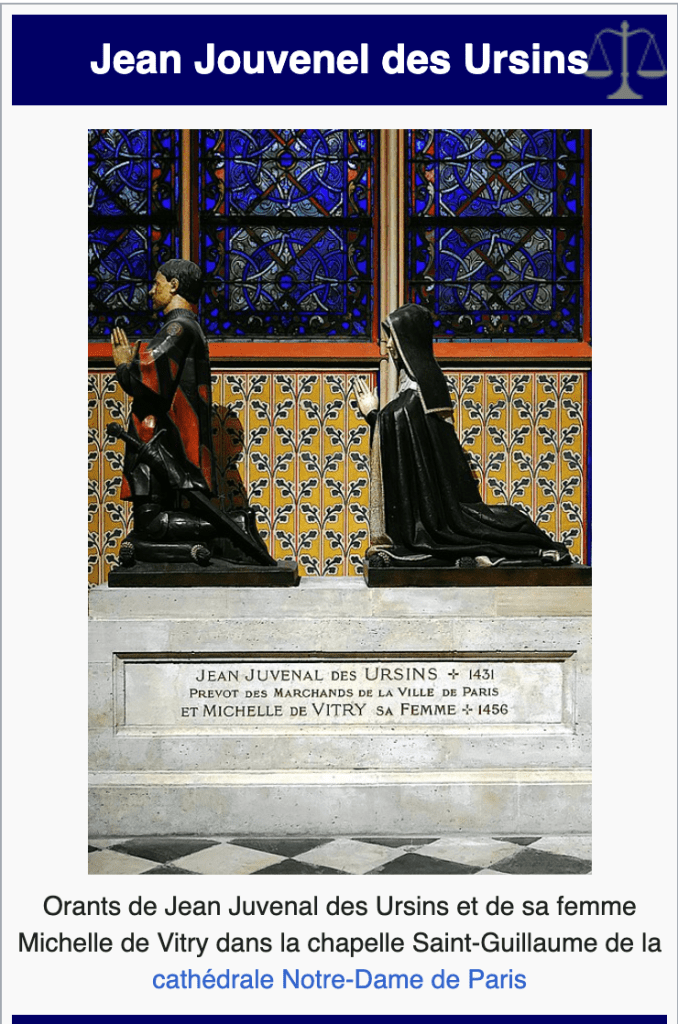
Another very moving moment of my many genealogical discoveries was the day I found out that two of my ancestors’ “orants” (kneeling statues) are located in the Chapelle Saint-Guillaume of the Cathedral Notre-Dame de Paris!
Jean Jouvenel des Ursins (ca 1350-1431) and his wife Michèle de Vitry (?-1456).
A discovery leading to another (like so often in genealogy!!), I found that Jean Jouvenel des Ursins was living at the “Hôtel des Ursins” in Paris (no longer standing), the very same residence where the playwright Jean Racine lived in between 1673 and 1676!
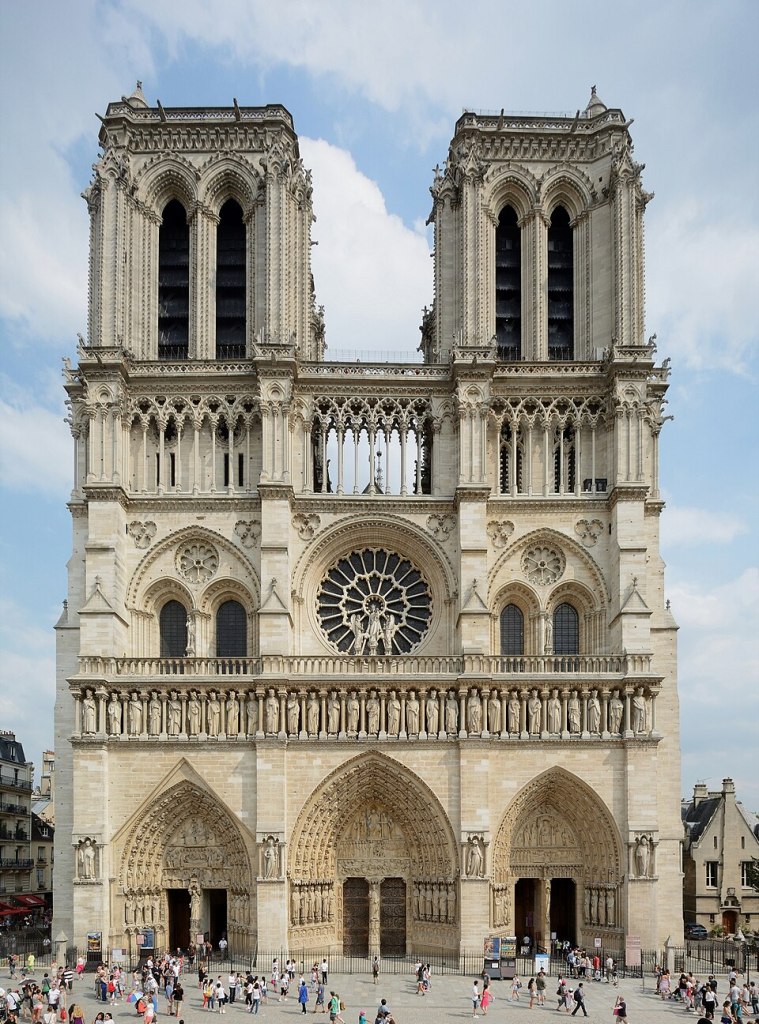
| Location: | Île de la Cité, Paris |
| Groundbreaking: | 1163 |
| Completed: | 1345 |
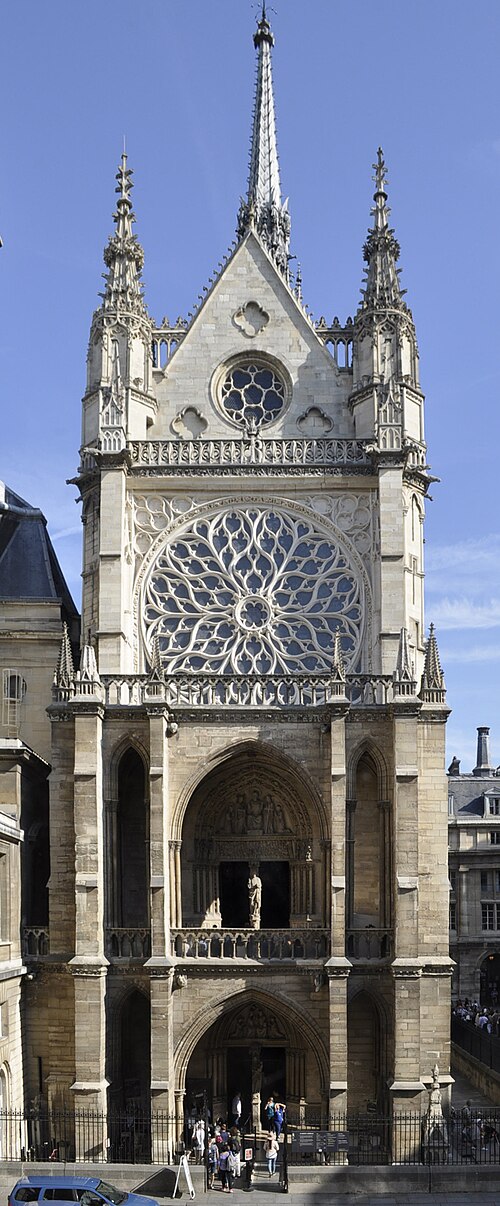
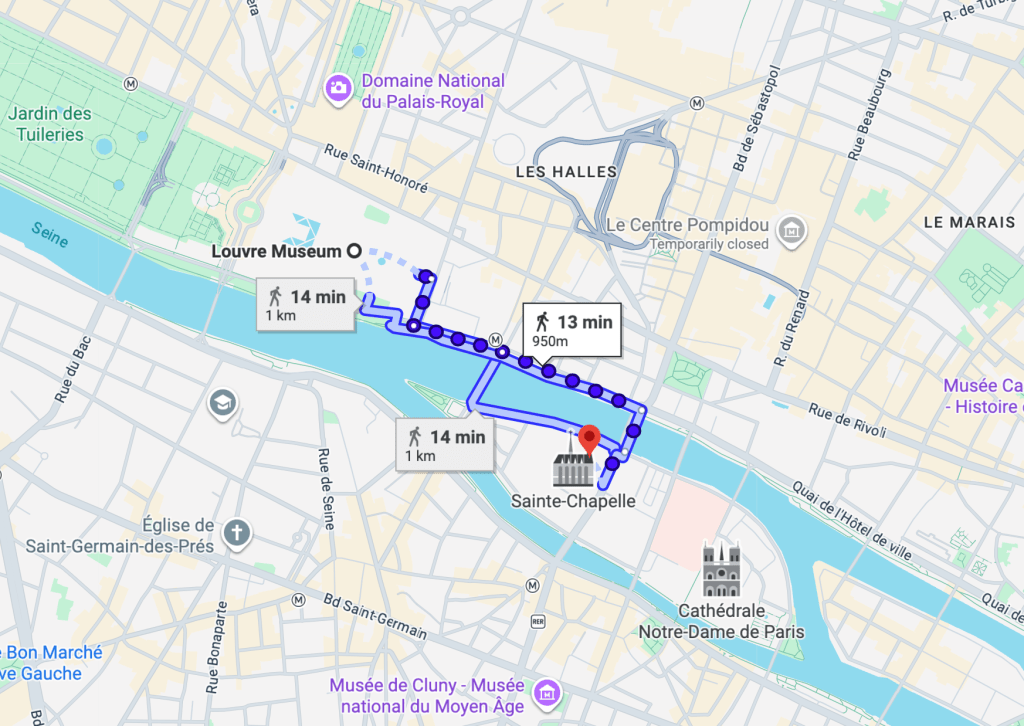
Must see! Minutes from the Cathedral Notre-Dame and the Conciergerie
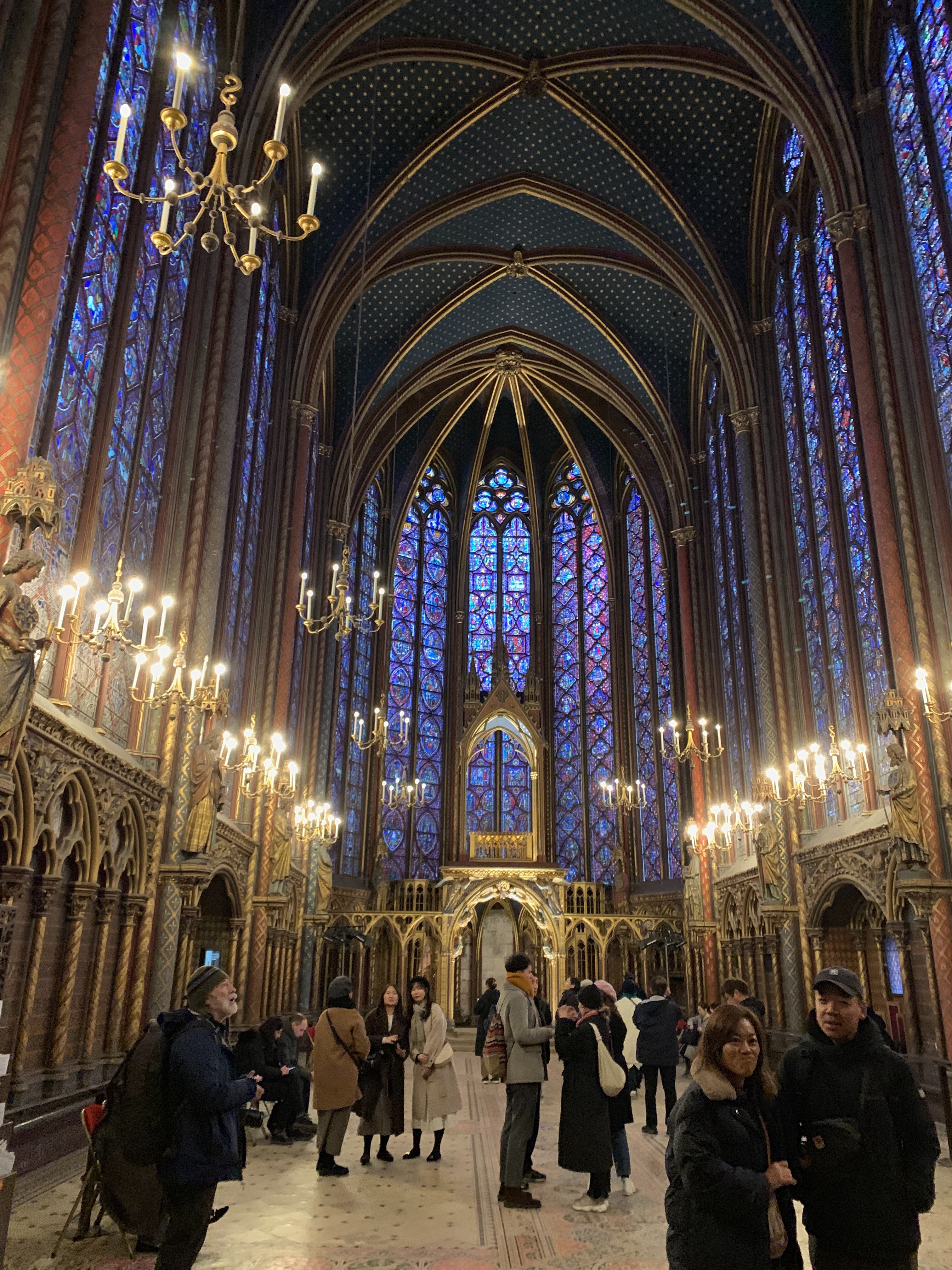
The Sainte-Chapelle was built in 1242 by Louis IX of France (Saint Louis) (1214-1270), Capetian king of France, to house the most prestigious relic of the Passion of Christ: the Crown of Thorns and a fragment of the True Cross, ceded by Emperor Baldwin II. (Saint Louis was the grandson of Philippe II Auguste (1165-1223) and Isabelle de Hainaut).
2/3 of the stained glass windows date from the construction of Sainte-Chapelle.
The Conciergerie is an essential monument of the French Revolution. It is also where one of my ancestors was held prisoner during the French Revolution (at the same time as Queen of France Marie-Antoinette) before being executed by guillotine.
The Conciergerie is a former courthouse and prison. It was originally part of the former royal palace, the Palais de la Cité, which also included the Sainte-Chapelle. It was converted into a state prison in 1370, after the palace was abandoned as a residence by Charles V the Wise and his successors.
My ancestor was Charles Louis Joseph de L’Escuyer d’Hagnicourt (1741-1793). His name is engraved in the “Salle des Noms” (Hall of Names) of the Conciergerie. Here is more about him On my Geneanet tree and in a previous post I wrote about him.


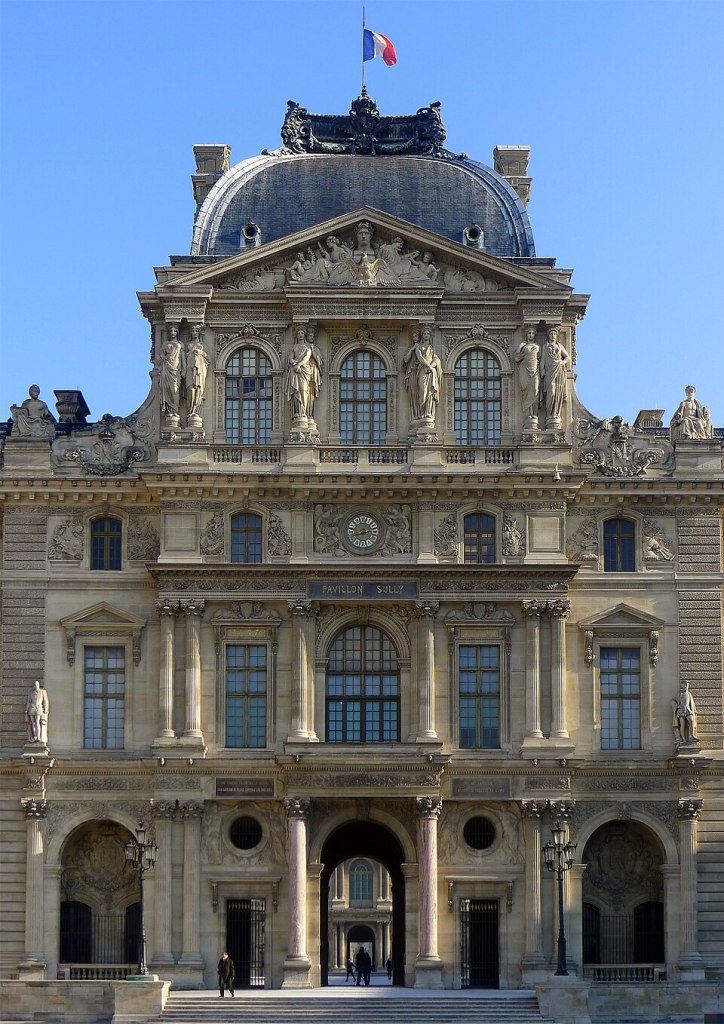
The Louvre is just a 15 minute walk from the Conciergerie
Did you know that the Louvre Museum, biggest museum in the world, was initially the palace of the Kings of France?
The Louvre Palace was built in the 1190s by Philippe II Auguste (1165-1223). It evolved from a medieval fortress into a royal residence. In 1793, during the French Revolution, it became what we know today as the world’s largest art museum: the Musée du Louvre.
Philippe II Auguste is “high enough” back in time on the Tree of Humanity that if you have completed your genealogy to the XIIth century, he is probably your ancestor too. Isn’t that deeply moving to realize that our ancestors built the beautiful monuments we see today?
North of Paris
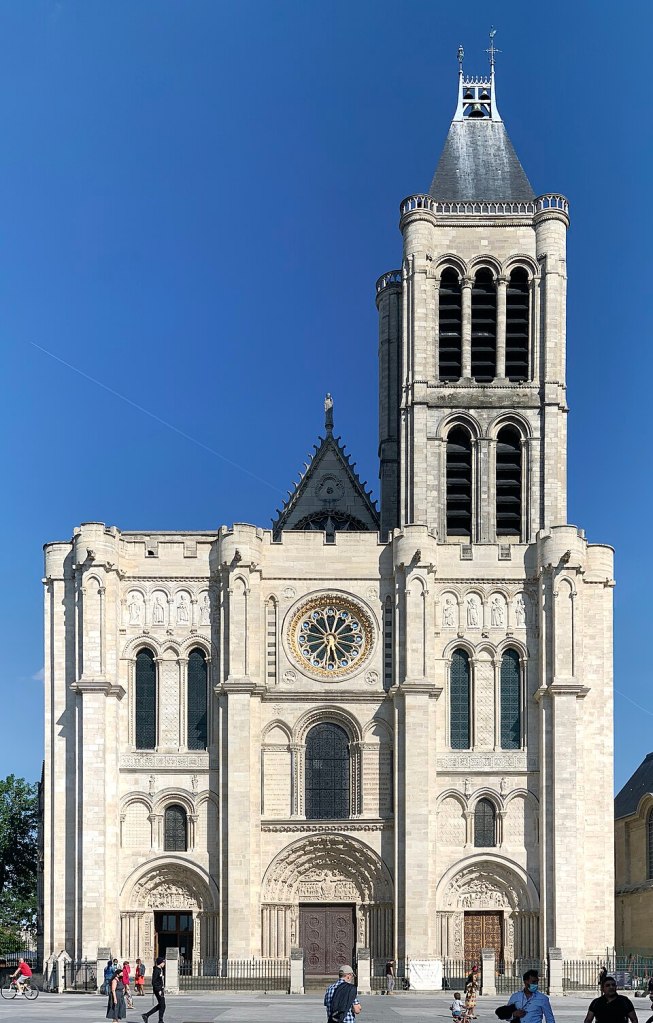
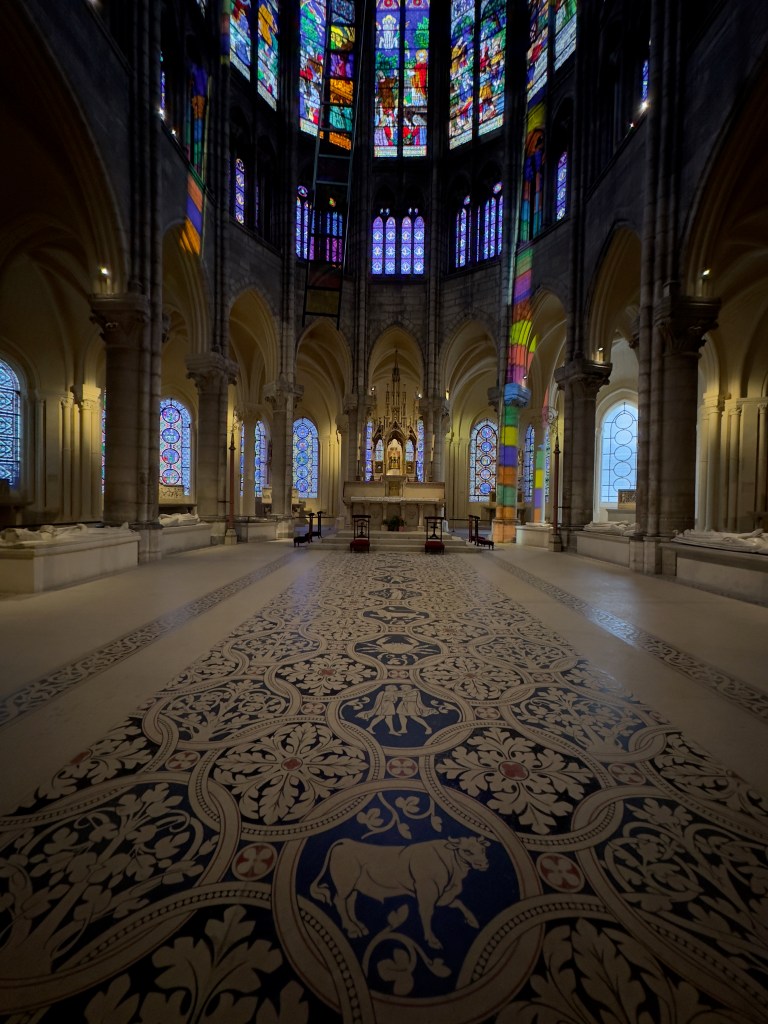
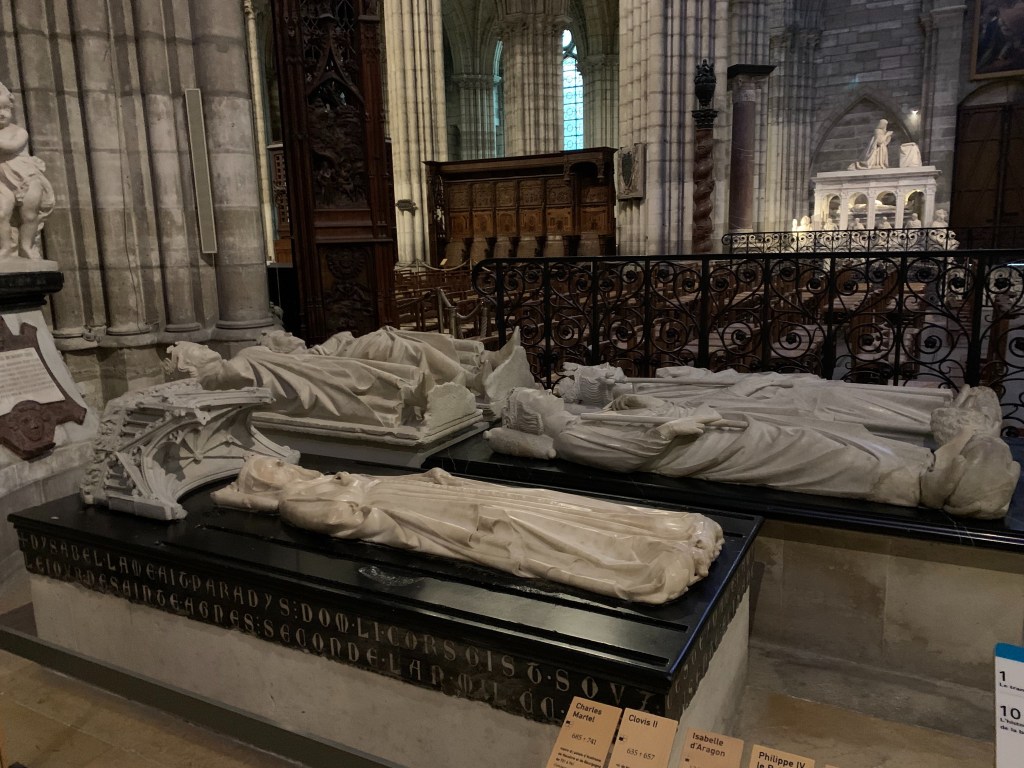
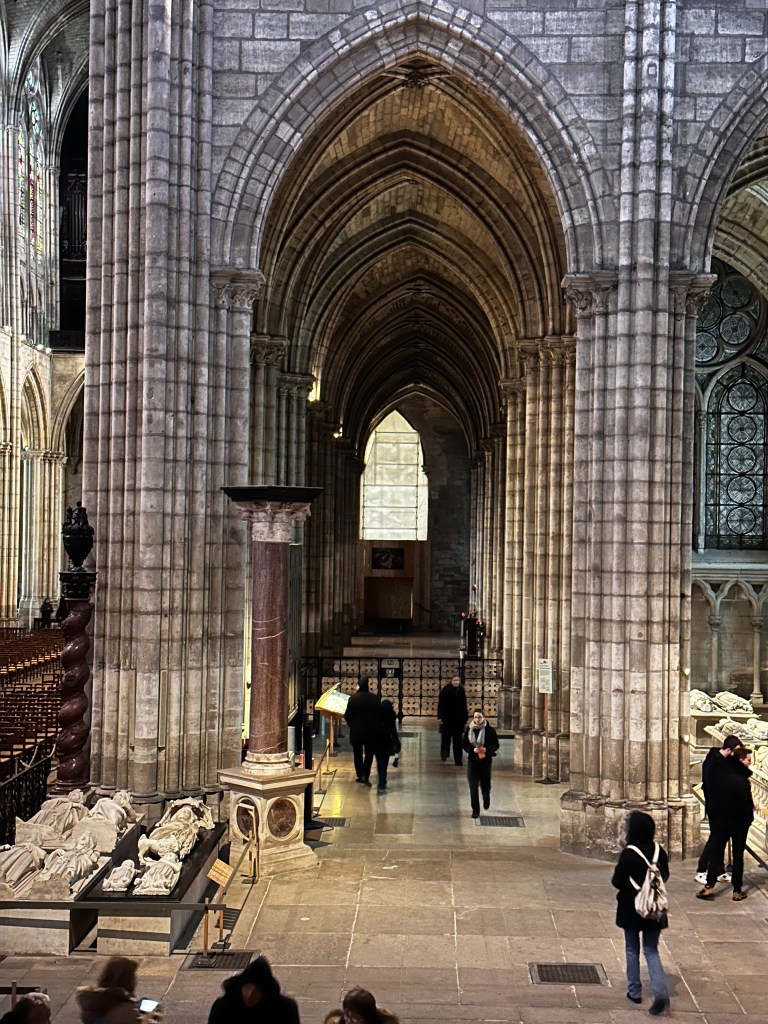
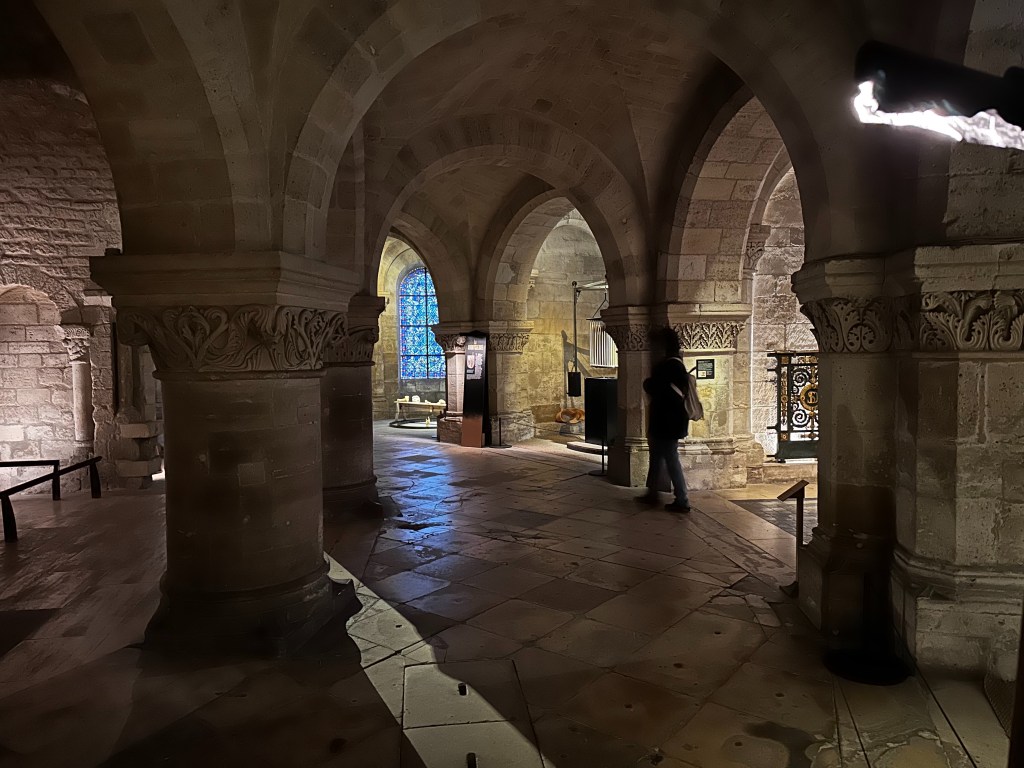
Royal necropolis of the Kings of France. One of the places I visited as a child and young adult when I was living in Paris, not knowing that I was standing in front of my ancestors… David (my husband, American) and I went back in January 2024 after my father’s funeral, this time knowing that we were both looking at many of our common ancestors. If you have discovered ancestors in France, many of the “gisants” (tomb effigies) exhibited at the Basilica are your ancestors too. A unique place to visit. Make sure to visit the basement of the basilica too and wear warm clothes: it is freezing in the Basilica!
The Basilica is located in Saint-Denis, a northern suburb of Paris. It stands on the site of a Gallo-Roman cemetery, burial place of Saint Denis of Paris (before 235-after 250).
The construction of the current basilica started in 1135. It is the royal necropolis of 43 kings of France, 32 queens and 10 servants of the monarchy, since the Robertian and direct Capetian dynasties, even though several Merovingian and then Carolingian kings had chosen to be buried there before them.
The first royal person to be buried was the Queen of the Franks, Aregund (Arégonde) (ca 510-ca 573), 3rd wife of Chlothar I (ca 498-561), whose tomb was destroyed during the French Revolution. Her sarcophagus, along with her jewelry, was discovered in 1959.
Basilica of Saint-Denis (Basilique Saint-Denis) (On this page, you will see on my tree several sections with links of the different dynasties and kings/queens buried at the Basilica that will take you to their “place” on my tree).
My page “Origines de la famille Monarques de France” will give you the entire reigns of Kings of France, from the Kings of the Franks to the Presidents of France and current President Emmanuel Macron. (If you click on “Règne de” or enter that in the “First name” field, you will also see this page and all the “reigns” I have entered for several other countries.
As of January 2026, I have entered the chronology of kings/leaders/presidents of France, United States, England, Italie, Bohemia/Czech Republic, Germany, Austria, Roman and Byzantine Emperors, Hungary, Kings of Cappadocia (historical region of Turkey), and the Kingdom of Macedonia. It’s a work in progress!
| Location: | Saint-Denis, a northern suburb of Paris |
| Construction of the initial basilica: | 639 |
| Construction of the current basilica: | 1135 |
🌿 Monuments, castles, churches and cemeteries on my Geneanet tree (multiple countries)
Over the years, while slowly building my tree, I started to see patterns between individuals I was researching, whether they were direct ancestors or not. For instance, they were part of the same battle, such as the Battle of Agincourt (“Bataille d’Azincourt” in French), which took place on October 25, 1415, in the North of France (Important battle of the Hundred Years’ War; overwhelming victory of Henry V‘s English armies over the French troops).
So I started to create pages of battles, castles, churches, cemeteries, etc, not only to refresh my memory about the History of the World (I now wish I had paid more attention in class instead of goofing around…!), but also where I “group” everyone I encounter during my research. All those pages link to individuals and their “place” in History and on my Geneanet tree.
Here are a few links regarding monuments, churches and cemeteries you can find on my Geneanet tree:
And here is my main page for the “Battles and Peace Treaties“.
 My French Lineage